The Pheromone-Regulated Membrane Protein CsPRM10 Plays an Essential Role in the Asexual Reproduction of the Pepper Anthracnose Fungus Colletotrichum scovillei
Haowei Shen, Jiaping Li, Wenjie Xu, Guoyang Gao, Kyoung Su Kim, Jian-Xin Deng, Teng Fu

TL;DR
This study identifies a protein in a pepper-damaging fungus that is crucial for producing spores, which helps the fungus spread.
Contribution
The study reveals a novel role of CsPRM10 in regulating asexual reproduction in Colletotrichum scovillei.
Findings
The ΔCsprm10 mutant showed reduced surface hydrophobicity and failed to form spores.
Transcriptomic analysis showed altered gene expression related to membrane and nuclear functions in the mutant.
CsPRM10 is essential for conidiophore development and conidiation in C. scovillei.
Abstract
The phytopathogenic fungus Colletotrichum scovillei causes a destructive anthracnose on pepper fruit worldwide. Conidiation plays an essential role in the dissemination of pathogenic fungi, yet the regulatory mechanisms underlying this process remain largely unknown. In this study, a pheromone-regulated membrane protein 10 (PRM10) was identified in C. scovillei, whose function has not been characterized in fungal plant pathogens previously. The targeted gene deletion mutant (ΔCsprm10) was normal in plant infection but showed a decrease in surface hydrophobicity compared to the wild-type strain. Notably, ΔCsprm10 was completely defective in conidiation. A microscopic observation further confirmed that ΔCsprm10 failed to form conidiophores, suggesting that CsPRM10 plays an essential role in the conidiation of C. scovillei by regulating conidiophore development. The transcriptomic analysis…
Genes, proteins, chemicals, diseases, species, mutations and cell lines named across the full text — each resolved to its canonical identifier and authoritative record.
Click any figure to enlarge with its caption.
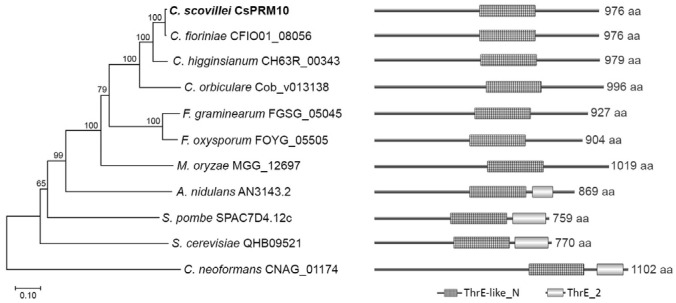 Figure 1
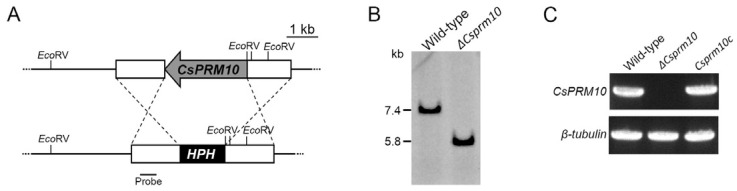 Figure 2
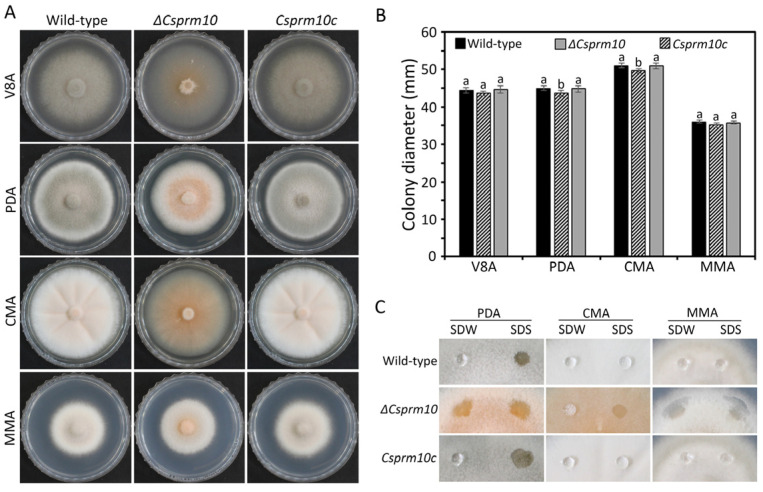 Figure 3
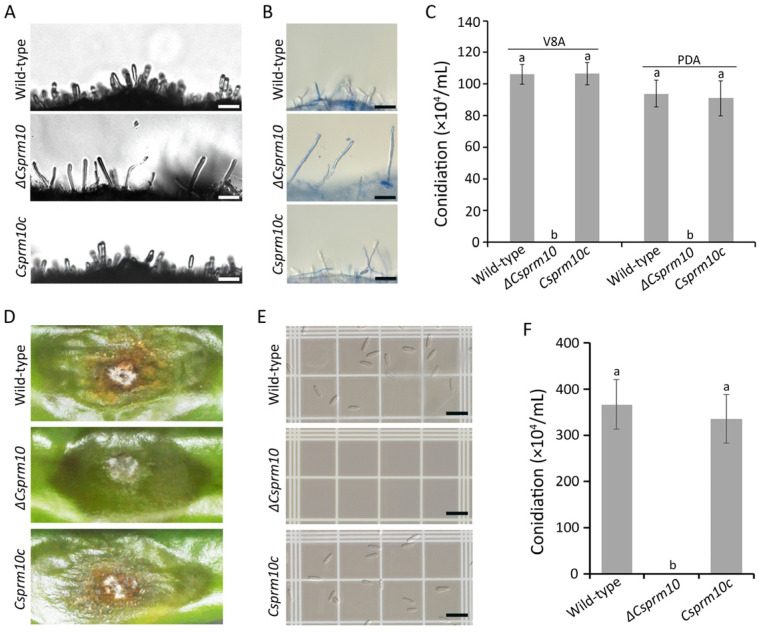 Figure 4
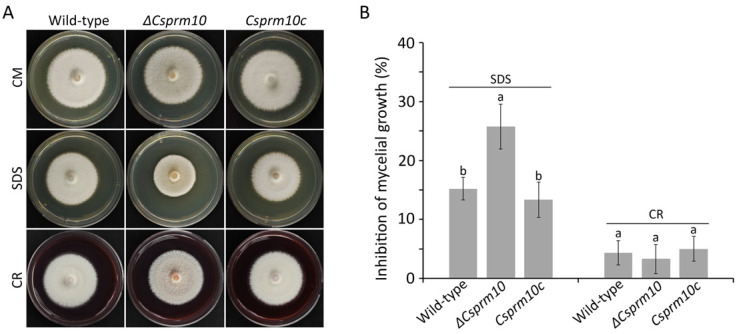 Figure 5
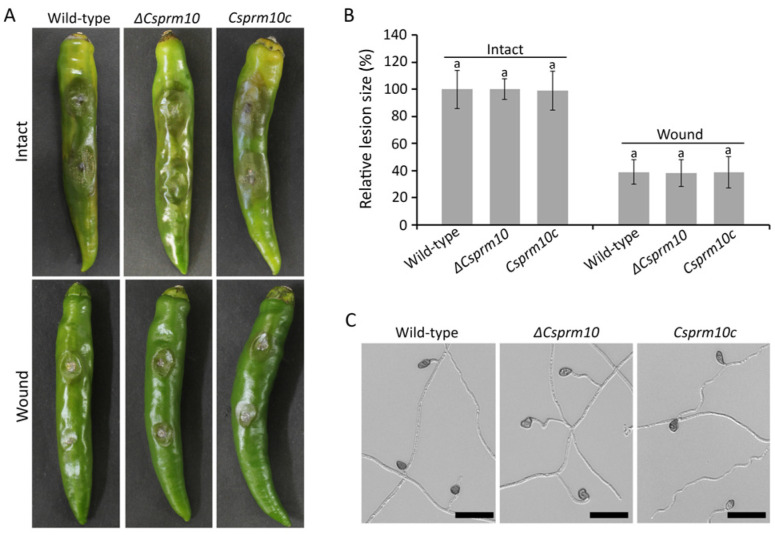 Figure 6
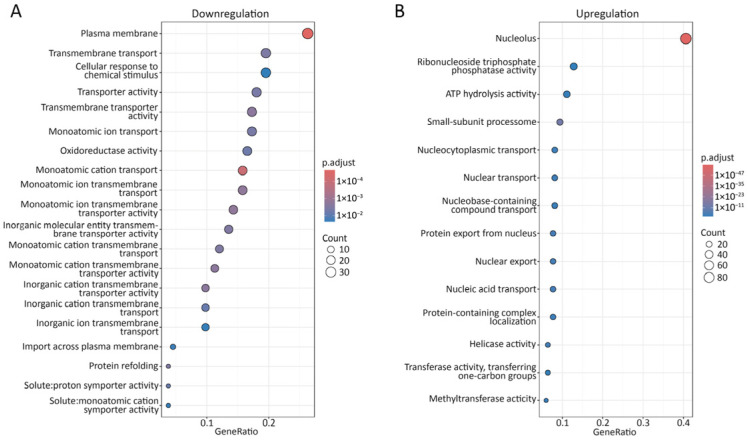 Figure 7
Peer Reviews
No public reviews on file for this paper yet. If you reviewed it on a platform where reviews are public (OpenReview, ICLR, NeurIPS, ICML), you can paste yours below so the community can read it here.
Videos
No videos yet. Explain this paper in a talk, walkthrough, or lecture? Add one.
Taxonomy
TopicsFungal and yeast genetics research · Plant-Microbe Interactions and Immunity · Plant Pathogens and Fungal Diseases