Dental Implantation Changes the Bone Morphology and Mineral Density of Human Mandibular Condyle: A Pilot Study
Ian Segall, Mark Finkelstein, Sonya Kalim, Jinju Kim, Nicholas Jones, Zachary Skabelund, Hong Chen, Hany A. Emam, Lisa Knobloch, Do-Gyoon Kim

TL;DR
This pilot study suggests that dental implants may change the shape and density of the jawbone near the temporomandibular joint, possibly due to increased chewing forces.
Contribution
The study is among the first to investigate how dental implantation affects mandibular condyle morphology and bone mineral density in humans.
Findings
The implant group showed a significant decrease in bone mineral density (BMD) values after functional loading.
TMJ osteoarthritis (OA) counts increased in the implant group, particularly in the anterior regions.
Masticatory loading from dental implants may stimulate new bone formation to balance load distribution on the mandibular condyle.
Abstract
Dental implantation affects masticatory bite and muscle forces. The temporomandibular joint (TMJ) bears a substantial amount of these masticatory forces. Thus, the objective of the current study was to investigate whether dental implantation alters the human mandibular condyle. Among 556 images, 54 and 22 CBCT scans were successfully identified from 27 patients (10 males and 17 females; 54.93 ± 19.46 years) in the control group and 11 patients (3 males and 8 females; 51.32 ± 13.13 years) in the implant group, respectively. In the control group, CBCT images were obtained longitudinally at the time of implantation and after the post-implantation healing period, both prior to crown placement. In the implant group, CBCT images were obtained at the time of crown placement on a single-tooth implant and after the functional loading period following crown placement. Left and right mandibular…
Genes, proteins, chemicals, diseases, species, mutations and cell lines named across the full text — each resolved to its canonical identifier and authoritative record.
Click any figure to enlarge with its caption.
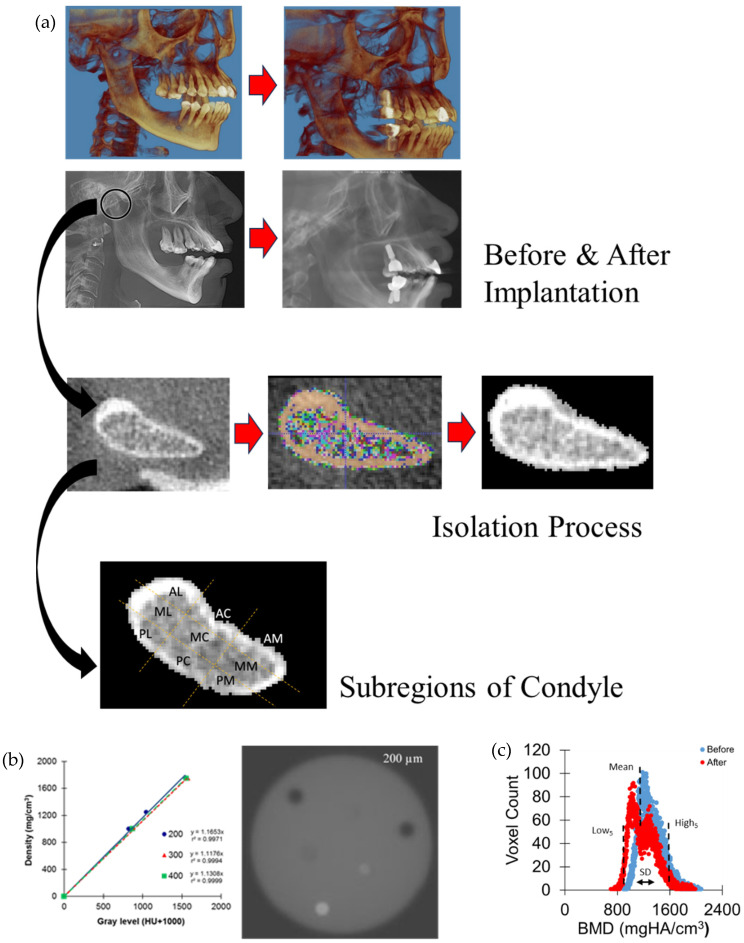 Figure 1
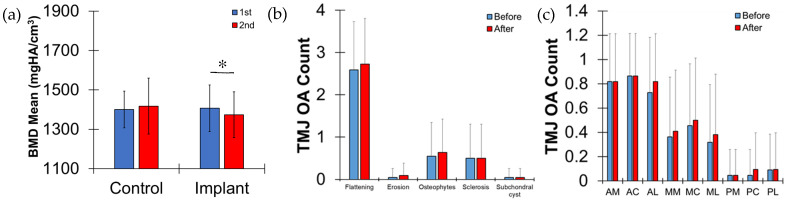 Figure 2
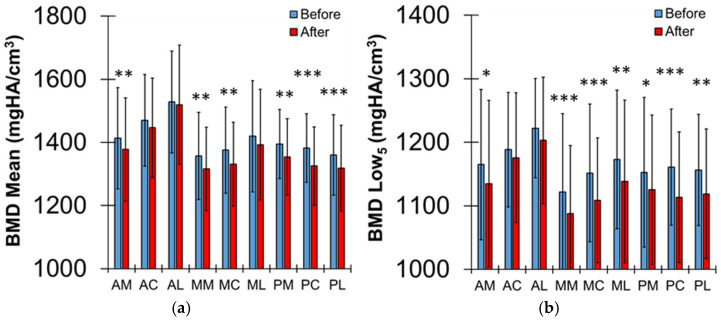 Figure 3
Peer Reviews
No public reviews on file for this paper yet. If you reviewed it on a platform where reviews are public (OpenReview, ICLR, NeurIPS, ICML), you can paste yours below so the community can read it here.
Videos
No videos yet. Explain this paper in a talk, walkthrough, or lecture? Add one.
Taxonomy
TopicsTemporomandibular Joint Disorders · Orthodontics and Dentofacial Orthopedics · Facial Trauma and Fracture Management