Don’t Tell Us How Strong It Feels! Converging and Discriminant Validity of an Indirect Measure of Emotional Evidence Accumulation Efficiency
Rotem Berkovich, Deanna M. Barch, Nachshon Meiran, Erin K. Moran

TL;DR
This study explores a new way to measure emotional experiences by analyzing decision-making processes instead of relying on self-reports.
Contribution
The study introduces a computational model to infer emotional evidence accumulation efficiency from reaction times and choices.
Findings
Higher consummatory pleasure is linked to less efficient evidence accumulation for unpleasant emotions.
Most correlations between self-report measures and model-based estimates were absent or inconclusive.
The drift rate shows initial support for measuring online emotional experience indirectly.
Abstract
The prevalent method for measuring emotional experiences is self-report scales. However, this method is prone to bias, affected by retrospective errors, and limited in studying individual differences due to variability in how individuals interpret scale values. In the present study, we tested the convergent validity of an alternative approach, which infers emotional components from computational modeling as applied to binary pleasant/unpleasant reports about affective images. Reaction times and choices were modeled to estimate the drift rate (efficiency of emotional evidence accumulation) and the boundary (decision caution). Participants (N = 191) also completed five self-report questionnaires assessing affect, anhedonia, depressive symptoms, and pleasure. Only one correlation reached evidence level (Bayes Factor > 10): Higher consummatory pleasure was negatively associated with drift…
Genes, proteins, chemicals, diseases, species, mutations and cell lines named across the full text — each resolved to its canonical identifier and authoritative record.
Click any figure to enlarge with its caption.
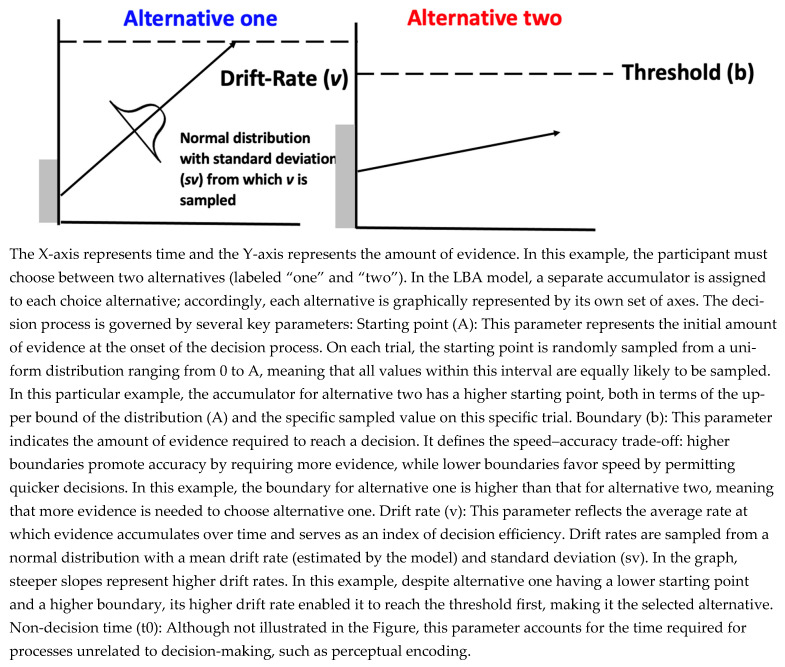 Figure 1
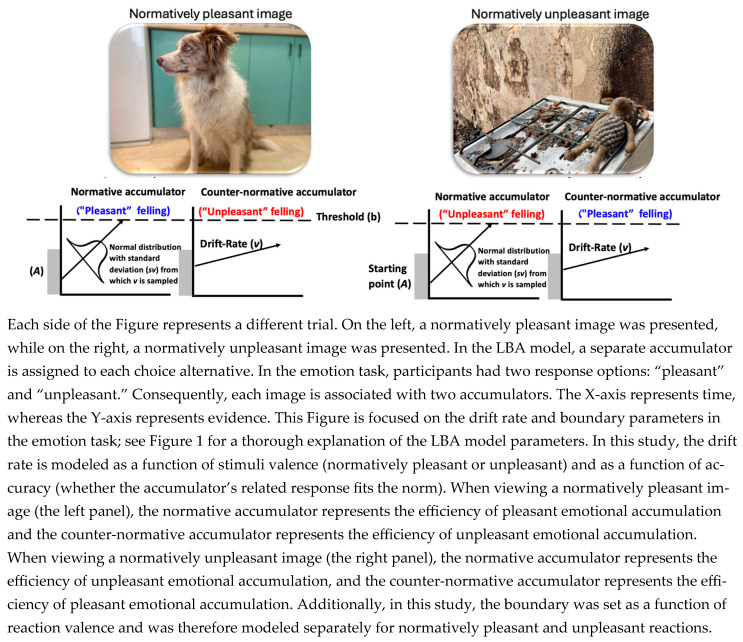 Figure 2
 Figure 3
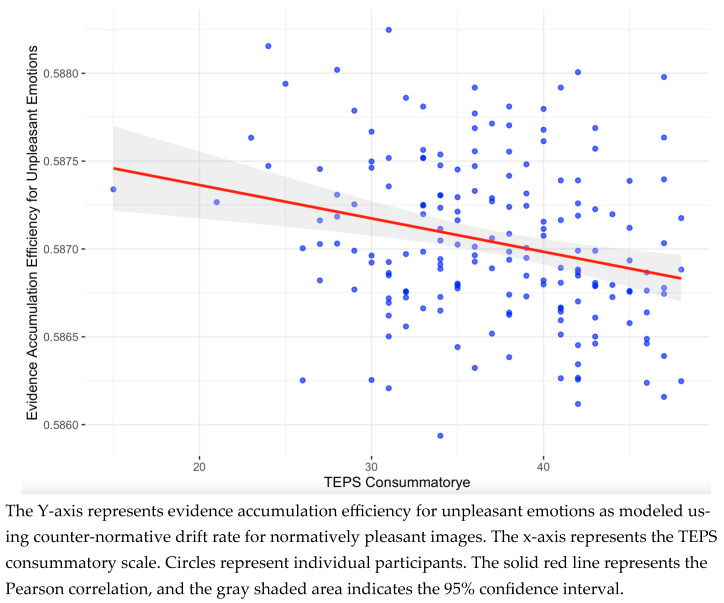 Figure 4
Peer Reviews
No public reviews on file for this paper yet. If you reviewed it on a platform where reviews are public (OpenReview, ICLR, NeurIPS, ICML), you can paste yours below so the community can read it here.
Videos
No videos yet. Explain this paper in a talk, walkthrough, or lecture? Add one.
Taxonomy
TopicsMental Health Research Topics · Media Influence and Health · Anxiety, Depression, Psychometrics, Treatment, Cognitive Processes