Endometriosis Is Associated with Increased Serum and Peritoneal Fluid Concentrations of Chromogranin A and Its Derivatives
Alicja Sztokfisz-Ignasiak, Maja Owe-Larsson, Maciej Maj, Hubert Rytel, Kateryna Shevchenko, Filip Dąbrowski, Piotr Laudański, Mikołaj Pater, Izabela Róża Janiuk, Jacek Malejczyk

TL;DR
This study finds that endometriosis is linked to higher levels of Chromogranin A and its derivatives in blood and peritoneal fluid, suggesting potential diagnostic and therapeutic applications.
Contribution
The study identifies elevated levels of Chromogranin A and its derivatives in endometriosis patients, proposing their potential as biomarkers.
Findings
CgA, catestatin, and pancreastatin levels were significantly higher in endometriosis patients compared to controls.
Serum concentrations of these factors correlated with disease progression.
ROC analysis confirmed their potential as diagnostic markers for endometriosis.
Abstract
Background/Objectives: Endometriosis is a prevalent gynecological illness associated with chronic pain, inflammation, and infertility, as ectopic endometrial lesions are formed. No fully effective treatment is available, and the pathogenesis of this disease is unclear. The survival of ectopic endometrial cells is facilitated by their low susceptibility to apoptosis, an immunosuppressive environment, and local angiogenesis. Chromogranin A (CgA), a glycoprotein prohormone, modulates various processes including angiogenesis and innate immunity, and its higher levels are detected in neuroendocrine tumors and inflammatory disorders. Since endometriosis may be considered an autoinflammatory disorder, this study aimed to evaluate serum and peritoneal fluid concentrations of CgA and its derivatives, catestatin and pancreastatin, and to correlate these levels with disease severity. Methods: The…
Genes, proteins, chemicals, diseases, species, mutations and cell lines named across the full text — each resolved to its canonical identifier and authoritative record.
Click any figure to enlarge with its caption.
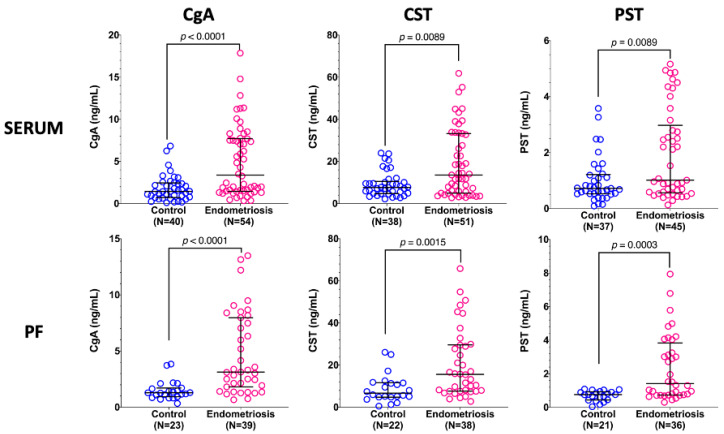 Figure 1
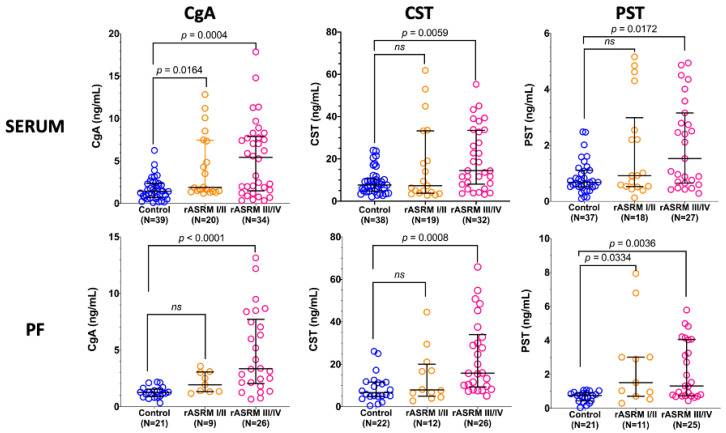 Figure 2
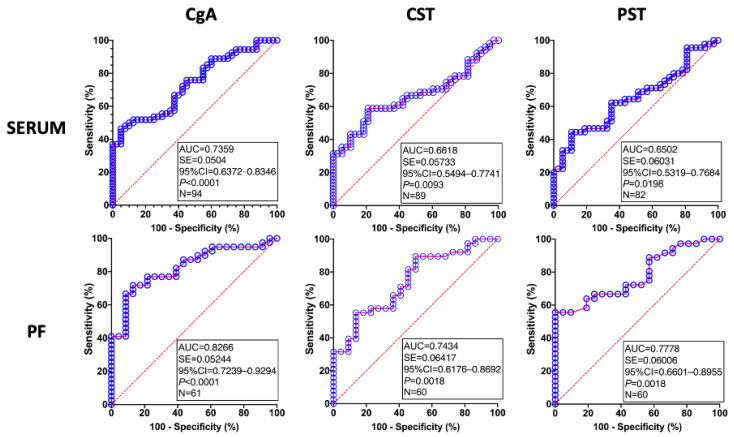 Figure 3
Peer Reviews
No public reviews on file for this paper yet. If you reviewed it on a platform where reviews are public (OpenReview, ICLR, NeurIPS, ICML), you can paste yours below so the community can read it here.
Videos
No videos yet. Explain this paper in a talk, walkthrough, or lecture? Add one.
Taxonomy
TopicsEndometriosis Research and Treatment · Connective Tissue Growth Factor Research · Coagulation, Bradykinin, Polyphosphates, and Angioedema