Improving Breast Cancer Outcomes Through Quality Care: Call to Action for the Implementation of the Breast Cancer Care Quality Index (BCCQI)
Maira Caleffi, Mary Ajango, Aydah M. Al-Awadhi, Ricki Fairley, Andrea B. Feigl, Ana Rita González, Victoria Harmer, Naveena Nekkalapudi, Toyin Saraki, Victoria Wolodzko Smart, Araceli Fernandez-Cerdeño, João Victor Rocha, Ilaria Lucibello, Namita Srivastava

TL;DR
This paper calls for global action to improve breast cancer care quality using the Breast Cancer Care Quality Index (BCCQI) to address inequalities and enhance outcomes.
Contribution
The paper introduces the BCCQI as a unified framework to assess and improve breast cancer care quality globally.
Findings
Breast cancer is the most common cancer among women globally, with rising incidence and significant mortality.
The BCCQI provides a structured self-assessment approach to identify and address gaps in breast cancer care systems.
The Call to Action emphasizes the need for coordinated national and international efforts to improve care quality.
Abstract
Public health relevance—How does this work relate to a public health issue? Breast cancer is the most common cancer among women globally, with increasing incidence, substantial mortality, and economic burden.Breast cancer has wide-ranging impacts, affecting individuals’ mental and physical health, disrupting household stability, productivity, equity, and social well-being, and placing strain on healthcare systems. Breast cancer is the most common cancer among women globally, with increasing incidence, substantial mortality, and economic burden. Breast cancer has wide-ranging impacts, affecting individuals’ mental and physical health, disrupting household stability, productivity, equity, and social well-being, and placing strain on healthcare systems. Public health significance—Why is this work of significance to public health? Most countries are not on track to achieve global targets…
Genes, proteins, chemicals, diseases, species, mutations and cell lines named across the full text — each resolved to its canonical identifier and authoritative record.
Click any figure to enlarge with its caption.
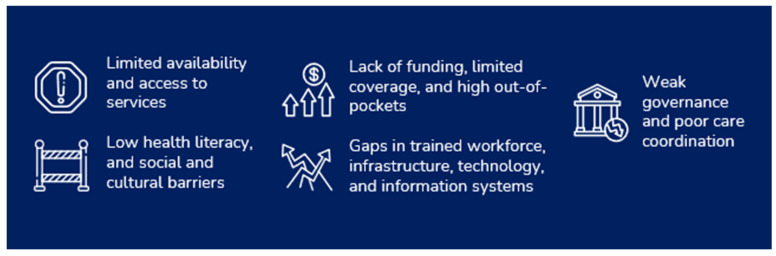 Figure 1
- —AstraZeneca
Peer Reviews
No public reviews on file for this paper yet. If you reviewed it on a platform where reviews are public (OpenReview, ICLR, NeurIPS, ICML), you can paste yours below so the community can read it here.
Videos
No videos yet. Explain this paper in a talk, walkthrough, or lecture? Add one.
Taxonomy
TopicsGlobal Cancer Incidence and Screening · Breast Cancer Treatment Studies · BRCA gene mutations in cancer
1. Breast Cancer: An Unfinished Agenda
1.1. Background
Breast cancer is the most common cancer among women globally and a major cause of mortality [1]. In 2022, it led to 2.3 million new diagnoses and 670,000 deaths [2]. By 2040, breast cancer cases are projected to exceed 3.19 million annually, with deaths rising to 1.04 million [3]. Key global and regional epidemiological trends in breast cancer reveal significant disparities in incidence, prevalence, and mortality. Incidence rates are highest in North America, Oceania, and Europe, while mortality is highest in Africa. Table 1 presents breast cancer incidence, mortality, and prevalence, per region, with data from 2022 [4].
Over the last few decades, significant technological and clinical advances have changed the breast cancer care pathway and improved the prognosis for many patients [5]. In addition, international health organizations have developed evidence-based and resource-adapted programs and interventions to support countries, healthcare systems, and institutions in improving breast cancer outcomes worldwide.
The Breast Health Global Initiative, the Breast Cancer Initiative 2.5, and the recent Global Breast Cancer Initiative (GBCI)—launched in 2021 by the World Health Organization (WHO), in collaboration with the International Atomic Energy Agency and the International Agency for Research in Cancer [6]—are only a few among them. This collective effort has contributed to the perception that breast cancer is a “finished agenda”, shifting attention toward other priorities.
Yet the 2024 Lancet Breast Cancer Commission highlighted ongoing inequities [5], and recent data shows that among 185 countries, only seven of the most developed, predominantly high-income countries (HICs), are meeting—and six are close to meeting—the GBCI goal to reduce breast cancer mortality by 2.5% annually [1,7].
Around 99% of breast cancer cases occur in women [2]. Outcomes vary widely across income levels, population groups, regions, and healthcare systems [8]. Some of these variations reflect intrinsic factors—such as population structure, tumor biology, and genomics [9,10]. However, most differences arise from system-level inequities, including inconsistent access to innovations and variations in the quality of early detection, diagnosis, and treatment services [11,12]. These gaps are often rooted in broader gender and socioeconomic inequities [5,8,11,12].
Women in low- and middle-income countries (LMICs) are less likely to be diagnosed and more likely to die from the disease [2]. Data show that women in developing countries experience 17% higher mortality compared to those in advanced economies [8]. This is critical as many of these countries face stagnant or even rising death rates [5,13,14].
These disparities are even more pronounced among women in humanitarian crises, including displaced and refugee populations [15].
Breast cancer therefore serves as a sentinel condition for gender-responsive, equitable care, revealing systemic gaps that disproportionately impact vulnerable women across all levels of development.
This highlights that closing the gaps in breast cancer quality of care is a high priority, not only for reducing preventable mortality but also for addressing the broader structural inequalities that drive these disparities [16]. Beyond the equity imperative, there is also a compelling economic case for action with proven economic returns on investment from strengthening breast cancer care, including improved productivity, household stability, and reduced catastrophic expenditure [16,17].
Without decisive action, the growing burden of breast cancer will deepen existing inequalities [18,19] and strain limited resources, making reduction in breast cancer mortality increasingly difficult. To this end, bold policy action and sustained commitment are essential to improve the quality of breast cancer care worldwide [17], highlighting the urgency to act now. As highlighted in Table 2, this also closely aligns with the 2030 Sustainable Development Agenda [20], making renewed attention to breast cancer a pivotal priority.
The aim of this Call to Action, co-authored and endorsed by a multidisciplinary panel of healthcare providers, policy and public health experts, patient advocates, and patients, is to provide a structured framework to guide countries in implementing the Breast Cancer Care Quality Index (BCCQI) [21]. The BCCQI is an expert-endorsed, structured tool developed through comprehensive literature review and a multistep process of expert consultation and validation. It aims to drive actionable and systematic healthcare transformation, closing gaps in breast cancer care and accelerating measurable improvements in outcomes. This underscores the need for bold policy action and sustained, long-term commitment.
1.2. Challenges in Breast Cancer Care
Numerous challenges affect breast cancer care, becoming significant determinants of the discussed disparities (see Figure 1 below).
Early detection is critical, as identifying breast cancer at an earlier stage greatly improves survival outcomes and significantly reduces cost through more effective treatment options. However, behavioral and psychosocial factors, such as stigma, fear, gender inequity, low health literacy, and misconceptions about cancer hinder early detection [1,11,22,23,24]. These barriers are further exacerbated by critical gaps in primary healthcare, which constitutes the backbone of integrated care and enables coordination and patient navigation from early detection to survivorship and follow-up. Documented systemic challenges that hamper the quality of primary healthcare services include limited access, difficulty scheduling appointments, and transportation barriers [11]. In addition, patients face limited symptom awareness, a low quality of services provided, and inadequate diagnostic tools, which can delay timely detection after symptom onset [1,22,25,26,27,28]. In rural and underserved contexts, community health workers could play an important role in addressing barriers to early breast cancer detection [29].
Barriers to timely breast cancer diagnosis—whether individual, disease-related, or systemic—can delay completion of appropriate diagnosis and staging, adversely affecting patient prognosis. Diagnostic delays after referral can result from low health literacy, limited disease awareness, and socio-economic factors [11,30,31]. Financial barriers, limited support, and travel challenges related to low income, unemployment, marital status, and distance from healthcare facilities can further extend diagnostic timelines [11,30,31,32,33].
Treatment is central to improving survival and quality of life, with timely initiation and high-quality care substantially reducing mortality and recurrence risk. Multiple patient-related, financial, and systemic barriers delay treatment initiation, impact access to optimal and comprehensive care, and hinder patient compliance with treatment for breast cancer, especially among vulnerable populations [11,34,35,36]. These challenges contribute to poorer outcomes and widen the equity gap in breast cancer care [37]. Misconceptions, fear, and high out-of-pocket costs contribute to inequities both within and across countries. In addition, unmet needs in supportive care, such as psychological support, pain management, and palliative care can persist in both LMICs and HICs. These gaps, often worsened by low awareness, misconceptions, and financial barriers, can lead to treatment interruptions or abandonment [1,35,38]. The limited use of patient-reported outcomes and patient-reported experience measures (PROMs and PREMs) further hinders understanding of breast cancer impact on health-related quality of life of patients [39].
Strong and resilient healthcare systems are essential for delivering high-quality breast cancer care, as they influence every stage of the patient’s journey. Weak governance, limited financing, and service delivery challenges hinder access to quality breast cancer care [23,36,40]. In many countries, the absence of national cancer plans, sustainable funding, and essential diagnostics, medicines, and equipment contributes to late-stage diagnoses and suboptimal treatment outcomes [1,40,41,42]. Workforce shortages, poor care coordination, geographical barriers, long waiting times, and inconsistent adherence to clinical practice guidelines further compromise care quality [11,30,36,43,44,45,46]. Weak health information systems and limited healthcare professional skills additionally constrain the healthcare system’s capacity to deliver timely, equitable, and high-quality care [23,36,47].
2. Need for Action
Despite decades of progress, breast cancer care remains marked by persistent gaps that limit survival gains and widen inequities. While current initiatives have contributed valuable advances, they have too often failed to translate scientific and clinical progress into tangible improvements in outcomes for patients worldwide. This underscores an urgent need for approaches that effectively drive system-wide change.
The Breast Cancer Care Quality Index (BCCQI) offers such an approach [21]. As a catalyst for progress, the BCCQI helps reframe breast cancer as an unfinished agenda and provides a unifying framework that bridges existing initiatives by translating broad guidance into practical, actionable measures. It empowers policymakers, clinicians, and advocates to align around a common standard and accelerate change by enabling countries to design context-sensitive roadmaps and implement tailored actions that foster stepwise improvements across the full continuum of breast cancer care. Furthermore, recognizing the widespread gender inequities that affect healthcare quality, the BCCQI was built to provide solutions that promote more equitable governance.
A global Call to Action to implement the BCCQI is now imperative. Embedding the BCCQI into breast cancer strategies is essential to ensure commitments translate into results. Designed to accelerate progress, the BCCQI can help countries prioritize policies and interventions that drive equitable, effective, and sustainable improvements in breast cancer care worldwide (Box 1).
Box 1Key Breast Cancer Care Quality Index (BCCQI) messages. The BCCQI matters now Breast cancer remains an unfinished agenda, with widening inequities and slow progress toward global mortality-reduction targets. The BCCQI provides a unified, actionable framework to turn commitments into measurable improvements. What adoption will deliver in 3–5 years Countries can accelerate earlier diagnosis, shorten diagnostic delays, improve treatment initiation and completion, and strengthen quality and accountability systems aligned with Universal Health Coverage and SDG goals through the development of tailored breast cancer roadmaps. Immediate commitments for ministers Endorse national BCCQI adoption, mandate a time-bound implementation roadmap, secure sustainable financing, and embed BCCQI indicators into national monitoring and cancer registry systems to drive rapid, accountable progress.
3. Introducing the Breast Cancer Care Quality Index (BCCQI)
The Breast Cancer Care Quality Index (BCCQI) is structured into dimensions, goals, targets, and indicators, mirroring the structure of key outcome-driven health-related frameworks established by international organizations and their collaborators. The BCCQI has four dimensions: early detection, timely diagnosis, comprehensive management, and strong and resilient healthcare systems. Each dimension has an associated goal, which outlines broad objectives, defining the desired achievements within each dimension. Targets specify measurable outcomes with defined timeframes, articulated through clear statements or quantitative benchmarks. Achieving these targets is critical to fulfilling the overarching goals. Indicators are the metrics used to monitor progress, assess gaps, and measure advancement toward targets. The BCCQI was primarily developed to address the challenges presented in Figure 1, also being guided by five essential domains aligned with global health priorities: health equity, patient centricity, universal access to healthcare, healthcare quality, and effective treatment. Table 3 summarizes the BCCQI targets and indicators by dimension, including the domains each indicator aims to enhance [21].
The BCCQI further supports and strengthens action under the GBCI and other relevant initiatives, enhancing their impact [21]. Recognizing that countries differ in context, investment capacity, and priorities, the BCCQI functions as a flexible and iterative tool that enables adaptation to national needs and resources. This approach facilitates the development of context-sensitive roadmaps and allows for phased national adoption through pathways tailored to each country’s healthcare system and capacity. To achieve this, it is essential to assess the varying levels of breast cancer progress across countries to identify gaps and opportunities. The following sections support the identification of areas requiring attention, prioritization of actions, and the development of country-specific roadmaps reflecting recommendations to advance breast cancer care.
4. Country Profiling Using the Breast Cancer Care Quality Index (BCCQI)
To support countries in applying the Breast Cancer Care Quality Index (BCCQI), a four-tier framework was introduced that characterizes typical stages of progress in breast cancer care across the four BCCQI dimensions. Each stage reflects the possible level of advancement across policy, services, and outcomes for each dimension. These reference profiles are intended to support national stakeholders in assessing the current state of breast cancer care. By comparing their policy, service, and outcome status against those described for each tier, countries can identify the group that most closely represents their situation in each dimension and recognize areas where improvements are needed.
To provide relevant guidance at the country level, a preliminary analysis was conducted to demonstrate how country-level assessments using the BCCQI could be operationalized in practice.
Given the absence of comprehensive national data required for direct BCCQI application, this analysis relied on globally available and methodologically consistent datasets. While data gaps remain a major barrier to progress in breast cancer care, the analysis recognizes the need to begin assessing the current situation, identify specific gaps, and build strategies to address them.
Supplementary Material S1 presents this exploratory 100-country application, detailing the indicator set (Table S1), scoring criteria (Table S2), and regional country rankings (Tables S3–S6). This exercise illustrates how structured frameworks like the BCCQI can guide the development of tailored recommendations based on countries’ progress toward common indicators.
The analysis demonstrates that even without consistent data addressing all BCCQI indicators, countries can advance framework implementation. This underscores the need for a global self-assessment questionnaire to enable coordinated baseline and progress reporting.
Recognizing that imperfect data systems must never delay action, these preliminary tools can help countries address data gaps while generating evidence to validate the BCCQI across diverse contexts. This process provides insights into a country’s current state, determines its level of progress across the dimensions and their specific elements, and highlights critical gaps requiring attention.
Based on these findings, the analysis seeks to provide the following: (i.) an initial structured matrix for self-assessment designed to support countries toward developing a formal, context-sensitive roadmap and (ii.) practical guidance for them to assess their current level of progress in each dimension of the BCCQI.
Progress towards improved breast cancer care might vary across dimensions, targets, and indicators. Countries may not fully align with a single profile but may instead exhibit elements from different profiles. In such cases, countries should identify the closest overall grouping and draw on relevant recommendations appropriate to the progress level of each aspect. This reflects the reality that countries may align with elements of different tiers simultaneously, as movement between tiers does not occur in a linear manner.
The framework is therefore designed to accommodate such heterogeneity, allowing countries to position themselves at different levels for early detection, timely diagnosis, comprehensive management, and healthcare system strengthening and resilience, in alignment with their actual situation. This approach enables countries to select context-specific priorities and recommendations based on their unique profiles, supporting national stakeholders and decision makers in identifying realistic advancement roadmaps and optimizing resource allocation—a capability not previously available in global breast cancer policy assessment. Establishing this baseline enables stakeholders to leverage the group-specific recommendations presented in Section 6 to select critical actions to prioritize and include in their final BCCQI country-specific roadmap.
Table 4, Table 5, Table 6 and Table 7 summarize the features and characteristics of countries achieving low, modest, moderate, and outstanding levels of performance for each dimension.
Table 4 specifically focuses on early breast cancer detection. Each level is defined by the presence and scope of national policies, awareness and education programs, the existence of an operational definition of “women at elevated risk”, the use of risk-stratified screening strategies, referral pathways, and the proportion of cancers detected at early stages (I–II). Country-level characteristics illustrate the context-specific features, such as equity of access and monitoring practices. The table provides a structured framework for assessing progress and identifying gaps in early detection capacity and implementation.
Following the assessment of early detection capacity, Table 5 outlines the typical profiles for the dimension of timely breast cancer diagnosis. It categorizes countries based on the presence and implementation of suitable policies for breast cancer diagnosis, the proportion of patients receiving a complete diagnosis and staging within two months from initial presentation due to a suspicious finding, and the availability and equity of quality diagnostic services. The table highlights differences in policy and outcomes, providing a framework to evaluate how effectively healthcare systems translate early detection into timely and complete diagnosis.
Building on the progression from early detection to timely diagnosis, Table 6 shifts the focus to the dimension of comprehensive breast cancer management, which comprises multidisciplinary care, supportive services such as pain management, physiotherapy, lymphedema management, psycho-oncology, and oncofertility, as well as survivorship plans. The four levels of achievement in this dimension are based on the scope and enforcement of national policies guaranteeing comprehensive breast cancer management, timeliness and equity of treatment initiation, access to subtype-specific therapies, integration of supportive care, and incorporation of survivorship planning. The profiles capture, among other things, differences in treatment completion rates, availability of multidisciplinary teams, use of patient-reported outcomes, and continuity of care, offering a structured lens to assess how healthcare systems deliver and sustain high-quality breast cancer care beyond diagnosis.
Concluding the sequence of dimensions, Table 7 presents typical profiles of progress for strong and resilient healthcare systems that are well suited to sustain and scale breast cancer control efforts. It classifies countries according to their maturity of funding mechanisms, workforce capacity, infrastructure, data systems, guideline implementation, care coordination, and patient engagement channels. The profiles emphasize how system-level strength underpins the effectiveness of early detection, timely diagnosis, and comprehensive management by ensuring consistent quality, equity, and sustainability across the entire care continuum.
Taken together, these four sets of profiles offer countries a practical assessment matrix to evaluate their current level of achievement across the four BCCQI dimensions. By identifying the profile that most closely reflects their current situation, policymakers and multisectoral stakeholders can pinpoint critical gaps and opportunities for progress. The following section builds on this assessment, presenting tailored recommendations for each level of achievement in every dimension. These recommendations aim to help align priorities and foster collaboration among different stakeholders at the country level and beyond.
5. Strategic Recommendations: Scaling up the Breast Cancer Care Quality Index (BCCQI)
Building on the country-level analyses, a structured set of recommendations is proposed across each dimension of breast cancer control to support the translation of evidence into policy and practice. Collectively, these recommendations aim to guide countries in addressing persistent system gaps, improving quality of care, and reducing inequities in outcomes. Specifically, they are designed to accomplish the following:
- Meet the Breast Cancer Care Quality Index (BCCQI) targets;
- Improve performance on key indicators;
- Align stakeholders at both national and international levels around common priorities.
Each recommendation outlines activities to foster advocacy and coordinated action by policymakers and multisectoral stakeholders, accelerating improvements across the breast cancer care continuum. By favoring alignment on critical actions to undertake, these recommendations can build consensus, generate urgency, and create a strong foundation for mobilizing support from the international community. Key stakeholders responsible for implementation are outlined in Table 8.
Policymakers provide the formal authority, coordination capacity, and resource allocation needed to integrate improvements in breast cancer care into national strategies and regulatory frameworks.
Multisectoral stakeholders contribute essential expertise, operational capabilities, and community reach for effective implementation. Within this group, medical and scientific societies, knowledge-based and academic institutions, professional associations, and the private sector support evidence generation, guideline development, training, and innovation. Civil society, survivors, and women’s organizations provide critical insights and networks that promote awareness, adherence, and accountability, ensuring that patient, survivor and caregiver voices shape national policies, plans, and review cycles.
Finally, the international community strengthens these efforts through global guidance, technical support, and financial and convening capacity. It also legitimizes country efforts by highlighting alignment with global priorities and agendas, helping advance improvements in breast cancer care.
The goal is for countries to select a set of recommendations for each dimension based on their respective level of progress in consideration of their local needs, opportunities, and challenges, ultimately developing true context-sensitive roadmaps, tailored to their specific contexts, resources, and healthcare system realities.
For each recommendation, Supplementary Material S2 provides the expanded stakeholder typology and a crosswalk identifying which actors should develop, implement, provide technical expertise, and advocate for each tiered recommendation across Dimensions A–D (Tables S7–S23). This clarifies roles and responsibilities to support coordinated implementation. By doing so, Supplementary Material S2 helps ensure that responsibilities are clearly defined and collaboration is optimized to drive meaningful and sustainable progress.
Table 9 provides a tiered menu of recommendations for early breast cancer detection, aligned to each level of progress as described in Table 4. The proposed actions are linked to the specific targets and indicators of Dimension A: early breast cancer detection and can serve as a practical guide for selecting interventions, strengthening multisectoral collaboration, and accelerating measurable progress. Each recommendation can be further adapted to the country context, if needed.
Building on early detection efforts, the recommendations in Table 10 address the critical needs under Dimension B: timely breast cancer diagnosis. While identifying suspicious findings is essential, it does not translate into improved outcomes unless it is promptly followed by a complete and accurate diagnostic assessment. Table 10 provides guidance for countries across all levels of system maturity (as outlined in Table 5) to ensure that every woman with a suspicious finding receives a full diagnostic work-up within the recommended 60-day timeframe.
Following timely diagnosis, it is essential to guarantee access to high-quality, comprehensive breast cancer care across the whole treatment pathway and beyond. Table 11 presents recommendations related to Dimension C: comprehensive breast cancer management, which aims to support countries at different levels of achievement—as outlined in Table 6—in implementing and scaling multidisciplinary treatment services. This dimension of the BCCQI covers different types of services which are critical for comprehensive care: from multidisciplinary treatment to supportive services and survivorship care, all critical components for the delivery of high-quality breast cancer care. The full range of essential services is fully articulated in the BCCQI framework, but it can be further expanded through the inclusion of other evidence-based services, once countries have achieved optimal delivery of the critical services pinpointed by the BCCQI co-authors in their work [21]. Patient-centeredness, which is also emphasized by the BCCQI, is also fully acknowledged in this dimension with the inclusion of specific focus on patient-reported outcomes and experience measures (PROMs and PREMs).
While advancing these types of treatments can seem far-fetching for resource-constraint settings, the relevant activities proposed in Table 11 indicates that, if a country identifies this as a priority area, context-appropriate solutions exist that can be adapted and replicated. For example, PROMs and PREMs can be introduced through short, paper-based surveys administered at key clinical touchpoints.
This has been demonstrated in Kenya where 66% of cancer patients self-administered the European Organisation for Research and Treatment of Cancer Quality of Life Questionnaire Core 30 with a mean completion time of 13 min. This is a questionnaire measures cancer patients’ health-related quality of life using 30 items covering five functioning domains (physical, role, cognitive, emotional, social), key symptoms (fatigue, pain, nausea/vomiting), global health status/quality of life, and six single items (dyspnea, appetite loss, sleep disturbance, constipation, diarrhea, and financial impact) [48].
Similarly, in Ethiopia, an oncology center collected patient-experience data using an interviewer-administered European Organisation for Research and Treatment of Cancer satisfaction with cancer care core questionnaire. This tool measures oncology outpatients’ experience and satisfaction with care using 33 items covering provider performance (doctors’ technical skills, information exchange, affective behavior), satisfaction with nurses and radiotherapy technologists, care coordination, interactions with hospital staff, and hospital organization and environment [49].
Overall, the actions outlined in Table 11 aim to ensure that patients not only start but also complete appropriate therapy, aligned with international standards and tailored to their specific cancer subtype.
Effective early detection, diagnosis, and treatment all depend on the existence of strong, resilient healthcare systems. Table 12 presents recommendations related to Dimension D: strong and resilient healthcare systems, aiming to strengthen the backbone of breast cancer care—starting from each country’s specific level of progress, as described in Table 7—covering infrastructure, workforce, financing, and governance. These actions involve system-wide investments in healthcare system capacity, including cancer registries, patient navigation, clinical guidelines, and institutionalized patient engagement, among others. They ensure sustainability, equity, and quality of care delivery across all levels of the system and the continuum of breast cancer care.
Together, the recommendations outlined in Table 9, Table 10, Table 11 and Table 12 offer a tool to help build a comprehensive roadmap to accelerate progress across all dimensions of breast cancer care, from early detection through treatment completion to system-level resilience. Countries can and should begin implementing the BCCQI even with partial data. Data gaps and inadequate data system must never delay action; instead, data strengthening and implementation can progress in parallel. For example, resource-constrained countries can leverage existing cancer registry data, even when incomplete, as well as alternative data sources that may serve as proxies to initiate assessments. Where feasible, self-assessment questionnaires completed by country officials or national experts may also help address data gaps. Finally, the BCCQI can support national data-strengthening efforts by serving both as an assessment framework and as a catalyst for resource mobilization to improve data availability and quality over time.
Box 2 illustrates this process by presenting a hypothetical country example, showing how the self-assessment process, as presented in Table 4, Table 5, Table 6 and Table 7, informs the subsequent development of recommendations, as presented in Table 9, Table 10, Table 11 and Table 12.
Box 2Applying the Call to Action self-assessment matrix and tiered recommendations to develop a baseline and roadmap for the BCCQI early detection dimension (hypothetical “Country X”). Country X: Description Country X has recently adopted a national policy for the early detection of breast cancer; however, while the policy establishes a general population screening campaign, it does not define women at elevated risk of breast cancer nor establish targeted screening approaches for these populations. Awareness and education programs have been implemented by international non-governmental organizations with support from international financing and technical partners such as the World Bank and the WHO and have been incorporated into the recently adopted national policy. As a result of these initiatives, awareness among the primary and community-based health workforce is generally adequate. Nevertheless, considerable gaps persist in the systematic administration of individual risk assessment, as specific tools and guidance for this purpose are lacking. Moreover, the timely referral of women with suspicious findings through appropriate care pathways remains inconsistent.The country’s health data system remains very weak, with only fragmented data collected. Despite the existence of primary health or community-level services for early identification and referral, access remains limited for some of the most vulnerable populations, including members of a large native ethnic group at high risk of breast cancer who live in a remote area of the country. As a result, estimates indicate that more than 75% of invasive breast cancers are diagnosed at stage III or IV according to TNM anatomical or pathological staging. Country X: Profile Based on the typical policy progress profiles presented in Table 4 for early detection of breast cancer, Country X meets the criteria for countries with a Modest level of achievement. However, with respect to the proportion of invasive breast cancers diagnosed at stage I or II according to TNM anatomical or pathological staging, the country meets the criteria for a Low level of achievement. Criteria for Modest Level of Achievement met by Country X:
- Drafted or recently adopted national policy or framework, outlining basic measures for early detection.
- Awareness and education programs exist but are fragmented or pilot-based, not integrated into national health frameworks.
- Some primary health or community-level services attempt early identification and referral, but pathways have not been formally established.
- No definition of women at elevated risk and targeted screening limited to certain jurisdictions, or dependent on external funding.
Criteria for Low Level of Achievement met by Country X:
- <25% of invasive breast cancers diagnosed at stage I or II according to TNM anatomical or pathological staging or no data for this indicator.
Country X: Potential activities for a short–medium-term roadmap Based on the recommendations for early breast cancer detection presented in Table 9 and the specific features outlined in the country description, Country X could consider the following activities, which are applicable to countries with Low or Modest levels of achievement, as outlined below. Recommendations for Low Level of Achievement applicable to Country X:
- Develop risk-assessment tools: With the support of national or international stakeholders, develop context-specific tools for individual risk assessment to be administered to women during GP visits.
- Establish referral pathways: Pilot basic referral pathways for suspicious findings in high-population areas as a model for future scale-up to reach rural or marginalized jurisdictions.
Recommendations for Modest Level of Achievement applicable to Country X:
- Promote implementation of breast cancer policy: Advocate for stepwise institutionalization of measures from the proposed or recently adopted breast cancer detection plan.
- Develop a definition of women at elevated risk of breast cancer: Develop an evidence-based definition of women at elevated risk of breast cancer to delineate the target population for the national early detection strategy and prioritize higher-frequency screening for this group.
- Develop a definition of women at elevated risk of breast cancer: Develop an evidence-based definition of women at elevated risk of breast cancer to delineate the target population for the national early detection strategy and prioritize higher-frequency screening for this group.
- Standardize risk-assessment in primary healthcare: Develop context-specific tools for individual risk-assessment to be administered to women during GP visits and establish national breast cancer risk-assessment protocols to be rolled out to GPs at the national level.
- Expand public and workforce awareness: Strengthen health promotion efforts, such as early detection awareness campaigns for the public, and scale education programs for healthcare workers by integrating breast cancer modules into existing national training platforms.
It is important to recognize that besides data constraints, other barriers, often not strictly related to breast cancer, may limit adoption of the context-sensitive roadmaps and the tailored recommendations [21]. These include limited public awareness and advocacy, cultural stigmas, logistical bottlenecks, workforce and infrastructure gaps, and financial limitations that can hinder political will. Geopolitical instability, competing priorities, and external pressures such as economic shocks, further risk deprioritizing the implementation of the framework outlined in this Call to Action and the adoption of the BCCQI.
Yet, by helping adapt the efforts to country’s context and actual level of achievement, the framework supports action and helps overcome also these barriers, facilitating the identification of realistic, tailored pathways for sustained, incremental improvements towards reduced disparities, improved outcomes to ensure that every woman can access timely, high-quality breast cancer services, irrespective of where they live.
6. Conclusions
Persistent gaps in breast cancer care continue to limit improvements in outcomes and wide inequities, indicating that current efforts have not fully translated progress into consistent, system-wide benefit, which highlights the need for bold action.
Breast cancer care remains an unfinished agenda, with disparities in access, quality, and outcomes threatening progress worldwide. By supporting the practical application of the Breast Cancer Care Quality Index (BCCQI), this Call to Action establishes a practical, structured approach for countries to move from knowledge to action.
Through the framework of Table 4, Table 5, Table 6 and Table 7, countries can assess their current level of progress across early detection, diagnosis, comprehensive care, and healthcare system resilience. The tiered recommendations in Table 9, Table 10, Table 11 and Table 12 then provide actionable guidance for national stakeholders to address gaps, prioritize interventions, and build a context-sensitive implementation roadmap tailored to their context and healthcare system realities.
For countries to be ready for the rising burden of breast cancer, urgent action is required: they must adopt the BCCQI as a strategic tool to identify gaps, translate commitments into measurable improvements. Multisectoral collaboration and international support, through varied forms of cooperation, such as pooled global technical assistance, shared self-assessment tools, cross-country learning platforms, or mentorship networks, could be leveraged to support these efforts. Through this approach, progress in breast cancer care can be accelerated, disparities reduced, and sustainable, high-quality care ensured. By bridging the gap between global targets and national action, healthcare system transformation becomes possible, and this Call to Action provides a structured framework to make it a reality—ensuring that no woman is left behind.
The reference list from the paper itself. Each links out to its DOI / PubMed record.
- 1World Health Organization Global Breast Cancer Initiative Implementation Framework: Assessing, Strengthening, and Scaling Up of Services for the Early Detection and Management of Breast Cancer World Health Organization Geneva, Switzerland 2023
- 2World Health Organization Breast Cancer. Fact Sheets Available online: https://www.who.int/news-room/fact-sheets/detail/breast-cancer(accessed on 18 August 2025)
- 3Arnold M. Morgan E. Rumgay H. Mafra A. Singh D. Laversanne M. Vignat J. Gralow J.R. Cardoso F. Siesling S. Current and Future Burden of Breast Cancer: Global Statistics for 2020 and 2040 Breast 202266152310.1016/j.breast.2022.08.01036084384 PMC 9465273 · doi ↗ · pubmed ↗
- 4International Agency for Research on Cancer Cancer Today- Age-Standardized Rate (World) per 100,000, Incidence and Mortality, Both Sexes, in 2022 Available online: https://gco.iarc.fr/today/en/dataviz/bars?types=0_1&mode=population&cancers=20&sort_by=value 1&populations=903_904_905_908_909_935(accessed on 4 February 2025)
- 5Coles C.E. Earl H. Anderson B.O. Barrios C.H. Bienz M. Bliss J.M. Cameron D.A. Cardoso F. Cui W. Francis P.A. The Lancet Breast Cancer Commission Lancet 20244031895195010.1016/S 0140-6736(24)00747-538636533 · doi ↗ · pubmed ↗
- 6Anderson B.O. Ilbawi A.M. Fidarova E. Weiderpass E. Stevens L. Abdel-Wahab M. Mikkelsen B. The Global Breast Cancer Initiative: A Strategic Collaboration to Strengthen Health Care for Non-Communicable Diseases Lancet Oncol.20212257858110.1016/S 1470-2045(21)00071-133691141 · doi ↗ · pubmed ↗
- 7Kim J. Harper A. Mc Cormack V. Sung H. Houssami N. Morgan E. Mutebi M. Garvey G. Soerjomataram I. Fidler-Benaoudia M.M. Global Patterns and Trends in Breast Cancer Incidence and Mortality across 185 Countries Nat. Med.2025311154116210.1038/s 41591-025-03502-339994475 · doi ↗ · pubmed ↗
- 8Sung H. Ferlay J. Siegel R.L. Laversanne M. Soerjomataram I. Jemal A. Bray F. Global Cancer Statistics 2020: GLOBOCAN Estimates of Incidence and Mortality Worldwide for 36 Cancers in 185 Countries CA Cancer J. Clin.20217120924910.3322/caac.2166033538338 · doi ↗ · pubmed ↗