Occupational Stress, Burnout, and Quality of Life in Radiographers: A Scoping Review of Workforce Well-Being
Pedro Ramalho, António Nunes, Fernanda M. Silva, André Ramalho, Gonçalo Flores, Beatriz Santos, Ricardo Ferraz, Henrique Neiva, Pedro Duarte-Mendes

TL;DR
This review explores stress, burnout, and quality of life in radiographers, highlighting common stressors and the need for workplace interventions.
Contribution
The study provides a comprehensive overview of psychosocial risks in radiographers using a scoping review approach.
Findings
Radiographers report high stress and burnout, especially emotional exhaustion and depersonalization.
Common stressors include workload, staffing pressures, and anxiety about radiation exposure.
Methodological quality of studies is moderate, with a need for better research design and larger samples.
Abstract
Background/Objectives: We conducted a scoping review to map peer-reviewed evidence on occupational stress, burnout, and quality of life among radiographers and radiologic technologists and to identify measurement tools and reported consequences. Methods: Searches were conducted in Web of Science, Scopus, and PubMed. Eligible studies enrolled radiographers/radiologic technologists who were healthy adults; assessed at least one target construct (occupational stress, burnout, or quality of life) using validated instruments; and used cross-sectional, experimental, quasi-experimental, longitudinal, or mixed-methods designs. Articles published from 1995 onward in English, French, Spanish, or Portuguese were considered. Two reviewers independently screened, extracted data, and appraised methodological quality using Quality Assessment with Diverse Studies (QuADS). The synthesis was narrative…
Genes, proteins, chemicals, diseases, species, mutations and cell lines named across the full text — each resolved to its canonical identifier and authoritative record.
Click any figure to enlarge with its caption.
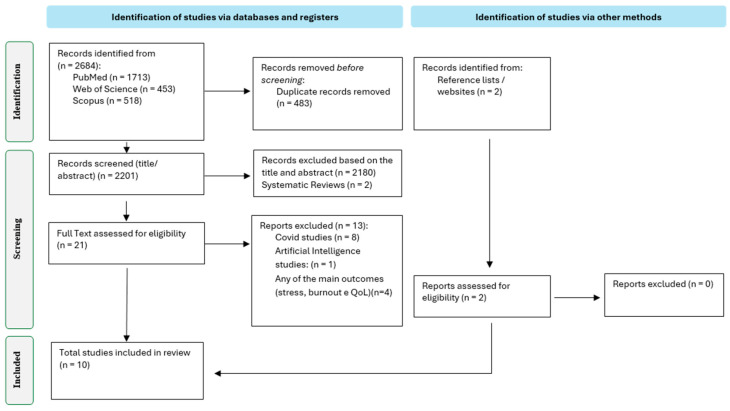 Figure 1
- —FCT—Fundação para a Ciência e a Tecnologia—Foundation for Science and Technology, I.P. (Portugal)
- —Research Center in Sports Sciences, Health Sciences, and Human Development
Peer Reviews
No public reviews on file for this paper yet. If you reviewed it on a platform where reviews are public (OpenReview, ICLR, NeurIPS, ICML), you can paste yours below so the community can read it here.
Videos
No videos yet. Explain this paper in a talk, walkthrough, or lecture? Add one.
Taxonomy
TopicsHealthcare professionals’ stress and burnout · Radiology practices and education · Diversity and Career in Medicine
1. Introduction
Healthcare professionals are exposed to multiple occupational stressors that can compromise both their well-being and the quality of patient care. Among these professionals, radiographers and radiologic technologists are particularly vulnerable due to the technical complexity of their tasks, exposure to ionizing radiation, high workloads, and the constant need for precision and patient interaction. Over the past two decades, increasing evidence has shown that these conditions may contribute to occupational stress and burnout, phenomena that have profound implications for health systems worldwide [1,2,3].
The working environment of radiographers is frequently characterized by high patient throughput, staff shortages, and shift-based work schedules, including night and weekend duties. These professionals often operate across multiple clinical settings, such as emergency departments, operating rooms, and outpatient services, which increases task variability and cognitive and emotional demands [1,2,3]. In addition, the physical requirements of radiographic practice (including prolonged standing, repetitive movements, and awkward postures) contribute to fatigue and musculoskeletal complaints, reinforcing the link between physical strain and psychological distress [2].
Burnout, recognized by the World Health Organization as an occupational phenomenon rather than a medical disorder, is characterized by emotional exhaustion, depersonalization, and reduced personal accomplishment [4]. It is associated with decreased job satisfaction, reduced productivity, and higher turnover intentions. In radiography, the literature suggests that burnout may be a relevant occupational health concern, but findings are dispersed across contexts and assessment approaches [1,2,3]. However, the available evidence remains fragmented and heterogeneous, with differences in methodological quality, sample characteristics, and assessment instruments. These gaps hinder the formulation of comprehensive occupational health strategies targeted at this professional group.
Controversy persists regarding the factors that most strongly predict stress and burnout in radiography. While some studies emphasize individual variables—such as gender, age, and coping style—others highlight organizational aspects including workload, shift work, and leadership quality. Moreover, the recent literature has highlighted interest in potential protective factors (e.g., self-compassion, coping strategies, and workplace physical activity), in buffering psychological distress. However, evidence remains heterogeneous and not yet consolidated [1,2,3]. Despite this growing interest, no consensus has been reached on the most effective interventions or on the standardized tools to assess occupational stress, burnout, and quality of life in radiographers.
In this context, the present scoping review aims to systematically map and synthesize peer-reviewed evidence on occupational stress, burnout, and quality of life among radiographers and radiologic technologists. Specifically, this review aims to describe the levels of stress, burnout, and quality of life; identify the assessment instruments used to measure these variables, summarize the main risk factors and individual and organizational consequences reported; and examine the potential mitigation strategies proposed in the literature. For clarity, study-level findings from eligible articles are presented exclusively in the Results and interpreted in the Discussion.
2. Materials and Methods
2.1. Study Design
This scoping review was conducted in accordance with the PRISMA-ScR (Preferred Reporting Items for Systematic Reviews and Meta-Analyses extension for Scoping Reviews) guidelines [5], with a protocol registered in the Open Science Framework (10.17605/OSF.IO/2RCUF), which provides specific standards for the development of this type of study. In line with these guidelines, the review followed the fundamental stages of the process, namely: the formulation of the research question, the definition of eligibility criteria, the identification of information sources, the selection of studies, the extraction and organization of data, and finally, the analysis, synthesis, and presentation of the results.
2.2. Eligibility Criteria: Inclusion and Exclusion
The eligibility criteria were defined in advance, in accordance with the objective of this scoping review and the PRISMA recommendations, in order to ensure consistency and transparency in the study selection process. The PCC framework (Population, Concept, Context) was used to ensure clarity and methodological consistency. Eligible studies had to be peer-reviewed, involve radiographers (Population), assess work-related stress, burnout, or quality of life (Concept), and occur in any healthcare setting (Context). Inclusion criteria: studies with samples composed of radiographers; participants being healthy individuals; assessment of at least one of the variables of interest (stress and/or burnout and/or quality of life) using validated scales; cross-sectional, experimental, quasi-experimental, longitudinal, or mixed-methods studies; and articles published since 1995 in English, French, Spanish, or Portuguese. Exclusion criteria: reviews, protocols, combined assessments, opinion articles, editorials, letters to the editor, conference abstracts, or non-scientific reports, COVID-19 studies, artificial intelligence studies; duplicate studies or those whose data were not available in full text; and investigations that, although initially identified, did not address the research question upon full-text reading.
2.3. Search Strategy
Initially, the electronic databases considered most appropriate for the scientific field in question were selected, namely Web of Science, SCOPUS, and PubMed, with access until March 2025. For each database, a set of search terms was defined, comprising controlled descriptors (e.g., MeSH) and free-text terms related to the review’s central concepts. These terms were combined using Boolean operators (“AND”, “OR”), and, whenever necessary, quotation marks were used to increase the sensitivity and specificity of the search.
Predefined limits were also applied in accordance with the eligibility criteria, namely articles in Portuguese, English, Spanish, and French published since 1995. In addition to the electronic search, a manual search of the reference lists of the included articles was carried out to identify additional relevant studies that had not been retrieved initially (snowballing).
The set of controlled descriptors, selected according to the specific vocabularies of each database, together with keywords and appropriate use of Boolean operators, enabled the construction of a comprehensive and precise search strategy. Thus, the combination of these elements resulted in the following search strategy, used to identify the studies relevant to the topic under analysis:
((radiographer OR “radiology technologist” OR “radiologist technician” OR radiologist OR radiotherapist OR “radiologic technologist” OR “radiation oncologists” OR “radiation therapist” OR “attending radiologist” OR” interventional radiologist” OR “radiology residents” OR “radiology fellow*” OR “radiology attending” OR “radiology consultant”) AND (exercise* OR “physical exercise” OR “physical activity” OR training OR “combined training” OR “aerobic exercises” OR strength OR program* OR mobility OR stretch) AND (burnout OR “burned out” OR “professional burnout” OR “occupational burnout” OR “career burnout” OR “occupational stress” OR “work stress” OR “professional stress” OR “workplace stress” OR “work-related stress” OR “job stress” OR “health related quality of life” OR “quality of life” OR HRQOL OR “life quality”))
2.4. Study Selection and Data Extraction
The study selection process was carried out in several stages, following the PRISMA guidelines [6]. In the first stage, all results obtained from the different databases were exported to bibliographic management software (EndNote X9), where duplicate records were automatically removed and subsequently eliminated manually. Next, titles and abstracts were independently screened by two reviewers, based on the previously defined inclusion and exclusion criteria. Potentially eligible articles were retrieved in full text and analyzed in detail to confirm their relevance. In cases of disagreement between reviewers, the final decision was reached by consensus or, when necessary, with the involvement of a third reviewer.
Data extraction was performed systematically using a pre-developed extraction form. This form included the main variables of interest, such as authorship, year, country, study design, sample details, instruments, and results. Whenever relevant, additional information pertinent to addressing the research questions was also recorded.
All extracted data were organized into tables and subsequently synthesized according to the review objectives, to enable descriptive analysis and the identification of patterns, trends, and gaps in the literature.
2.5. Quality Assessment
The Quality Assessment with Diverse Studies (QuADS) tool, developed by Harrison et al. [7], was specifically designed to assess the methodological quality of studies included in systematic reviews that encompass mixed-methods, multiple-methods, or diverse methodological approaches. Unlike tools intended exclusively for quantitative or experimental studies—such as randomized controlled trials or observational studies—QuADS was developed to address the methodological heterogeneity often found in reviews that include qualitative, non-experimental quantitative, or mixed-methods studies.
QuADS enables reviewers to consider, in an integrated manner, different dimensions of methodological quality, such as the clarity of objectives, theoretical justification, participant involvement, author reflexivity, and the practical relevance of findings. This tool does not establish rigid cut-off points, as its authors recognize that any standardized classification attempt could be arbitrary. Instead, it promotes a reflective approach, allowing for the interpretation of criteria to be adapted to the specific context and objectives of the review.
The instrument consists of 13 items that analyze aspects related to the clarity of objectives, adequate design, theoretical justification, description of context, stakeholders involved, rigorous data collection, among others. Each item is assigned a score from 0 to 3, allowing a detailed assessment of the quality of each study. The final score has a maximum of 39 points.
The assessment was carried out independently by two reviewers. In cases of disagreement, discrepancies were resolved by consensus or, when necessary, with the involvement of a third reviewer. The quality assessment results were recorded systematically and subsequently presented in tabular form, providing a comparative overview of the methodological quality of the included studies and facilitating the interpretation of the findings of this scoping review.
3. Results
3.1. Study Identification and Selection
The flowchart presented in Figure 1 provides an insightful overview of the results of the bibliographic search. During the scoping review, a total of 2699 records were identified through database searches, and two additional studies were identified through reference list screening. After duplicate removal, the number was reduced to 2201 studies. From this group, a careful screening process excluded 2178 articles with irrelevant titles and abstracts, leaving 23 full-text articles for further analysis. Finally, 15 of these articles were excluded after full-text reading; the reasons for their exclusion are clearly explained in Figure 1. In the end, 10 studies were selected that met the rigorous inclusion criteria and provided a compelling justification for their inclusion in this review. This rigorous selection process ensured that only studies relevant and consistent with the research objectives were included.
3.2. Study Characteristics
Table 1 provides an overview of the main characteristics of the 10 studies included in the analysis. The studies were conducted in various countries—Iran, China, France, Ireland, Saudi Arabia, Jordan, Portugal, Malaysia, and the United Kingdom. Eight of the studies employed quantitative approaches [8,9,10,11,12,13,14,15], using validated questionnaires to measure levels of stress, burnout, or well-being. Two studies adopted mixed-methods approaches [16,17], incorporating qualitative dimensions such as open-ended comments and descriptive analyses of perceptions. Sample sizes ranged from 38 to 864 participants, most of whom were active radiographers, with average ages of 30 to 40 years. Most studies focused on healthy adults living in the community. Data collection methods primarily involved validated questionnaires.
3.3. Study Methodology
All 10 articles analyzed adopted cross-sectional methodologies, consisting of observational studies with data collected at a single point in time. Although the search timeframe was broad, only ten studies met eligibility, indicating limited eligible evidence in the peer-reviewed literature. While this methodological choice limits the ability to establish causal relationships, it is widely used in studies assessing the prevalence of psychological and behavioral phenomena.
Eight of the studies employed quantitative approaches [8,9,10,11,12,13,14,15], using validated questionnaires to measure levels of stress, burnout, or well-being. Two studies adopted mixed methods approaches [16,17], incorporating qualitative dimensions such as open-ended comments and descriptive analyses of perceptions.
Regarding the origin of the samples, the studies differed significantly in terms of institutional context: some were conducted in public hospitals (as in Portugal and Iran), others in mixed environments (as in Jordan), and some included multiple countries (as in the international study by Kennedy et al., [8]. This diversity allows for a comparative interpretation of the influence of cultural variables, labor policies, and healthcare systems on the experience of stress.
3.4. Sample Characteristics
The sample size of the studies analyzed varies considerably, reflecting the heterogeneity of the contexts in which they were conducted. The largest study, conducted by Shubayr and Alashban [17], involved 864 radiographers in Saudi Arabia, while the smallest, by Videira and Ventura [14], included only 38 participants from a Portuguese hospital. Between these extremes, most studies reported samples ranging from 43 to 253 participants, the majority consisting of active professionals, with an average age between 30 and 40 years.
Regarding gender distribution, most samples show a significantly higher proportion of women, except for studies conducted in Saudi Arabia [17] and Jordan [11], where men were the majority. This finding may reflect distinct cultural and institutional contexts. In the United Kingdom, for example, Rutter and Lovegrove [15] studied exclusively women, as mammography is performed solely by female professionals. The Portuguese studies provided greater detail on working conditions, highlighting differences between public and private services and between small and large teams, thereby enriching the contextual understanding of risk factors.
3.5. Assessment Instruments
The analysis of the ten studies revealed a diversity of instruments used to assess different dimensions of occupational stress, burnout, and quality of life. This methodological variety, while enriching, also represents a limitation to the direct comparison of results across different contexts.
To measure occupational stress, several internationally validated instruments were applied. The most frequently used was the Occupational Stress Inventory–Revised (OSI-R), which was employed in studies conducted in Iran [13] and Jordan [11]. This tool assesses dimensions such as workload, professional roles, interpersonal relationships, and individual coping resources. Kennedy et al. [8] used the HSE Management Standards Indicator Tool, developed in the United Kingdom and widely adopted in occupational health research, which identifies psychosocial risk factors related to demands, control, support, relationships, role, and organizational change. Other studies used structured sociodemographic and occupational questionnaires, such as those by Shubayr & Alashban [17], which included specific questions on experiences of bullying and perceptions of institutional support, and by Videira Ventura [14], which incorporated indicators of workload and technical versatility.
Regarding burnout syndrome, the reference instrument was the Maslach Burnout Inventory–Human Services Survey (MBI-HSS), applied in four studies [8,9,10,14]. The MBI-HSS assesses the three classical dimensions of the syndrome—emotional exhaustion, depersonalization, and personal accomplishment—providing consistent data on the prevalence of clinically relevant burnout levels among radiographers. In some cases, such as Cui et al. [12], burnout was also analyzed in relation to psychological variables, such as the sense of coherence, using complementary scales, thereby broadening understanding of the phenomenon from a more integrative perspective.
3.6. Methodological Quality of Studies Included
The methodological quality assessment is presented in Table 2. The majority of studies were rated as having moderate quality. In several cases, the studies demonstrated well-organized structures and adequate theoretical grounding but lacked reflexivity and offered only brief discussions of limitations, thereby weakening the research’s critical depth. Some works displayed solid methodological rigor and sound practical applications, placing them in the moderate-to-high quality range, though they remained limited by insufficient participant engagement and reflective depth. Others featured clear and consistent analyses but failed to advance methodological critique or acknowledge inherent weaknesses in their approaches. Conversely, specific articles exhibited moderate-to-low quality, either due to restricted instruments, superficial analyses, or limited reflexivity, compromising the robustness of their findings. A few studies also had small samples or shallow analytical approaches, constraining the validity and generalizability of their results. Overall, the articles were well structured and theoretically supported, though they shared weaknesses related to the absence of critical reflexivity, limited discussion of methodological limitations, and, in some cases, insufficient methodological robustness.
4. Discussion
The present review aimed to understand the levels of occupational stress, burnout, and quality of life among radiographers, identify the assessment instruments used and the main associated factors, analyze their individual and organizational consequences, and explore the potential mitigation strategies proposed in the studies. Ten national and international studies were comparatively analyzed, covering contexts such as Iran, China, France, Ireland, Saudi Arabia, Jordan, Portugal, Malaysia, and the United Kingdom. Despite methodological diversity, all converge in revealing that radiographers experience high levels of psychological, emotional, and physical exhaustion, confirming the profession’s particular vulnerability to occupational stress and burnout [8,9,10].
Across studies, common risk factors include work overload, shift work, multiple role accumulation, low recognition, poor management, and lack of organizational support [8,9,16]. Contractual instability, such as fixed-term contracts, and workplace bullying—reported by up to 89% of professionals in certain contexts [17]—further intensify strain. These findings align with Rutter and Lovegrove’s [15] observation that role ambiguity and insufficient recognition contribute to dissatisfaction and intention to leave the profession. Physical consequences, such as musculoskeletal complaints affecting the lower back, neck, and shoulders [11], reinforce the link between emotional exhaustion and somatic symptoms.
Sociodemographic variables also influence these outcomes. Female professionals consistently emerge as more vulnerable to burnout and stress, possibly reflecting the double burden of professional and family responsibilities and persistent inequalities in career advancement. The role of age and length of service appears ambivalent: while greater experience may enhance coping skills and emotional resilience [16], prolonged exposure to demanding environments can intensify exhaustion [9].
Some studies introduced moderating and protective factors. Self-compassion emerged as a key variable, associated with greater emotional resilience and lower burnout [16]. Positive coping strategies, such as regular physical activity and leisure pursuits, were also identified as protective mechanisms [10,14]. However, despite these insights, few studies offered empirically tested interventions to mitigate occupational stress, emphasizing instead theoretical recommendations for institutional support and recognition of radiographers within multidisciplinary teams.
Within this context, the analysis highlights the importance of promoting physical activity and workplace exercise as preventive strategies. Several studies documented significant associations between occupational stress and physical complaints, suggesting that regular exercise can reduce injuries linked to repetitive effort and prolonged postures while enhancing overall well-being. The relationship between physical and emotional health is evident: exercise fosters emotional balance, reduces anxiety, and mitigates depersonalization associated with burnout [18,19].
Empirical evidence from intervention studies supports this perspective. In a controlled study [20], a workplace exercise program led to significant improvements in quality of life—particularly in the physical (p = 0.046) and environmental (p = 0.032) domains—and reductions in perceived stress (p = 0.013) and burnout (p < 0.05) among radiographers in the experimental group. In contrast, the control group showed no significant changes. The intervention promoted psychophysiological recovery, enhanced perceptions of institutional support, and strengthened emotional regulation. These effects are consistent with research linking regular physical activity to improved energy, mood, and concentration, as well as lower burnout levels [8,16].
Overall, the ten studies confirm the multifactorial nature of occupational stress among radiographers, influenced by both personal and organizational variables. They also demonstrate that structured, low-cost interventions—such as workplace exercise programs—can effectively promote physical and psychological well-being, reduce stress and burnout, and improve quality of life. For policymakers and healthcare institutions, the findings underscore the urgency of implementing comprehensive occupational health policies that combine psychological support, fair working conditions, and initiatives to foster emotional resilience and physical activity in the workplace. Such integrated strategies are essential to ensure sustainable professional practice, enhance job satisfaction, and ultimately improve the quality and safety of patient care [8,9,10,14,16,18,19,20].
Study Limitations
The present analysis of the ten studies has several limitations that should be acknowledged. First, most investigations adopted a cross-sectional design, which prevents the establishment of causal relationships among the variables studied. Although associations can be identified between factors such as gender, years of service, or working conditions and levels of stress or burnout, it is not possible to determine the direction of these relationships or to confirm whether stress results directly from these factors or whether the phenomena are bidirectional in nature.
Another relevant limitation concerns methodological heterogeneity. The studies employed a variety of assessment instruments, including the MBI-HSS, OSI-R, HSE Indicator Tool, IPWBW, and structured questionnaires, which complicates direct comparison of results and hinders the development of more robust quantitative syntheses. In addition, some studies presented only categorized data by age groups or professional categories, without providing means or standard deviations, thereby limiting the precision of comparisons.
The geographical diversity of the studies, while representing a strength in terms of scope, also introduces constraints, as working conditions, cultural factors, and health policies vary substantially across countries such as Portugal, Iran, France, Saudi Arabia, and Malaysia. This factor makes generalizing the findings risky, since the impact of occupational stress may differ across specific organizational and sociocultural contexts.
Furthermore, there was considerable variation in sample sizes, ranging from studies with fewer than 50 participants to those with several hundred participants. This disparity compromises the representativeness of some conclusions, particularly in smaller studies, where the likelihood of sampling bias is higher.
Another limiting aspect relates to the scarce exploration of mediating and contextual variables. Although well-established risk factors such as workload, shift work, bullying, and lack of institutional support were identified, few investigations examined in depth the more subjective dimensions of stress—such as perceived recognition, organizational culture, or leadership style—leaving gaps in the understanding of subtler determinants of occupational stress.
The limited number of included studies may constrain the comprehensiveness of conclusions, but it also maps an evidence gap consistent with the purpose of a scoping review.
Finally, it is important to note that most studies did not include empirically tested intervention proposals, relying instead on theoretical or descriptive recommendations. This lack of applied research reduces the immediate practical contribution of the existing literature to the evidence-based implementation of occupational health policies.
5. Conclusions
The analysis of the studies included in this synthesis shows that radiology technicians report levels of occupational stress and burnout, associated with a combination of individual, organizational and contextual factors related to different health profession contexts. The available evidence thus suggests the demanding nature of the working conditions of these professionals and the potential negative implications for their well-being. Intervention strategies focused on professional recognition, psychological support, and the promotion of physical activity appear to play an important role in preventing burnout and improving overall quality of life. Therefore, it is essential that healthcare institutions adopt sustainable policies that foster balanced, healthy, and emotionally safe work environments.
The review also identified substantial heterogeneity in the instruments used to assess these constructs. Although validated tools such as the Maslach Burnout Inventory–Human Services Survey (MBI-HSS), the Occupational Stress Inventory–Revised (OSI-R), and the HSE Management Standards Indicator Tool were most commonly applied, the lack of standardization limits comparability across studies and highlights the need for more harmonized assessment approaches in future research.
Across the included studies, the main risk factors associated with stress and burnout were predominantly organizational and included high workload, staff shortages, shift work, role ambiguity, workplace bullying, limited professional recognition, and insufficient managerial support. These factors were consistently linked to important individual and organizational consequences, such as reduced job satisfaction, physical and psychological health complaints, increased intention to leave the profession, and potential risks to workforce sustainability and quality of care.
Although the overall methodological quality of the evidence was mostly moderate and largely based on cross-sectional designs, several studies highlighted potential mitigation strategies. Protective factors such as self-compassion, effective coping strategies, and workplace physical activity were identified as promising approaches to reducing stress and burnout and enhancing well-being. However, empirically tested interventions remain scarce, underscoring the need for future longitudinal and intervention-based studies.
In summary, promoting the physical and psychological well-being of radiographers should be regarded as an institutional priority and an essential condition for delivering high-quality, safe, and compassionate healthcare.
Taken together, the findings of this scoping review support the conclusion that radiographers and radiologic technologists constitute a group particularly affected by work-related stress. Across diverse healthcare settings and countries, the included studies consistently reported elevated levels of occupational stress and burnout, especially emotional exhaustion, alongside negative impacts on quality of life. This vulnerability appears to be closely linked to the specific characteristics of the radiography working environment, which combines high technical demands, responsibility for radiation safety, physical strain, shift work, and frequent exposure to organizational stressors such as workload pressure, staff shortages, limited recognition, and insufficient managerial support. The convergence of these factors, repeatedly observed across studies, provides a coherent basis for interpreting radiographers as a professional group at increased psychosocial risk when compared with broader healthcare populations.
The reference list from the paper itself. Each links out to its DOI / PubMed record.
- 1Arif, M Radiographers’ workload and burnout on performance: An empirical study Front. Public Health 202412141978410.3389/fpubh.2024.141978439193196 PMC 11347417 · doi ↗ · pubmed ↗
- 2Gransjøen A. M Prevalence, impact and prevention of stress and burnout, and promoting resilience among radiological personnel: A systematized review Discov. Psychol.202441110.1007/s 44202-024-00124-7 · doi ↗
- 3Mahecha-Naranjo G. Álvarez-Alucema L. Campo-Torregrosa Y. López-Sepúlveda D. García-Martínez D. Tuirán-Tinoco M. Burnout and work stress in radiology technicians: A narrative review Duazary 202522 e 646510.21676/2389783 X.6465 · doi ↗
- 4World Health Organization Burn-Out: An Occupational Phenomenon. International Classification of Diseases 11th Revision (ICD-11)2019 Available online: https://icd.who.int/(accessed on 1 September 2025)
- 5Tricco A.C. Lillie E. Zarin W. O’Brien K.K. Colquhoun H. Levac D. Moher D. Peters M.D.J. Horsley T. Weeks L. PRISMA Extension for Scoping Reviews (PRISMA-Sc R): Checklist and explanation Ann. Intern. Med.201816946747310.7326/M 18-085030178033 · doi ↗ · pubmed ↗
- 6Page M.J. Mc Kenzie J.E. Bossuyt P.M. Boutron I. Hoffmann T.C. Mulrow C.D. The PRISMA 2020 statement: An updated guideline for reporting systematic reviews BMJ 2021372 n 7110.1136/bmj.n 7133782057 PMC 8005924 · doi ↗ · pubmed ↗
- 7Harrison R. Jones B. Gardner P. Lawton R. Quality assessment with diverse studies (Qu ADS): An appraisal tool for methodological and reporting quality in systematic reviews of mixed- or multi-method studies BMC Health Serv. Res.20212114410.1186/s 12913-021-06122-y 33588842 PMC 7885606 · doi ↗ · pubmed ↗
- 8Kennedy E. Ryan M. England A. Sarkodie B. Khine R. Mc Entee M.F. High workload and under-appreciation lead to burnout and low job satisfaction among radiographers Radiography 20253123124010.1016/j.radi.2024.11.01939631271 · doi ↗ · pubmed ↗