The Interplay of Genetics and Lifestyle in MASLD: Focus on LPIN1 rs13412852 and Sedentary Behaviour
Isabella Franco, Rossella Donghia, Antonella Bianco, Claudia Beatrice Bagnato, Nicola Verrelli, Caterina Bonfiglio, Elisabetta Di Nicola, Giovanna Forte, Martina Lepore Signorile, Marialaura Latrofa, Marika D’Addabbo, Katia De Marco, Vittoria Disciglio, Paola Sanese

TL;DR
This study shows that a genetic variant and sedentary behavior together increase the risk of liver disease, highlighting the importance of both genes and lifestyle.
Contribution
The study identifies a synergistic effect between the LPIN1 rs13412852 variant and sedentary behavior on liver disease risk.
Findings
The LPIN1 rs13412852 T-allele is statistically associated with increased MASLD risk.
Sedentary behavior also increases MASLD risk, especially in T-allele carriers.
The combination of sedentary behavior and the CT/TT genotype shows a synergistic effect on MASLD risk.
Abstract
The LPIN1 rs13412852 variant has been linked to lipid levels and liver disease in children. This genotype may modulate the liver’s response to sedentary behaviour, potentially increasing the vulnerability of certain individuals to liver dysfunction. These findings underscore the need to consider both genetic predisposition and environmental exposures when evaluating disease risk. This study aims to investigate the association between the LPIN rs13412852 T-allele and sedentary behaviour and to explore how the interplay between genetic and environmental factors may contribute to individual susceptibility to liver-related conditions. rs13412852 was genotyped in a cohort from Southern Italy (n = 394), and all participants were administered an International Physical Activity Questionnaire (IPAQ), collected a blood sample, and underwent an abdominal ultrasound analysis. The association…
Genes, proteins, chemicals, diseases, species, mutations and cell lines named across the full text — each resolved to its canonical identifier and authoritative record.
Click any figure to enlarge with its caption.
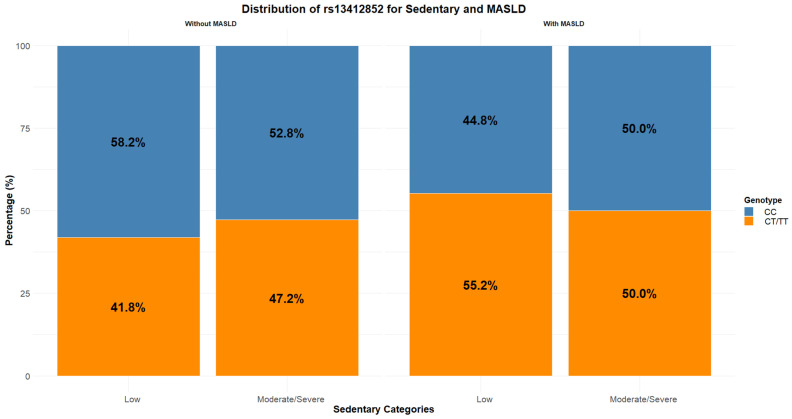 Figure 1
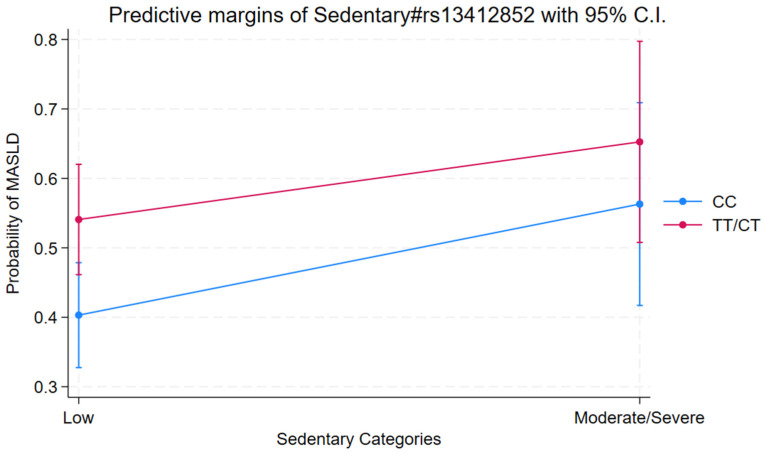 Figure 2
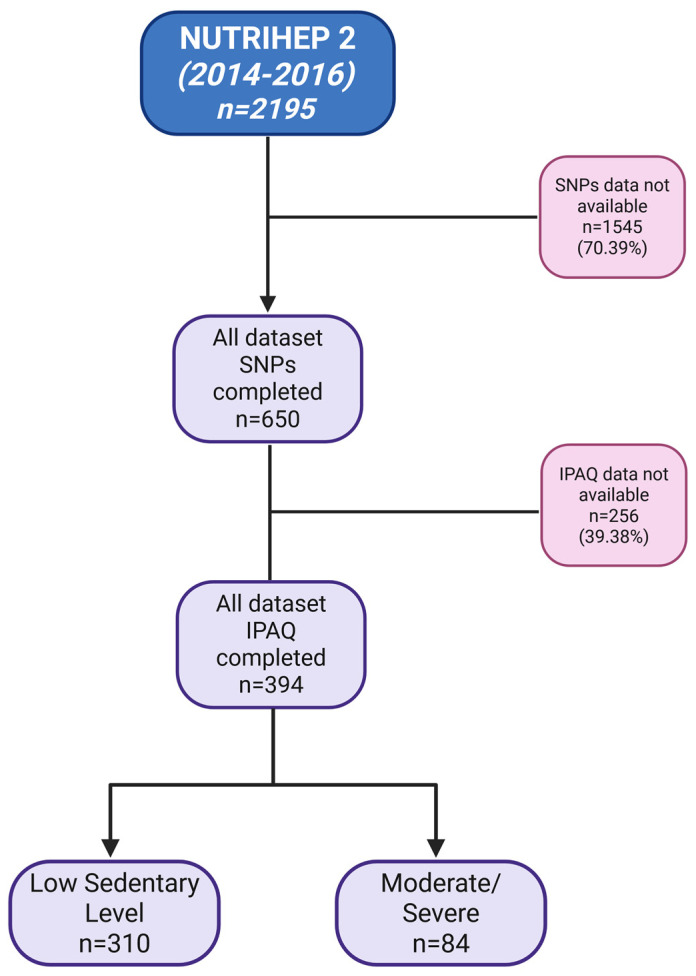 Figure 3
Peer Reviews
No public reviews on file for this paper yet. If you reviewed it on a platform where reviews are public (OpenReview, ICLR, NeurIPS, ICML), you can paste yours below so the community can read it here.
Videos
No videos yet. Explain this paper in a talk, walkthrough, or lecture? Add one.
Taxonomy
TopicsLiver Disease Diagnosis and Treatment · Genetic Associations and Epidemiology · Diabetes, Cardiovascular Risks, and Lipoproteins