Differential Preclinical Efficacy of Combined CDK4/6 and MEK Inhibition in Low-Grade Serous Ovarian Carcinoma Based on KRAS/NF1 Mutational Status
Madison Bittner, Marta Llaurado Fernandez, Joshua Hoenisch, Yuen Yee Leung, Hannah Kim, Nelson K. Y. Wong, Kathleen I. Pishas, Dane Cheasley, Karla J. Cowley, Kaylene J. Simpson, Yen-Yi Lin, Stanislav Volik, Stephane Le Bihan, Colin C. Collins, Martin Köbel, Mark S. Carey

TL;DR
This study explores how combining CDK4/6 and MEK inhibitors can be more effective in treating low-grade serous ovarian carcinoma, depending on genetic mutations.
Contribution
The study identifies KRAS/NF1 mutational status as a key determinant for treatment response to CDK4/6 and MEK inhibitors in LGSOC.
Findings
Abnormal p16 expression is linked to poorer survival in LGSOC patients.
KRAS/NF1-mutant cell lines show increased sensitivity to trametinib.
Combining palbociclib and trametinib shows synergistic effects in wild-type cell lines.
Abstract
Low-grade serous ovarian carcinoma (LGSOC) usually presents in advanced stages and is associated with a high mortality rate. Clinical trials targeting the MAPK and cell cycle pathways in LGSOC have shown promising results for its treatment, however there is a need to improve efficacy and define predictive biomarkers to guide patient selection for treatment using these agents. We therefore evaluated cell cycle protein expression by immunohistochemistry (IHC) in 186 LGSOC cases, and evaluated the efficacy of the MEK inhibitor, trametinib, in combination with the CDK4/6 inhibitor, palbociclib, in preclinical models of LGSOC. Abnormal p16 expression was observed in 20% of primary and 46% of recurrent tumors, and it was associated with poorer survival (log-rank p = 0.005). Notably, cell lines with increased sensitivity to trametinib were more likely to harbor mutations in KRAS or NF1 and…
Genes, proteins, chemicals, diseases, species, mutations and cell lines named across the full text — each resolved to its canonical identifier and authoritative record.
Click any figure to enlarge with its caption.
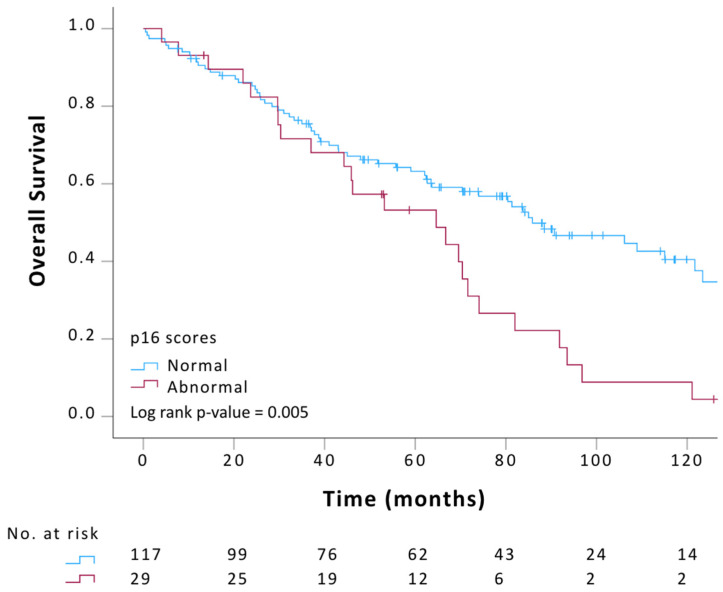 Figure 1
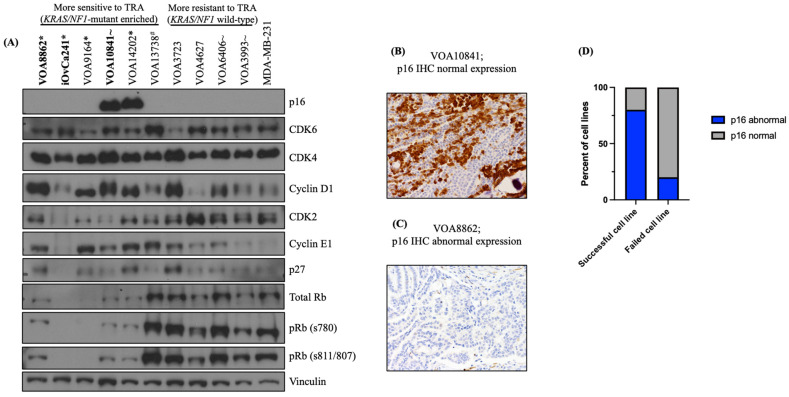 Figure 2
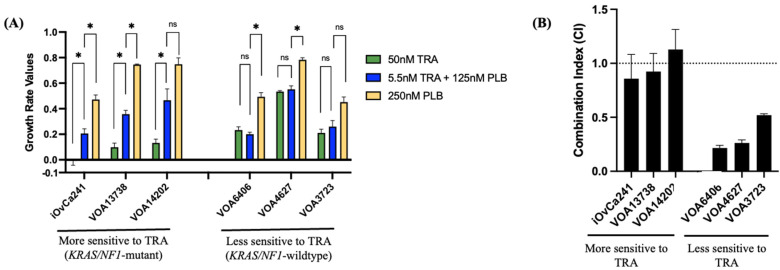 Figure 3
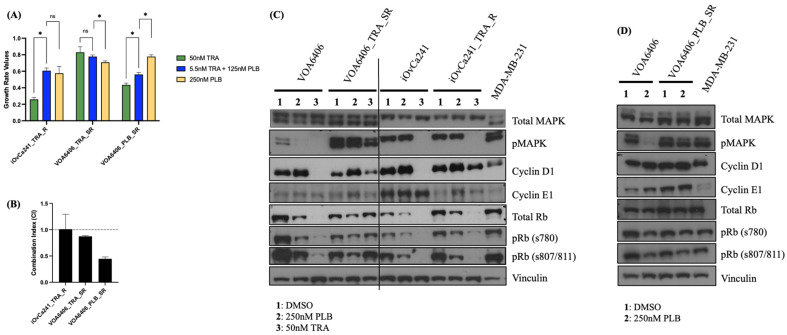 Figure 4
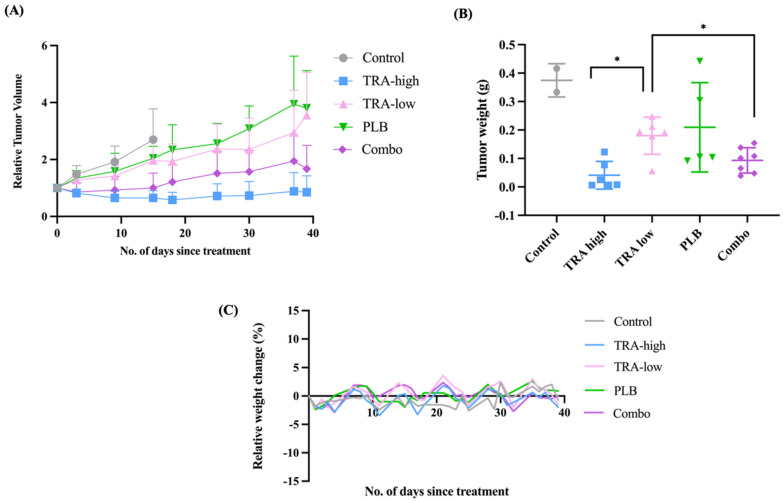 Figure 5
Peer Reviews
No public reviews on file for this paper yet. If you reviewed it on a platform where reviews are public (OpenReview, ICLR, NeurIPS, ICML), you can paste yours below so the community can read it here.
Videos
No videos yet. Explain this paper in a talk, walkthrough, or lecture? Add one.
Taxonomy
TopicsAdvanced Breast Cancer Therapies · Cancer-related Molecular Pathways · Ovarian cancer diagnosis and treatment