Cellulose-Rich Polysaccharide Extracts with Gel-Forming Potential and Improved Antioxidant Properties from Stem (Vitis vinifera L.) By-Products: Ultrasound-Assisted Aqueous Extraction and Characterization
Francesca Comas-Serra, Valeria S. Eim, Rafael Minjares-Fuentes, Víctor M. Rodríguez-González, Antoni Femenia

TL;DR
This study shows how ultrasound-assisted extraction can efficiently recover antioxidant compounds and cellulose-rich gels from grape stems, supporting sustainable and green chemical processes.
Contribution
The novel contribution is the use of ultrasound to efficiently extract antioxidant compounds and gel-forming polysaccharides from grape stems at lower temperatures.
Findings
Ultrasound-assisted extraction increased total phenolics yield by up to 3.1-fold compared to conventional methods.
Extracts contained cellulose-rich polysaccharides with inherent gel-forming potential.
The process reduced extraction times by 3- to over 6-fold while preserving compound integrity.
Abstract
The valorization of wine by-products aligns with circular bioeconomy principles. This study investigates the ultrasound-assisted aqueous extraction (UAE) of bioactive compounds and cell wall polysaccharides from Syrah grape stems (Vitis vinifera L.) to produce polysaccharide extracts with the intrinsic potential to form cellulose-rich gels with enhanced antioxidant properties. Extractions were performed at three temperatures (10, 20, and 50 °C) and three ultrasonic power densities (120, 206, and 337 W/L), and compared to conventional extraction (CE, 200 rpm). The results demonstrated that UAE significantly accelerated the extraction kinetics for total phenolics (TP), flavonols, and antioxidant capacity (ABTS, FRAP), achieving up to a 3.1-fold increase in TP yield at 20 °C. Notably, UAE at 337 W/L and 20 °C produced antioxidant levels equivalent to those obtained by CE at 50 °C, enabling…
Genes, proteins, chemicals, diseases, species, mutations and cell lines named across the full text — each resolved to its canonical identifier and authoritative record.
Click any figure to enlarge with its caption.
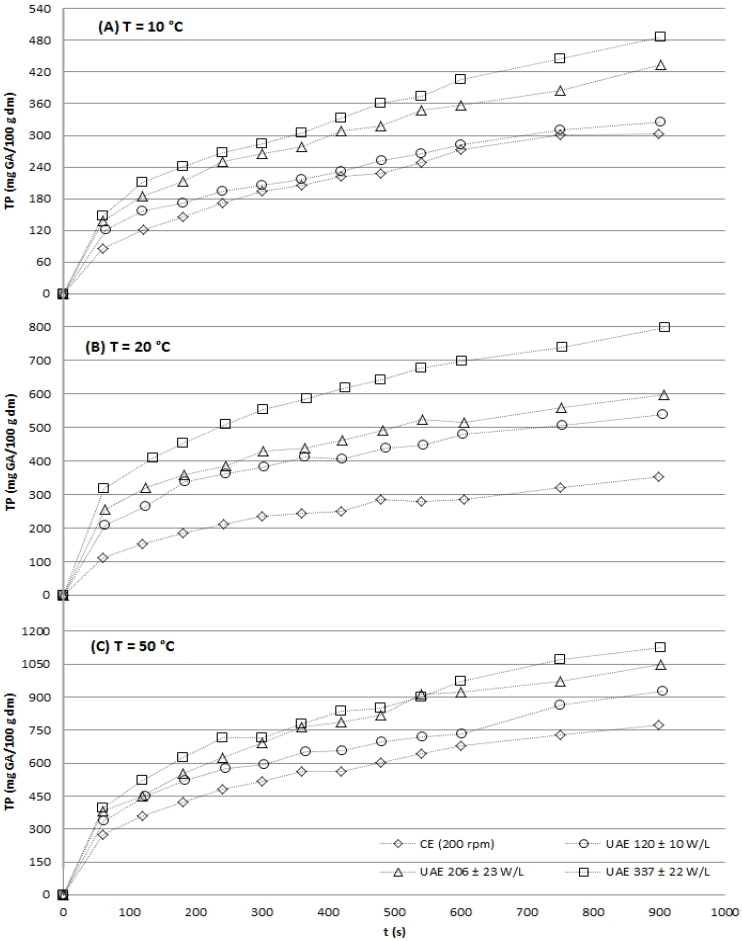 Figure 1
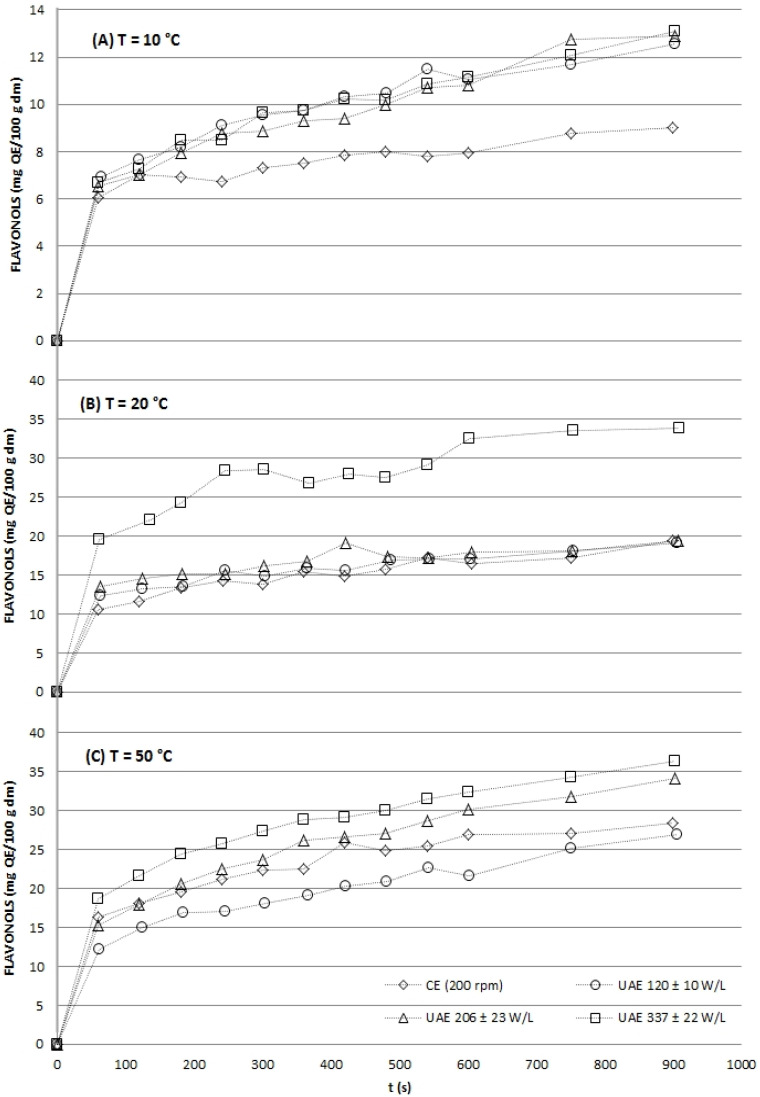 Figure 2
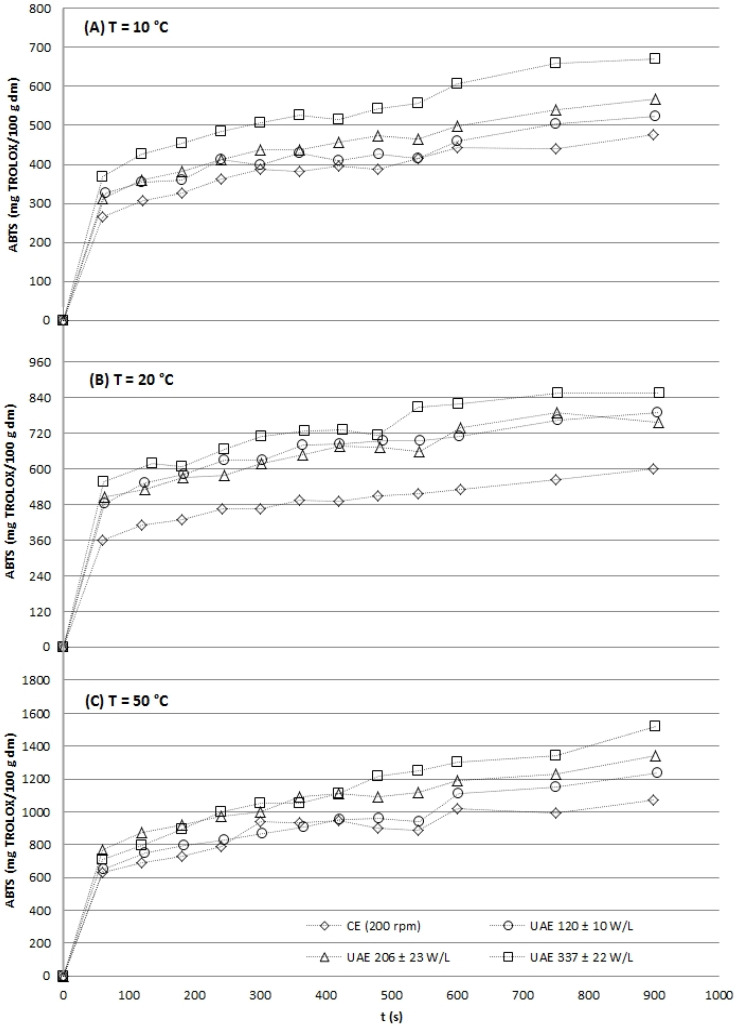 Figure 3
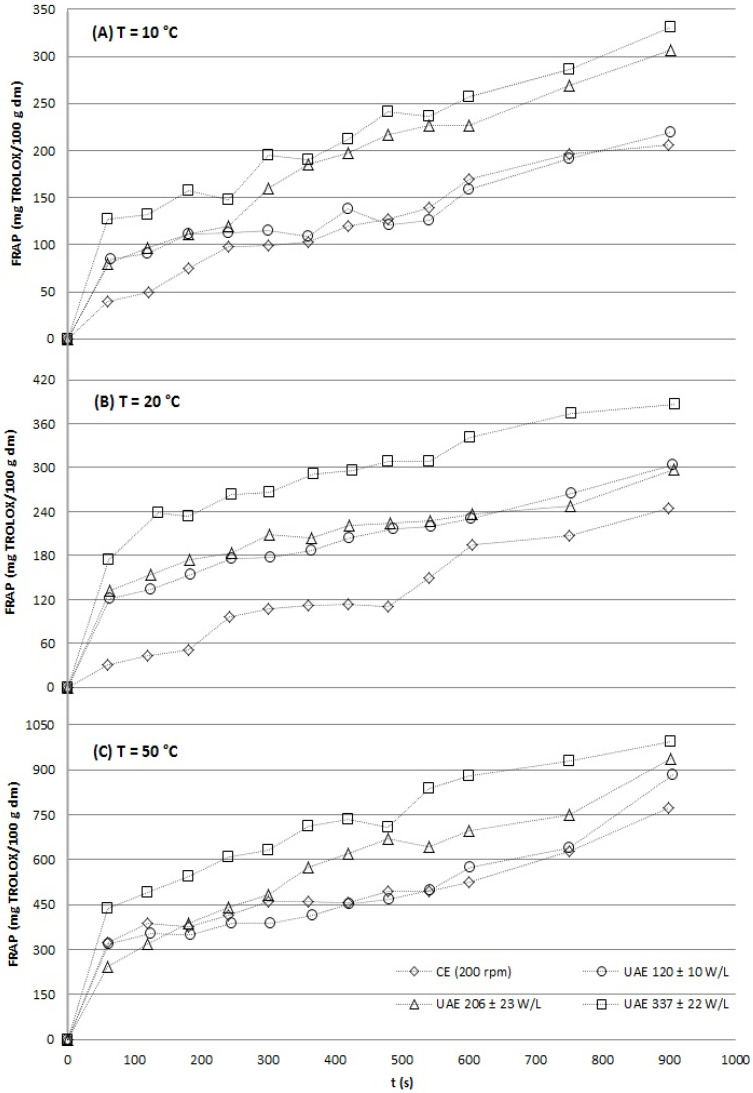 Figure 4
Peer Reviews
No public reviews on file for this paper yet. If you reviewed it on a platform where reviews are public (OpenReview, ICLR, NeurIPS, ICML), you can paste yours below so the community can read it here.
Videos
No videos yet. Explain this paper in a talk, walkthrough, or lecture? Add one.
Taxonomy
TopicsPolysaccharides and Plant Cell Walls · Polysaccharides Composition and Applications · Fermentation and Sensory Analysis