A Test of the Adaptive Lag Hypothesis of the Evolution of Cancer Suppression and Lifespan in Dog Breeds
Jack da Silva

TL;DR
Larger modern dog breeds may have shorter lifespans due to a lag in evolving cancer suppression, compared to ancient breeds of similar size.
Contribution
This study provides empirical evidence supporting the adaptive lag hypothesis in dog breeds.
Findings
Ancient breeds have longer lifespans and smaller litters than modern breeds of the same size.
Ancient breeds show a significant departure from the expected increase in cancer mortality with weight.
Findings align with the adaptive lag hypothesis of cancer suppression evolution.
Abstract
Background/Objectives: The well-established inverse relationship between lifespan and weight across dog breeds has been associated with higher cancer mortality in larger breeds. However, Peto’s paradox implies that larger-bodied species experience lower-than-expected rates of cancer mortality because of higher levels of cancer suppression. Therefore, it has been hypothesised that recently established large dog breeds experience high cancer mortality because of a lag in their evolution of cancer suppression. This “adaptive lag hypothesis” predicts that ancient breeds, which have had more time to evolve optimal cancer suppression, exhibit lower cancer mortality rates, longer lifespans, and smaller litter sizes (a cost of cancer suppression) compared to modern breeds of the same size. Methods: The adaptive lag hypothesis is tested here by comparing ancient and modern breeds defined by…
Genes, proteins, chemicals, diseases, species, mutations and cell lines named across the full text — each resolved to its canonical identifier and authoritative record.
Click any figure to enlarge with its caption.
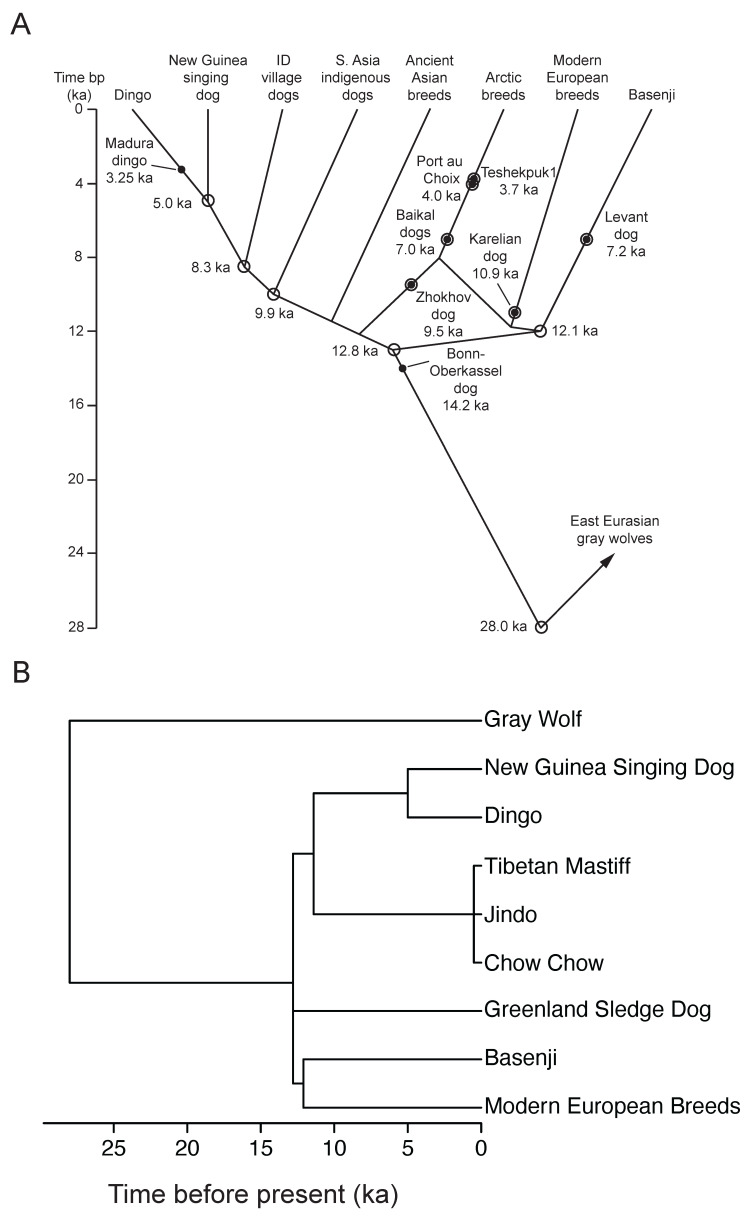 Figure 1
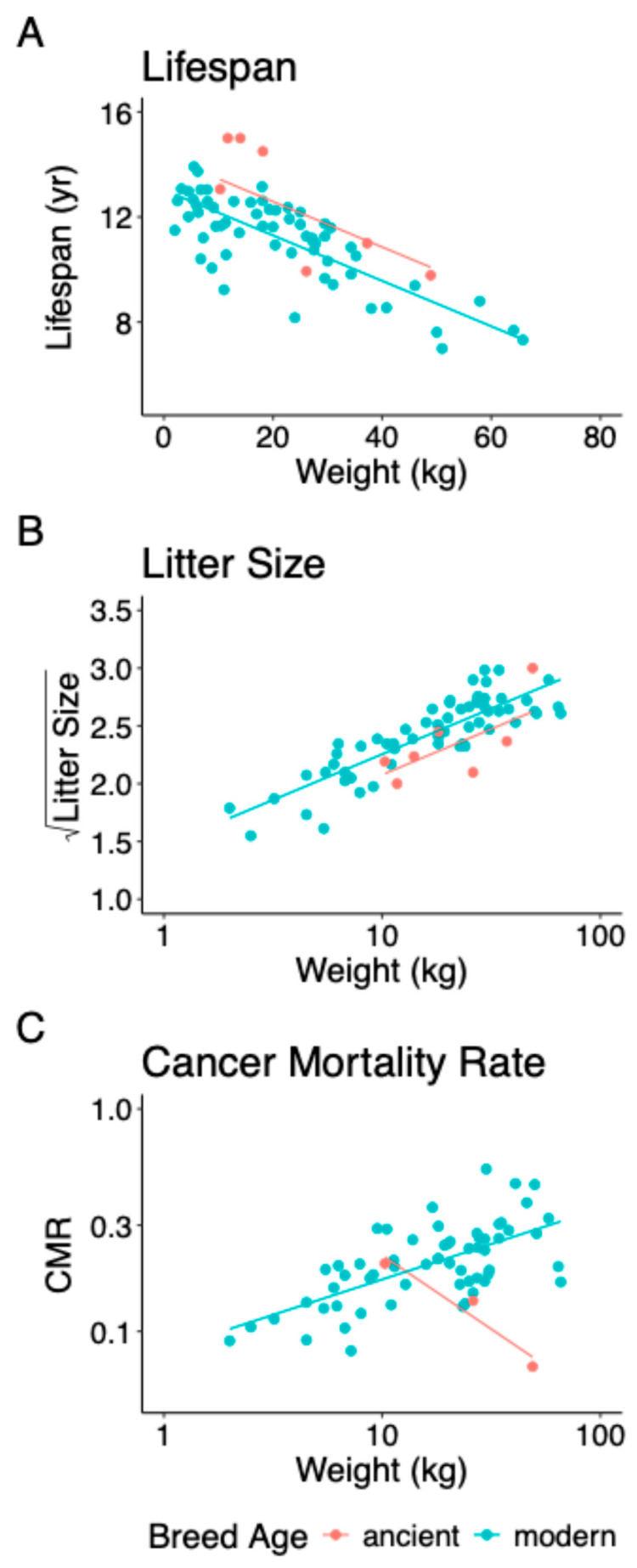 Figure 2
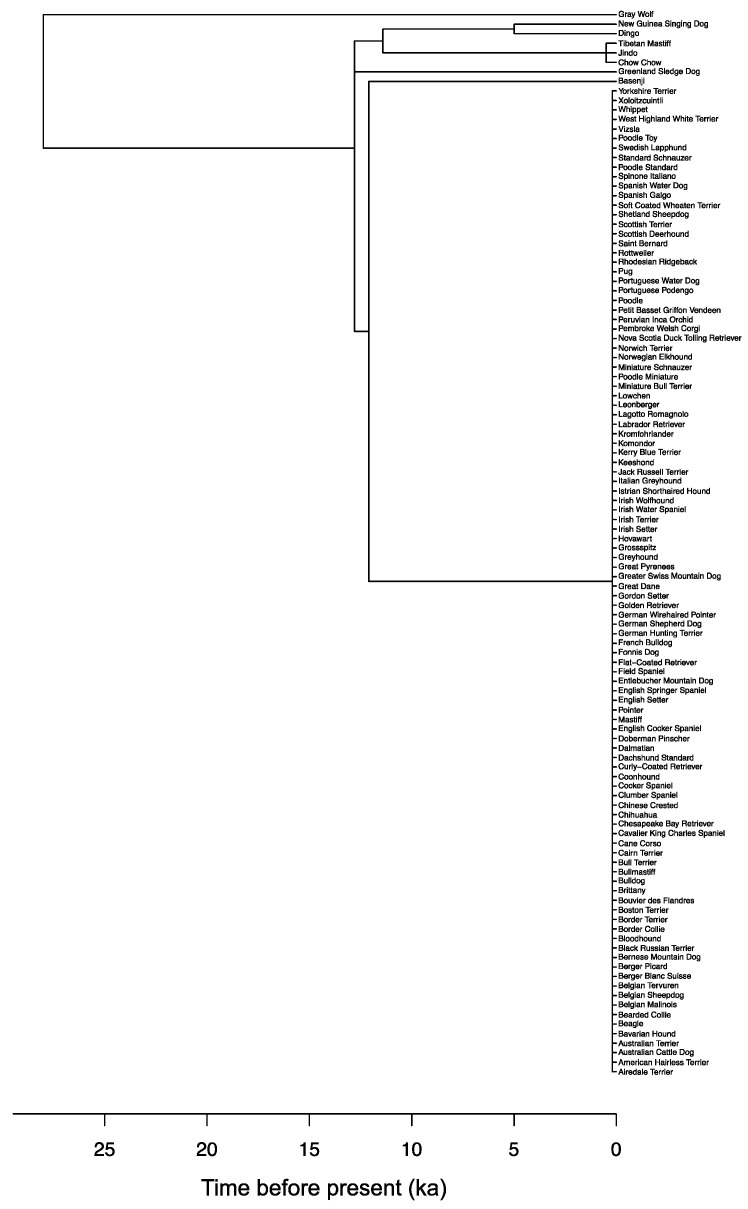 Figure 3
Peer Reviews
No public reviews on file for this paper yet. If you reviewed it on a platform where reviews are public (OpenReview, ICLR, NeurIPS, ICML), you can paste yours below so the community can read it here.
Videos
No videos yet. Explain this paper in a talk, walkthrough, or lecture? Add one.
Taxonomy
TopicsHuman-Animal Interaction Studies · Veterinary Oncology Research · Veterinary Medicine and Surgery