Pheromone-Mediated Social Organization and Pest Management of the Red Imported Fire Ant, Solenopsis invicta: A Review
Mengbo Guo, Nazakat Osman, Shunhai Yu, Junyan Liu, Yiping Wang, Jianyu Deng

TL;DR
This paper reviews how pheromones control the social behavior of fire ants and how this knowledge can be used to develop better pest management strategies.
Contribution
The paper integrates chemical ecology, neurobiology, and pest management to highlight novel directions for sustainable fire ant control.
Findings
Pheromones regulate key social behaviors like foraging and reproduction in fire ants.
Pheromone-based baits and trail disruption show promise but face practical limitations.
Current gaps include incomplete pheromone characterization and challenges in field application.
Abstract
The red imported fire ant, Solenopsis invicta, is one of the most aggressive invasive insects worldwide, causing economic and ecological damage. Their invasion success relies heavily on an efficient pheromone signaling system that regulates collective behaviors, including foraging, defense, nursing, and reproduction. This review summarizes current knowledge on how different pheromones regulate social organization and collective behaviors and discusses their potential applications in pest management, including pheromone-enhanced baits and behavioral disruption strategies. Current research gaps, challenges, and future directions are discussed to inform the development of more targeted, efficient, and sustainable pest management strategies. Pheromone-mediated chemical communication plays a central role in shaping the social organization and ecological success of S. invicta, a globally…
Genes, proteins, chemicals, diseases, species, mutations and cell lines named across the full text — each resolved to its canonical identifier and authoritative record.
Click any figure to enlarge with its caption.
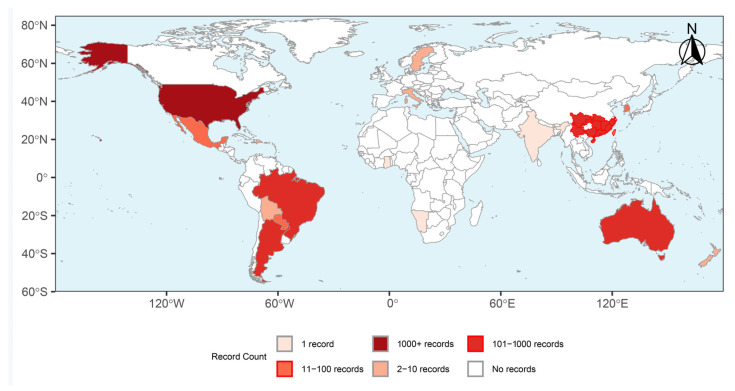 Figure 1
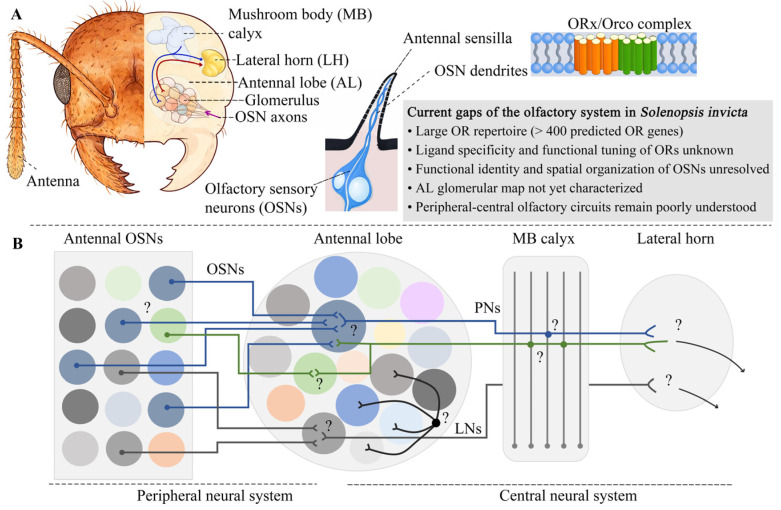 Figure 2
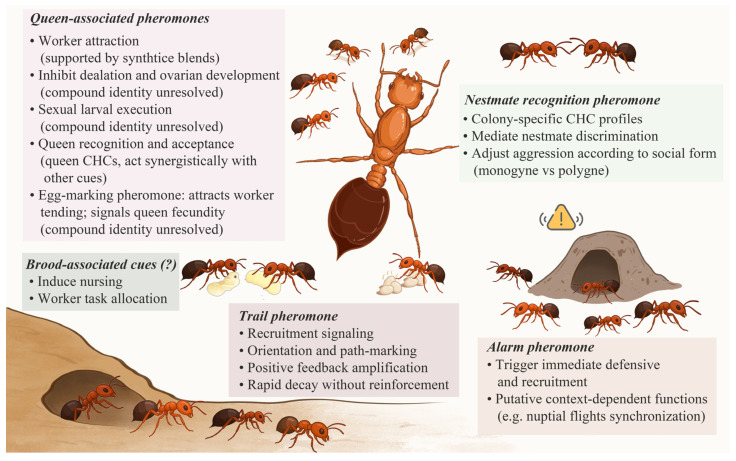 Figure 3
Peer Reviews
No public reviews on file for this paper yet. If you reviewed it on a platform where reviews are public (OpenReview, ICLR, NeurIPS, ICML), you can paste yours below so the community can read it here.
Videos
No videos yet. Explain this paper in a talk, walkthrough, or lecture? Add one.
Taxonomy
TopicsInsect and Arachnid Ecology and Behavior · Neurobiology and Insect Physiology Research · Hemiptera Insect Studies