Circulating Clues in Ménière’s Disease: Elevated Cell-Free DNA and a Pro-Inflammatory Signature in Patients’ Blood
Marijana Sekulic, Swethiny Kobivasan, Stavros Giaglis, Daniel Bodmer, Vesna Petkovic

TL;DR
This study finds elevated cell-free DNA and inflammation in Ménière’s disease patients, suggesting a role in damaging inner ear blood barriers.
Contribution
The study identifies cell-free DNA and specific inflammatory markers as contributors to endothelial injury in Ménière’s disease.
Findings
MD patient plasma elevates cfDNA levels and impairs endothelial barrier function in vitro.
Exposure to MD plasma causes cytotoxic effects and glycocalyx degradation in endothelial cells.
DNase I reverses some effects, suggesting extracellular DNA drives vascular damage in MD.
Abstract
Ménière’s disease (MD) is thought to involve dysfunction of the blood–labyrinth barrier, but circulating mechanisms of endothelial injury remain poorly understood. The present study investigated whether cell-free DNA (cfDNA) and inflammatory mediators in plasma contribute to vascular stress and barrier disruption in MD. cfDNA levels were significantly elevated in plasma from patients compared with plasma from healthy controls. Exposure of primary human stria vascularis endothelial cell monolayers to plasma from MD patients led to decreased transepithelial electrical resistance and a significant increase in FITC-dextran permeability, indicating impaired barrier function. MD plasma also induced higher lactate dehydrogenase release and pronounced F-actin disorganization with reduced syndecan-1 expression, consistent with endothelial cytotoxicity and glycocalyx degradation. DNase I…
Genes, proteins, chemicals, diseases, species, mutations and cell lines named across the full text — each resolved to its canonical identifier and authoritative record.
Click any figure to enlarge with its caption.
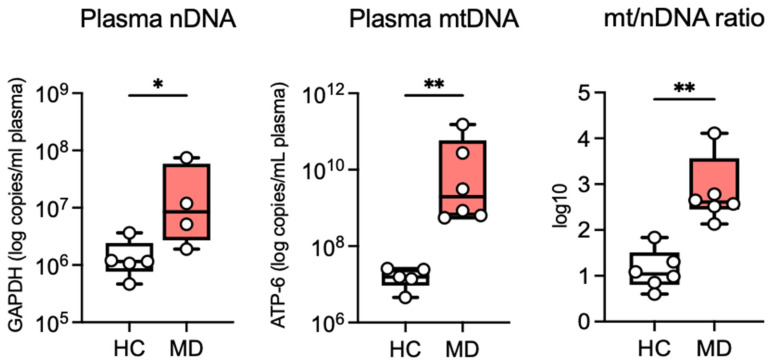 Figure 1
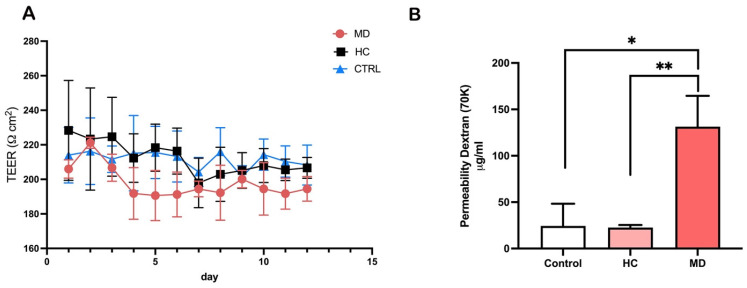 Figure 2
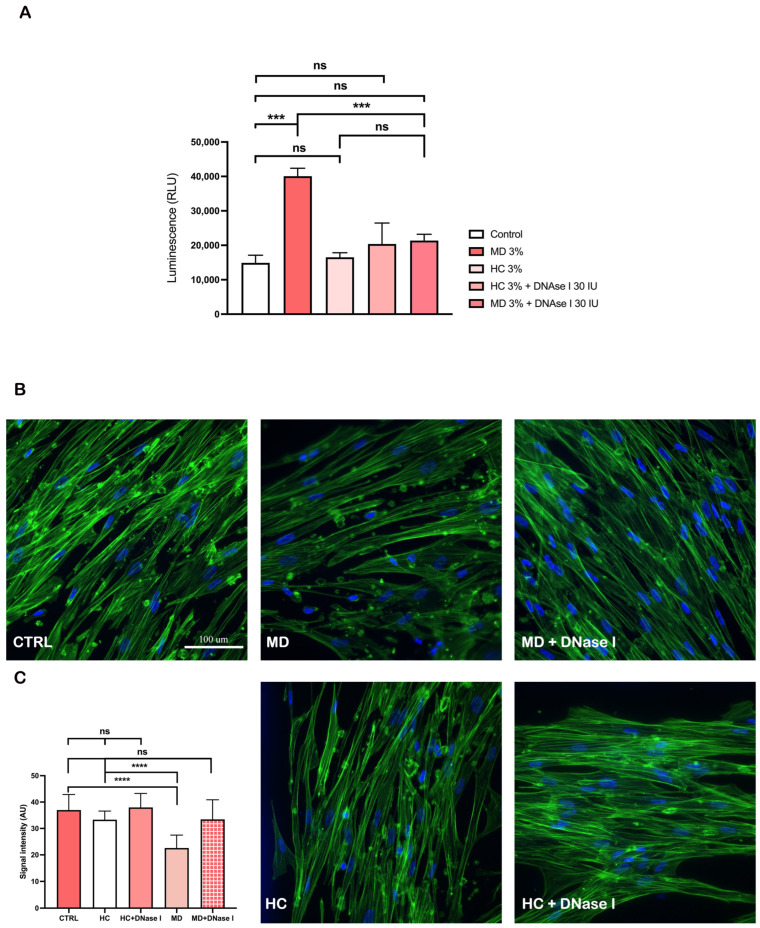 Figure 3
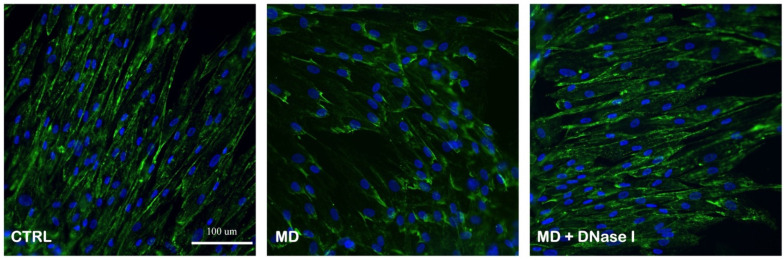 Figure 4
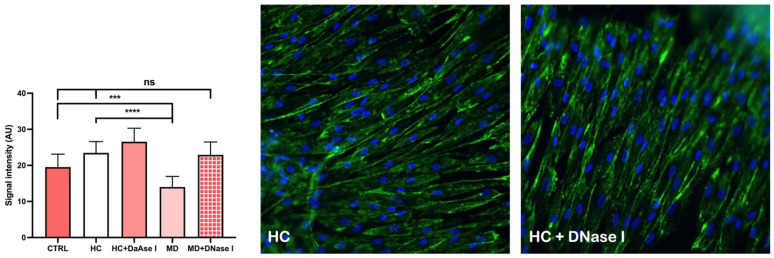 Figure 5
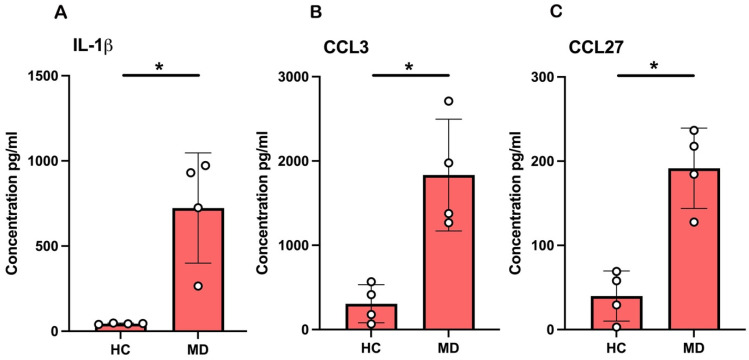 Figure 6
Peer Reviews
No public reviews on file for this paper yet. If you reviewed it on a platform where reviews are public (OpenReview, ICLR, NeurIPS, ICML), you can paste yours below so the community can read it here.
Videos
No videos yet. Explain this paper in a talk, walkthrough, or lecture? Add one.
Taxonomy
TopicsVestibular and auditory disorders · Barrier Structure and Function Studies · Glaucoma and retinal disorders