Tissue IL-6/LIF/LIFR and CXCL9 Expression Correlates with High-Risk NBI Patterns and Squamous Cell Carcinoma in Vocal Fold Lesions
Magda Barańska, Katarzyna Taran, Wioletta Pietruszewska

TL;DR
This study finds that specific tissue markers correlate with high-risk NBI patterns and SCC in vocal fold lesions, potentially improving preoperative risk assessment.
Contribution
The study identifies novel associations between IL-6/LIF/LIFR and CXCL9 expression and high-risk NBI patterns in vocal fold lesions.
Findings
Ni ≥ 4 was the strongest independent predictor of SCC with high diagnostic accuracy.
LIF and LIFR expression decreased with higher histopathological severity and NBI risk categories.
CXCL9 increased with more suspicious NBI patterns, suggesting a complementary role in SCC risk stratification.
Abstract
Laryngeal squamous cell carcinoma (SCC) remains a major clinical challenge due to substantial mortality and limited preoperative risk stratification. Narrow-Band Imaging (NBI) enables real-time visualization of mucosal microvasculature, yet the molecular correlates of high-risk NBI phenotypes in vocal fold lesions are incompletely defined. In a prospective cohort of 145 patients with vocal fold lesions, NBI microvascular patterns were graded using the Ni classification and dichotomized using a pre-specified high-risk threshold (Ni ≥ 4 vs. Ni ≤ 3). Histopathology was classified according to WHO 2017. Epithelial expression of IL-6, LIF, LIFR and CXCL9 was quantified by immunohistochemistry using the immunoreactive score (IRS). Associations were tested using non-parametric methods and logistic regression, and diagnostic performance was assessed by ROC analysis. SCC was diagnosed in 63/145…
Genes, proteins, chemicals, diseases, species, mutations and cell lines named across the full text — each resolved to its canonical identifier and authoritative record.
Click any figure to enlarge with its caption.
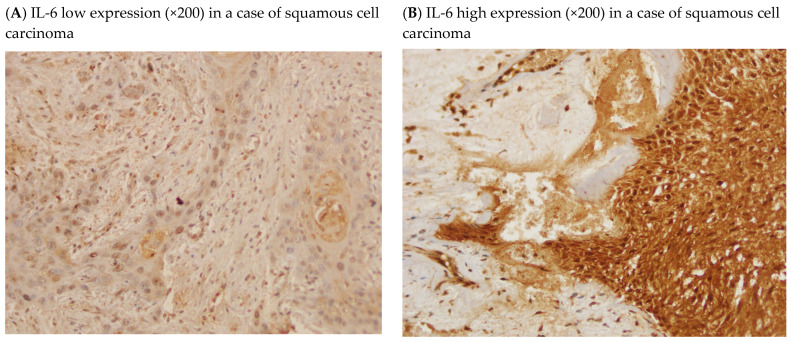 Figure 1
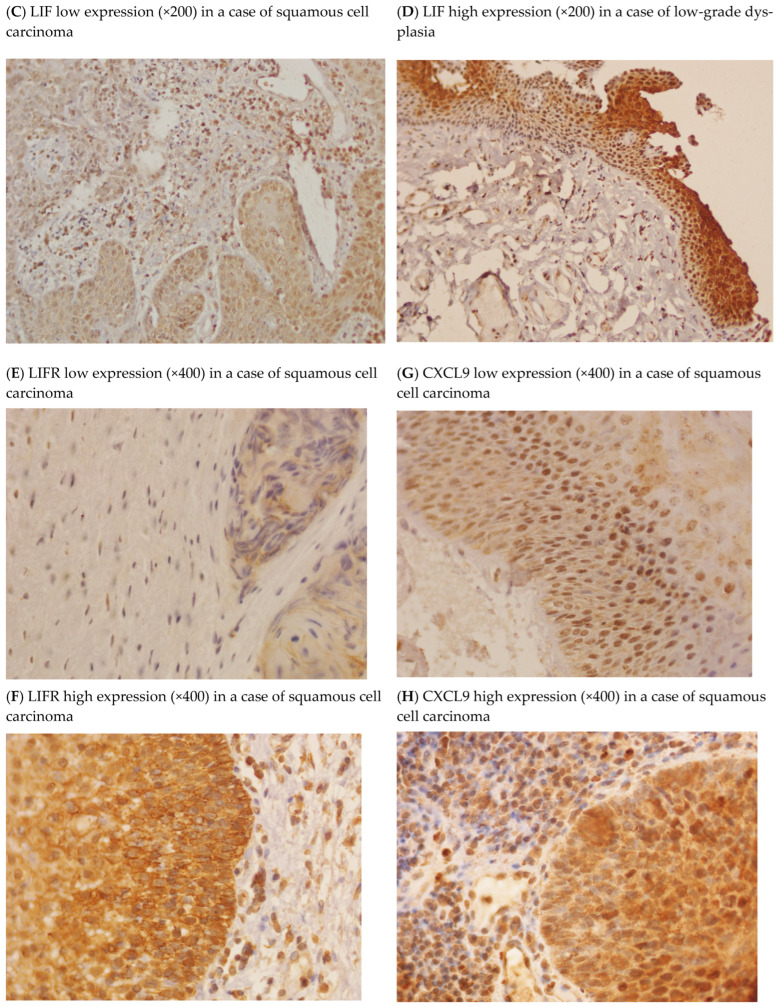 Figure 2
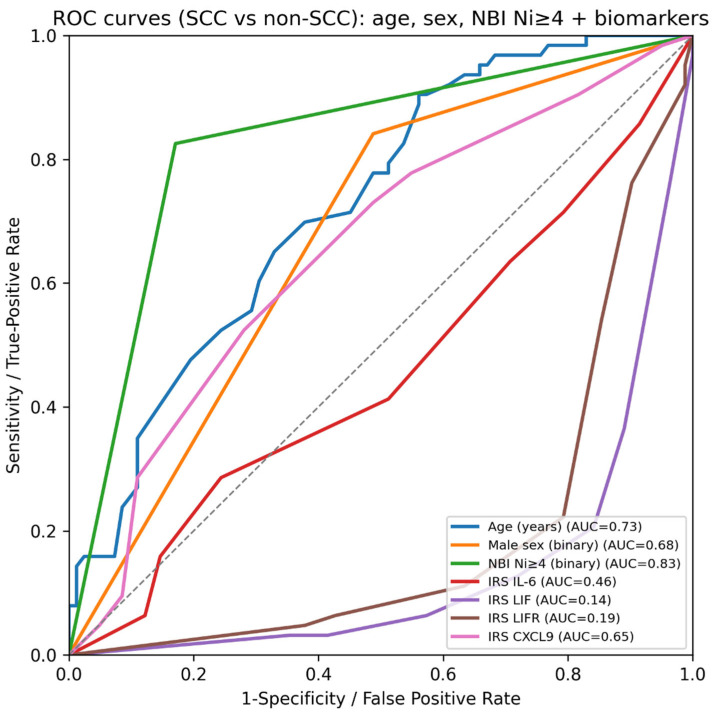 Figure 3
Peer Reviews
No public reviews on file for this paper yet. If you reviewed it on a platform where reviews are public (OpenReview, ICLR, NeurIPS, ICML), you can paste yours below so the community can read it here.
Videos
No videos yet. Explain this paper in a talk, walkthrough, or lecture? Add one.
Taxonomy
TopicsHead and Neck Cancer Studies · Voice and Speech Disorders · Esophageal Cancer Research and Treatment