Molecular Profiling of Polish Pediatric Patients with Epilepsy: A Single-Center Diagnostic Experience Using Next-Generation Sequencing
Beata Chałupczyńska, Elżbieta Ciara, Paulina Halat-Wolska, Agnieszka Pollak, Piotr Stawiński, Dorota Jurkiewicz, Dorota Piekutowska-Abramczuk, Marzena Gawlik, Justyna Pietrasik, Agata Cieślikowska, Dorota Wicher, Agata Ulatowska, Dominika Jedlińska, Julita Borkowska

TL;DR
This study used next-generation sequencing to identify genetic causes of epilepsy in 87 Polish children, finding 88 pathogenic variants in 48 genes, with SCN1A and KCNQ2 being the most common.
Contribution
The study provides a detailed molecular profile of pediatric epilepsy in a Polish cohort using NGS, highlighting genetic heterogeneity and diagnostic utility.
Findings
88 pathogenic or likely pathogenic variants were identified in 48 epilepsy-related genes across 87 patients.
SCN1A and KCNQ2 were the most frequently mutated genes, contributing to 12.6% and 9.2% of cases, respectively.
Developmental and epileptic encephalopathy (DEE) had the highest diagnostic yield at 48%.
Abstract
Introduction: Epilepsy syndromes show marked clinical and genetic heterogeneity, with numerous functionally diverse genes involved in their etiology. Next-generation sequencing (NGS) has facilitated the identification of many monogenic epilepsy syndromes and enables earlier, more accurate diagnosis in pediatric patients. Materials and Methods: This study analyzes the molecular profiles of 87 pediatric patients with various forms of epilepsy in whom pathogenic or likely pathogenic variants were identified. Next-generation sequencing (NGS) using multi-gene epilepsy panels or whole-exome sequencing (WES) was performed. Results: A total of 88 pathogenic or likely pathogenic variants were detected in 48 epilepsy-related genes; 30 variants occurred de novo. SCN1A and KCNQ2 were the most frequent contributors (12.6% and 9.2%, respectively). The highest percentage of positive diagnoses (48%)…
Genes, proteins, chemicals, diseases, species, mutations and cell lines named across the full text — each resolved to its canonical identifier and authoritative record.
Click any figure to enlarge with its caption.
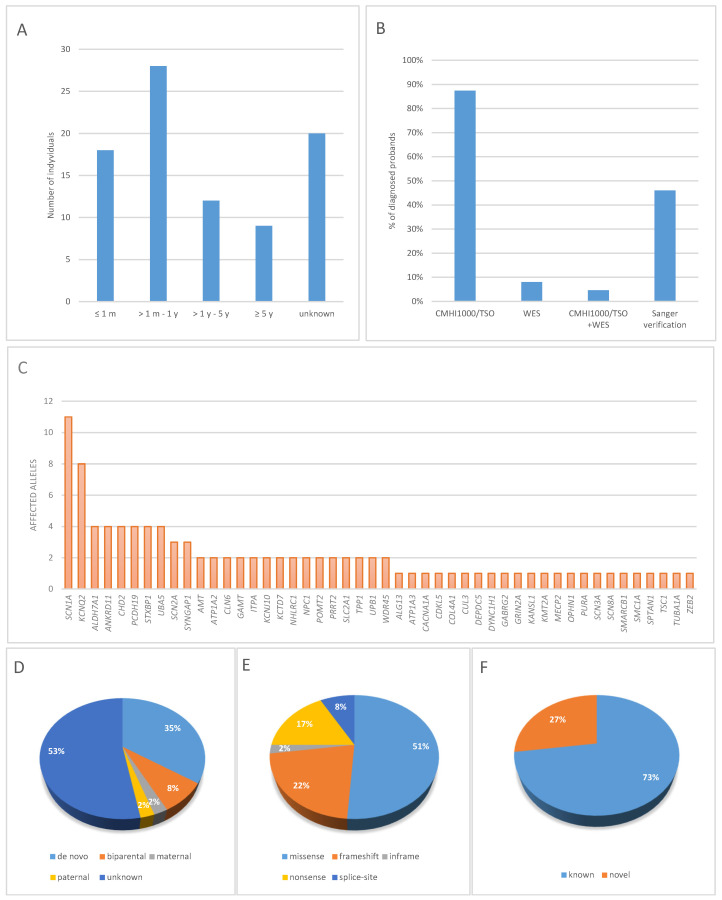 Figure 1
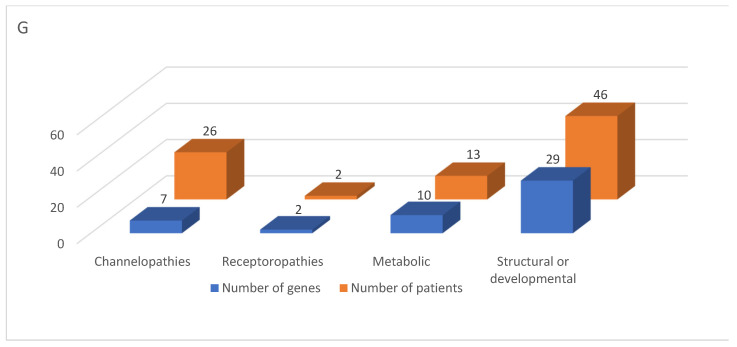 Figure 2
Peer Reviews
No public reviews on file for this paper yet. If you reviewed it on a platform where reviews are public (OpenReview, ICLR, NeurIPS, ICML), you can paste yours below so the community can read it here.
Videos
No videos yet. Explain this paper in a talk, walkthrough, or lecture? Add one.
Taxonomy
TopicsGenomics and Rare Diseases · Epilepsy research and treatment · Genetics and Neurodevelopmental Disorders