Resolution of long-term severe irritable bowel syndrome following fecal microbiota transplantation: A case report and microbiota analysis
Elena Montenegro-Borbolla, Jeanine Wakim El-Khoury, Claire Bertelli, Alain Schoepfer, Benoît Guery, Tatiana Galperine

TL;DR
A woman with long-term severe IBS saw significant symptom improvement after fecal microbiota transplantation, which helped restore a healthier gut microbiome.
Contribution
This case report demonstrates the effectiveness of fecal microbiota transplantation in resolving severe, treatment-resistant IBS through microbiota restoration.
Findings
The patient's gastrointestinal symptoms significantly improved one month after FMT and remained better after a year.
16S rRNA analysis showed a 90% genus-level taxonomic overlap between the patient and donor, with enrichment of beneficial gut commensals.
Elimination of IBS-associated genera in the patient's microbiota likely contributed to her recovery.
Abstract
The diagnosis and management of irritable bowel syndrome (IBS) is challenging due to its complex symptoms and inconsistent treatment responses. Given the important role of gut microbiota in gastrointestinal health, fecal microbiota transplantation (FMT) is a promising intervention. We describe the case of a 55-y-old woman without prior gastrointestinal issues who, following severe depression, developed multiple gastrointestinal symptoms, including abdominal pain, fluctuating bowel habits, and a persistent burning sensation in her mouth and upper gastrointestinal tract. At Lausanne University Hospital, she was diagnosed with IBS resistant to multiple lines of treatment and a multidisciplinary team proposed multiple oral FMTs. One-month post-FMT, her gastrointestinal symptoms significantly improved and remained better after a year, with only the burning sensation persisting. Analysis of…
Genes, proteins, chemicals, diseases, species, mutations and cell lines named across the full text — each resolved to its canonical identifier and authoritative record.
Click any figure to enlarge with its caption.
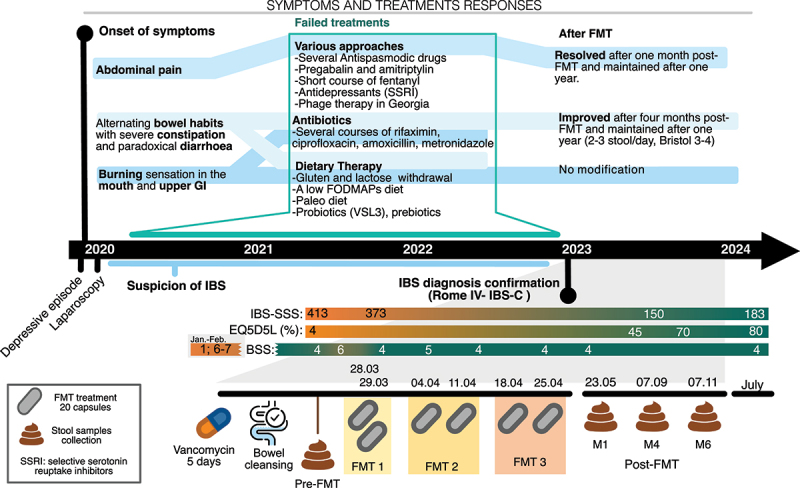 Figure 1
 Figure 2
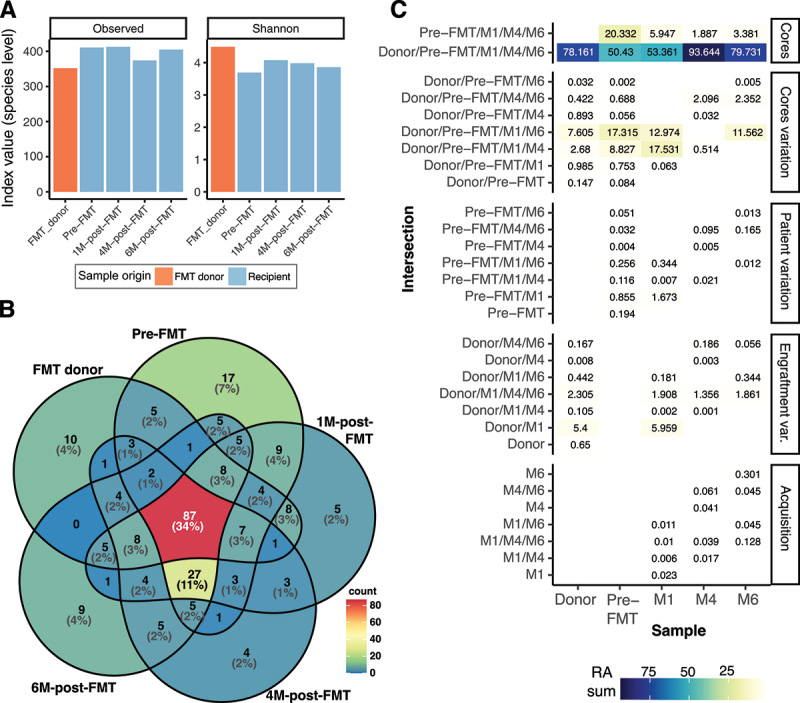 Figure 3
 Figure 4
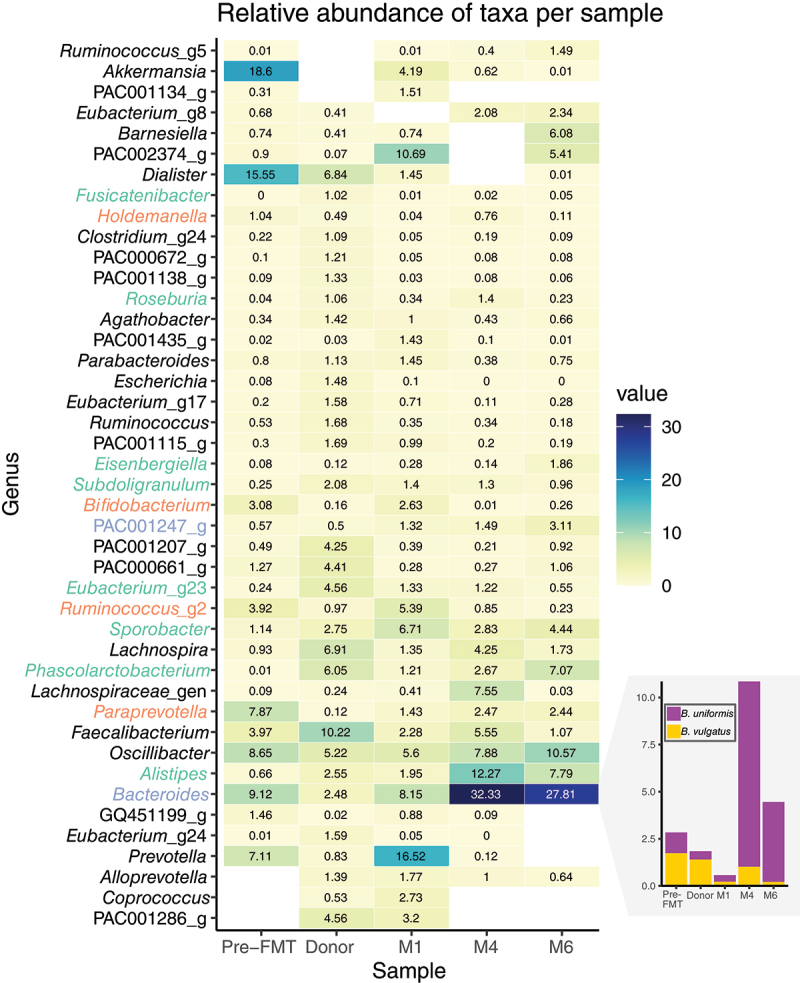 Figure 5
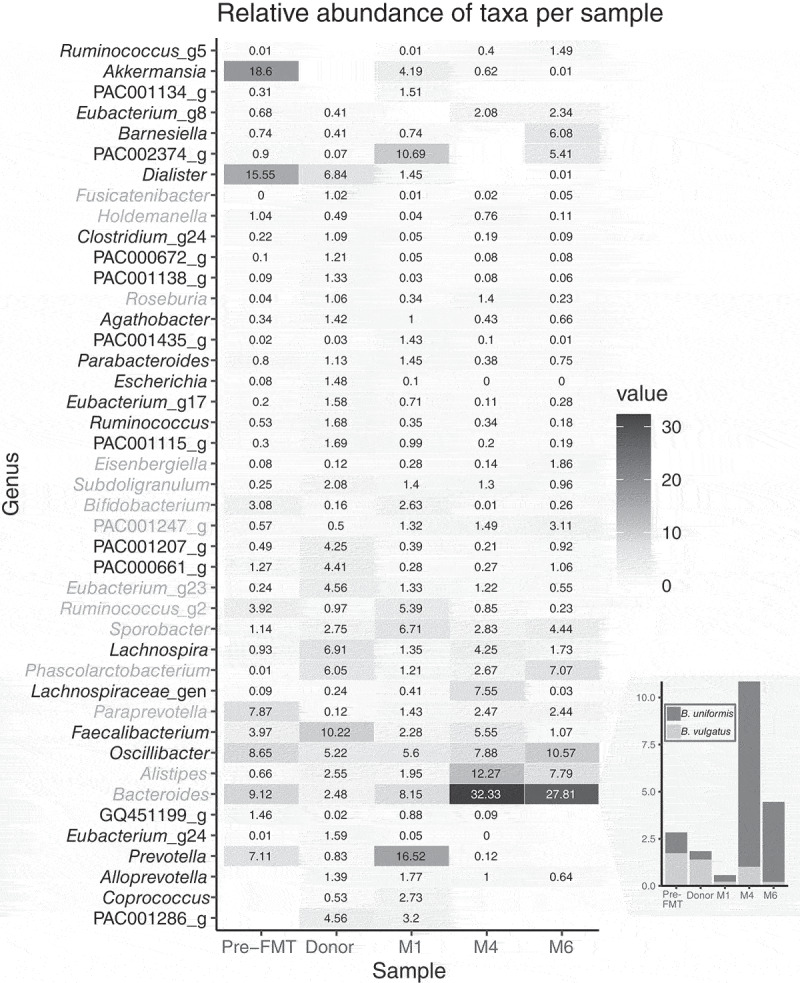 Figure 6
Peer Reviews
No public reviews on file for this paper yet. If you reviewed it on a platform where reviews are public (OpenReview, ICLR, NeurIPS, ICML), you can paste yours below so the community can read it here.
Videos
No videos yet. Explain this paper in a talk, walkthrough, or lecture? Add one.
Taxonomy
TopicsGastrointestinal motility and disorders · Clostridium difficile and Clostridium perfringens research · Helicobacter pylori-related gastroenterology studies