Impella preserves haemodynamics with adequate stressed blood volume and normal pulmonary vascular resistance in a goat model of ventricular fibrillation
Shohei Yokota, Takaaki Maruhashi, Midori Kakuuchi, Takuya Nishikawa, Hiroki Matsushita, Hidetaka Morita, Kei Sato, Yuki Yoshida, Toru Kawada, Kazunori Uemura, Tomohiro Nishinaka, Keita Saku

TL;DR
The Impella device helps maintain blood flow to vital organs during ventricular fibrillation in goats when blood volume and lung resistance are normal.
Contribution
This study demonstrates that the Impella device can preserve systemic and cerebral blood flow during ventricular fibrillation in a controlled goat model.
Findings
Impella support increased arterial pressure in a dose-dependent manner during ventricular fibrillation.
Impella partially maintained pulmonary artery, carotid artery, and coronary flows during ventricular fibrillation.
The device preserved blood flow with adequate stressed blood volume and normal pulmonary vascular resistance.
Abstract
Ventricular fibrillation (VF) is a frequent and life-threatening complication of acute myocardial infarction. Although the Impella device provides circulatory support solely to the left ventricle (LV), emerging reports have suggested that it may partially maintain haemodynamics even during VF. This study sought to examine this phenomenon under controlled experimental conditions. In eight Saanen goats, we recorded right atrial pressure (RAP), left atrial pressure (LAP), arterial pressure (AP), LV pressure, pulmonary artery flow (PAF), carotid artery flow (CAF), and coronary flow (CoF). We inserted an Impella CP and induced VF using direct current. In Protocol 1, we changed the stressed blood volume (SBV) by blood withdrawal/infusion or pulmonary vascular resistance (PVR) by pulmonary microembolisation and measured the haemodynamics during VF with Impella P4 support (n = 1 each). In…
Genes, proteins, chemicals, diseases, species, mutations and cell lines named across the full text — each resolved to its canonical identifier and authoritative record.
Click any figure to enlarge with its caption.
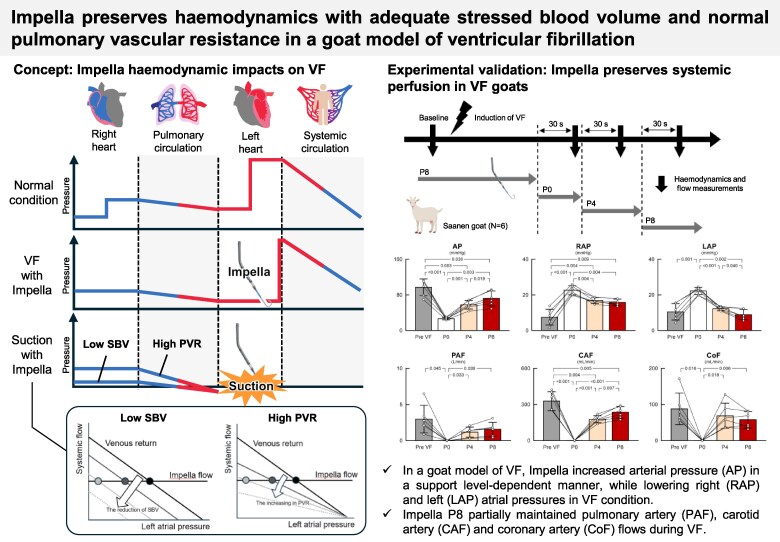 Figure 1
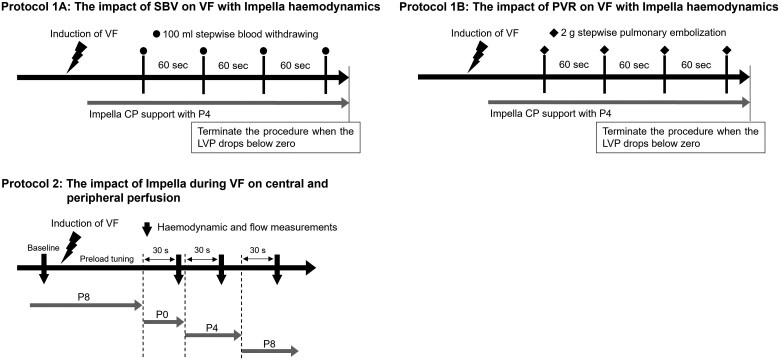 Figure 2
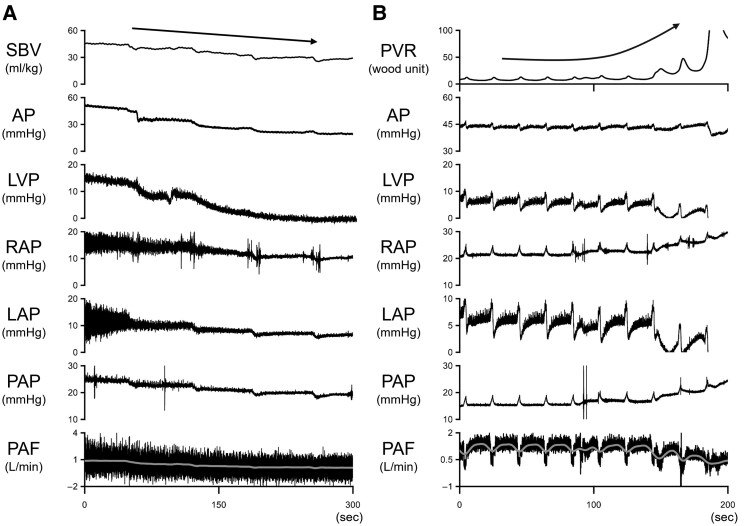 Figure 3
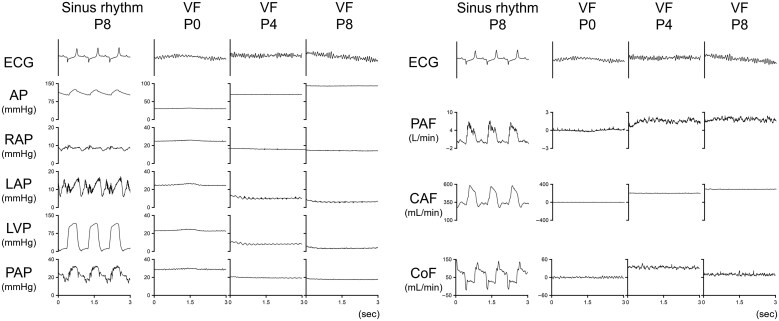 Figure 4
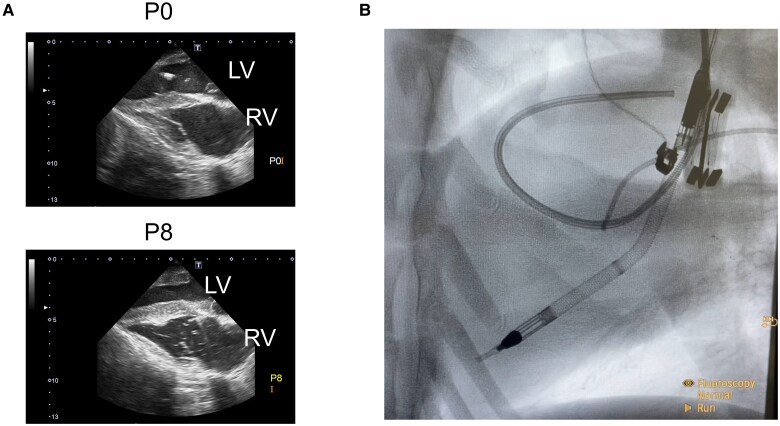 Figure 5
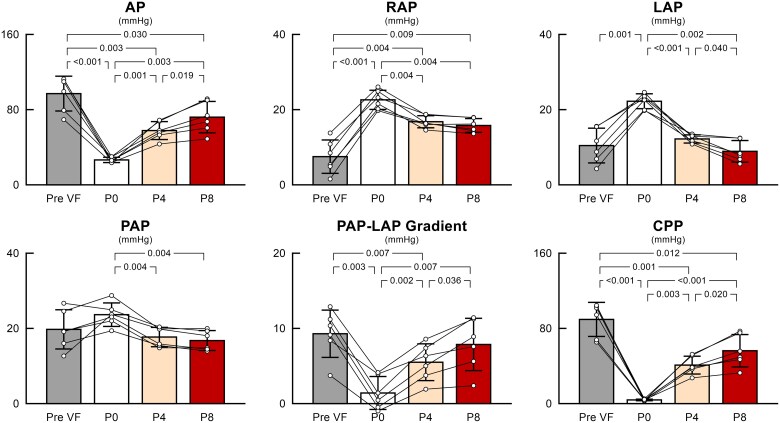 Figure 6
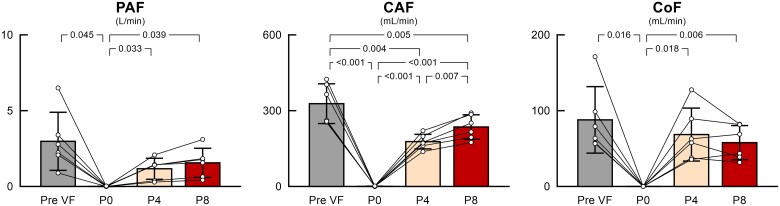 Figure 7
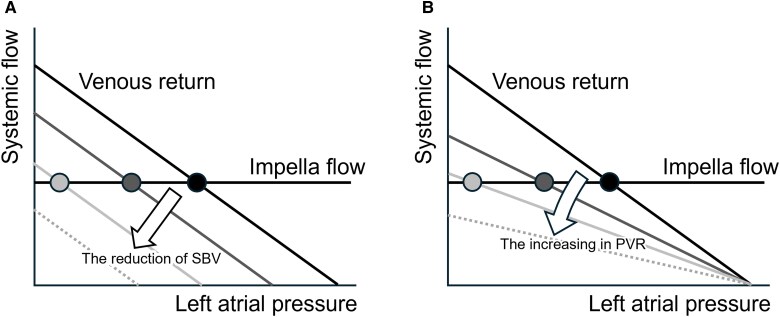 Figure 8
Peer Reviews
No public reviews on file for this paper yet. If you reviewed it on a platform where reviews are public (OpenReview, ICLR, NeurIPS, ICML), you can paste yours below so the community can read it here.
Videos
No videos yet. Explain this paper in a talk, walkthrough, or lecture? Add one.
Taxonomy
TopicsCardiac electrophysiology and arrhythmias · Mechanical Circulatory Support Devices · Cardiovascular Function and Risk Factors