Evaluation of artificial intelligence-based electrocardiogram analysis tools in patients with hypertrophic cardiomyopathy
Gamze Babur Guler, Arda Guler, Ozgur Surgit, Irem Turkmen, Sezgin Atmaca, Hasan Sahin, Dilara Pay, Muayad Almasri, Gizemnur Coskun, Utku Yartasi, Dogukan Salduz, Busra Kuru Gorgulu, Sinem Aydin, Nail Guven Serbest, Aysel Turkvatan Cansever, Ibrahim Halil Tanboga

TL;DR
AI tools for analyzing ECGs show limited accuracy in patients with hypertrophic cardiomyopathy, suggesting the need for disease-specific validation.
Contribution
This study evaluates AI ECG tools specifically in patients with hypertrophic cardiomyopathy, revealing their limited performance in this population.
Findings
AI-calculated HCM probabilities were uniformly distributed, with only 41.2% above 50% and 12.5% above 75%.
HCM probabilities were higher in patients with abnormal ECGs and correlated with disease severity markers.
SHD probabilities were generally higher, with 51.2% above 50% and 25% above 75%.
Abstract
Artificial intelligence (AI)-based electrocardiogram (ECG) analysis tools have shown promise in detecting various cardiac conditions. However, their performance in specific patient populations, such as those with hypertrophic cardiomyopathy (HCM), remains incompletely characterized. To evaluate the performance of three AI-based ECG analysis tools in patients with confirmed HCM: (1) a tool calculating HCM probability, (2) a tool calculating structural heart disease (SHD) probability, and (3) a tool providing ECG-based diagnoses across multiple categories. We analysed digitized 12-lead ECGs from patients with confirmed HCM (n = 681) using three AI tools. We assessed the distribution of AI-calculated probabilities and their associations with clinical parameters and evaluated agreement between AI-based and manually assigned ECG diagnoses using Cohen’s kappa. Despite all patients having…
Genes, proteins, chemicals, diseases, species, mutations and cell lines named across the full text — each resolved to its canonical identifier and authoritative record.
Click any figure to enlarge with its caption.
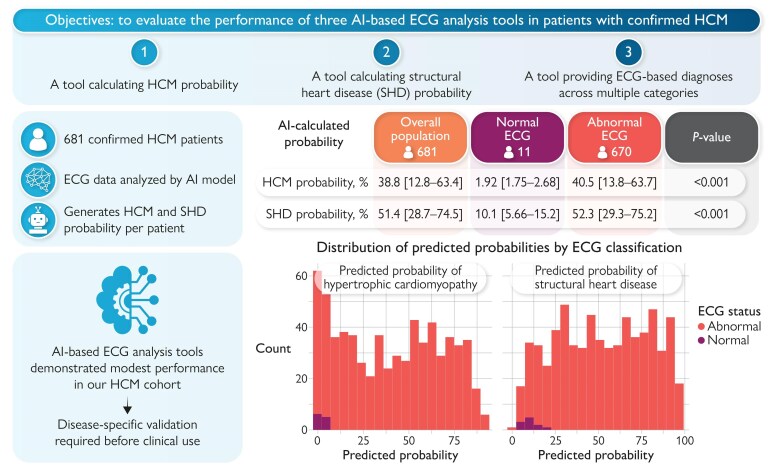 Figure 1
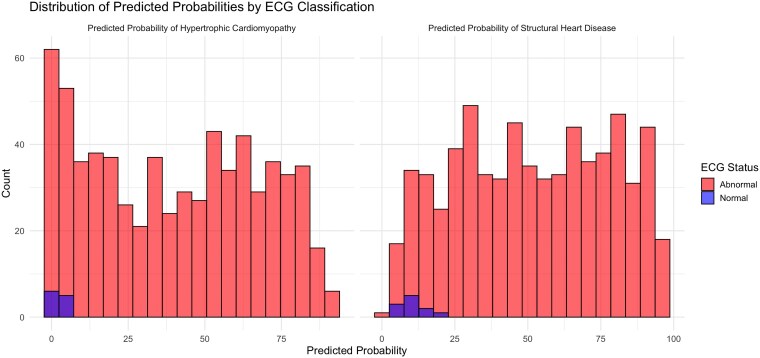 Figure 2
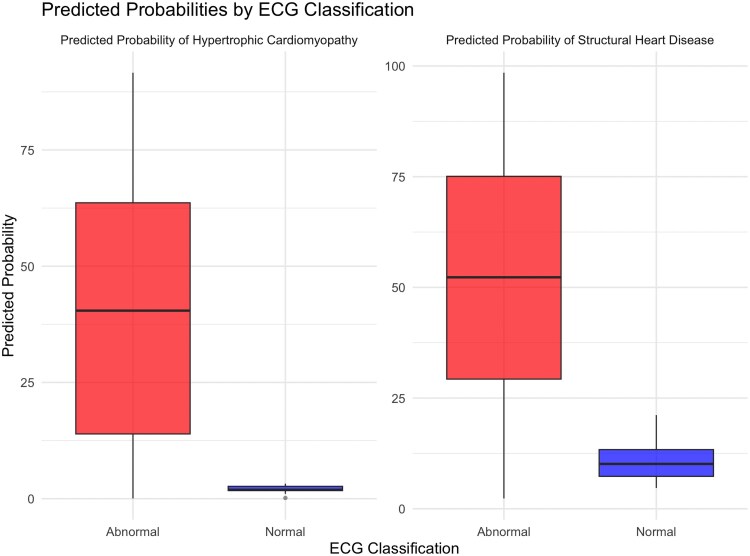 Figure 3
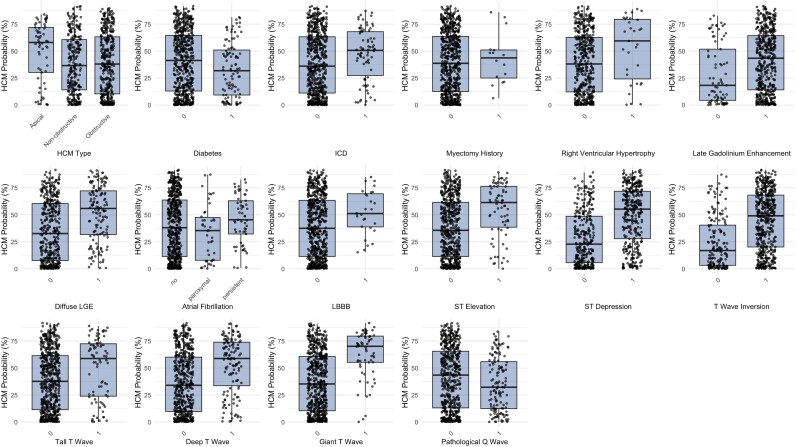 Figure 4
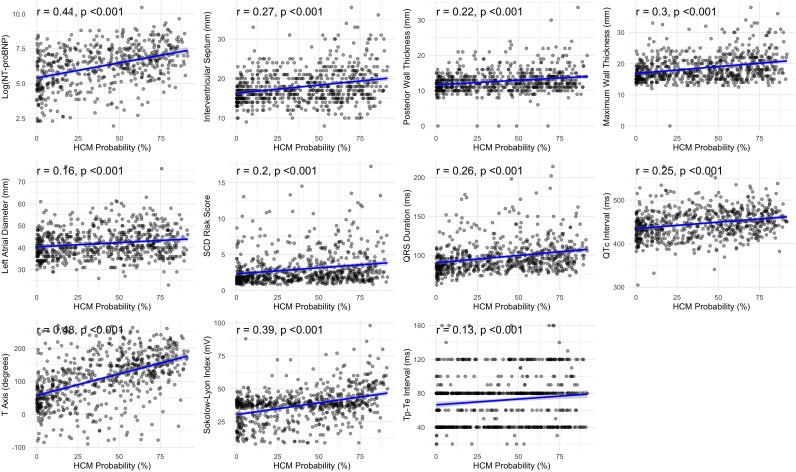 Figure 5
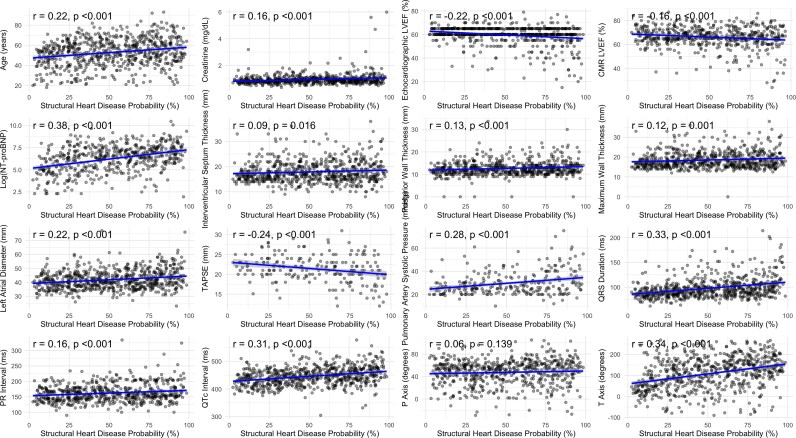 Figure 6
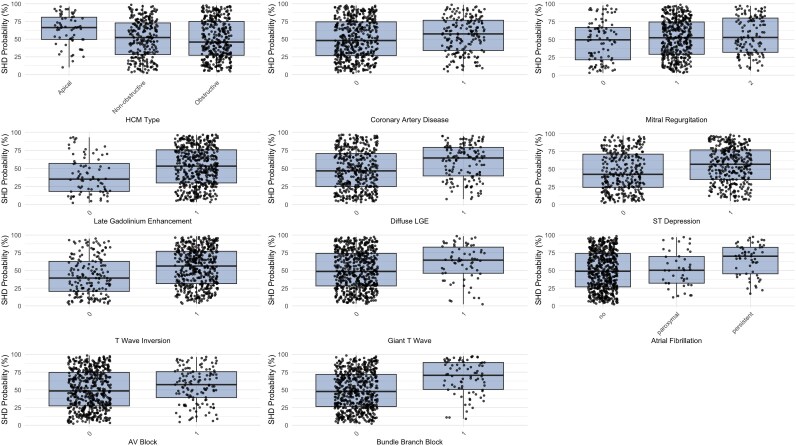 Figure 7
 Figure 8
Peer Reviews
No public reviews on file for this paper yet. If you reviewed it on a platform where reviews are public (OpenReview, ICLR, NeurIPS, ICML), you can paste yours below so the community can read it here.
Videos
No videos yet. Explain this paper in a talk, walkthrough, or lecture? Add one.
Taxonomy
TopicsCardiomyopathy and Myosin Studies · ECG Monitoring and Analysis · Cardiovascular Function and Risk Factors