HbA1c-Based Metabolic Stratification: A Retrospective Study of Clinical and Biological Differences Across Normoglycemic, Prediabetic, and Diabetic Subjects
Mihaela Simona Popoviciu, Timea Claudia Ghitea, Carmen Pantis, Nicolae Ovidiu Pop, Roxana Daniela Brata

TL;DR
This study shows that HbA1c levels can help identify early metabolic and complication risks in prediabetic individuals, suggesting HbA1c could be used for early diabetes prevention.
Contribution
The study demonstrates that prediabetic individuals show early signs of complications, supporting HbA1c as a tool for metabolic stratification and risk assessment.
Findings
Prediabetic individuals showed higher prevalence of peripheral neuropathy and retinopathy compared to normoglycemic subjects.
Diabetic patients had the highest complication burden, with increased odds of complications compared to normoglycemic individuals.
Abstract
Background: Glycated hemoglobin (HbA1c) is widely used for the diagnosis and monitoring of diabetes mellitus. However, its potential role as a marker of metabolic stratification and early complication risk beyond diagnostic thresholds remains insufficiently explored. Prediabetes is often considered a transitional state, although growing evidence suggests the presence of early metabolic and microvascular alterations. Methods: In this cross-sectional observational study, adult subjects were stratified into three groups based on HbA1c levels: normoglycemic (HbA1c < 5.7%), prediabetic (HbA1c 5.7–6.4%), and diabetic (HbA1c ≥ 6.5%). Demographic data, metabolic parameters, cardiometabolic comorbidities, and diabetes-related complications were analyzed. Group differences were assessed using appropriate statistical tests. Cumulative complication burden was evaluated, and risk estimation was…
Genes, proteins, chemicals, diseases, species, mutations and cell lines named across the full text — each resolved to its canonical identifier and authoritative record.
Click any figure to enlarge with its caption.
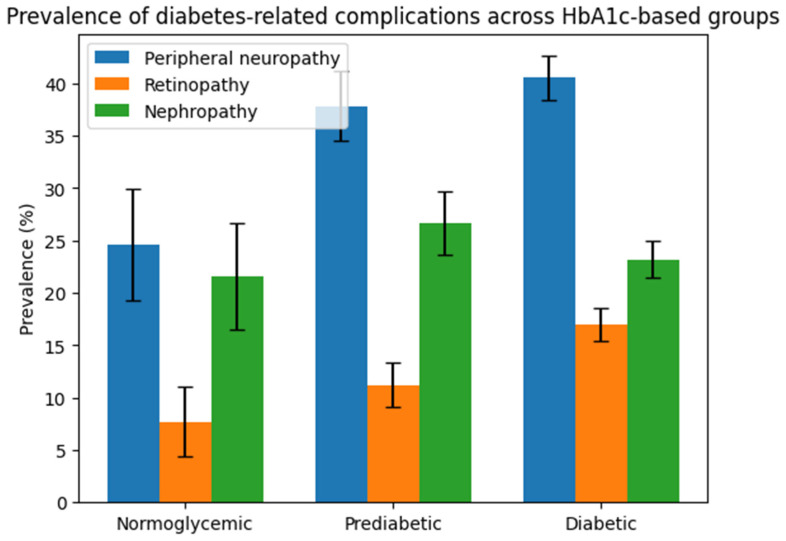 Figure 1
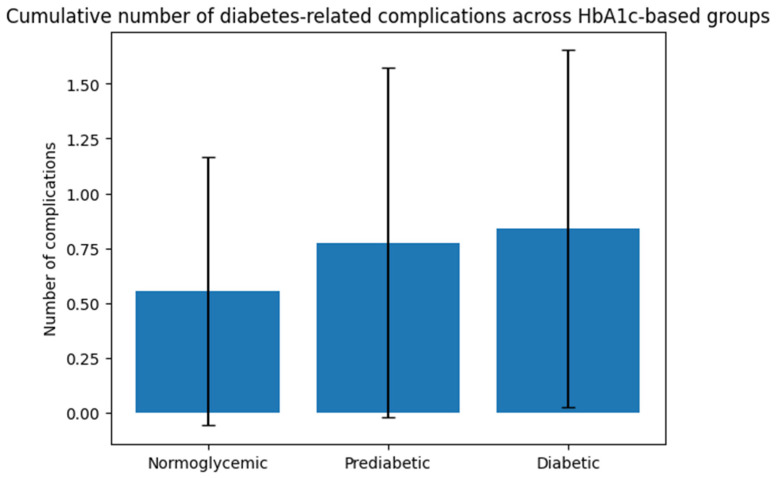 Figure 2
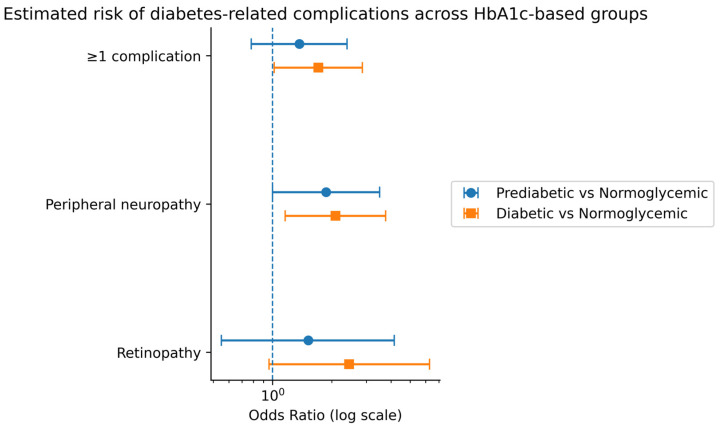 Figure 3
Peer Reviews
No public reviews on file for this paper yet. If you reviewed it on a platform where reviews are public (OpenReview, ICLR, NeurIPS, ICML), you can paste yours below so the community can read it here.
Videos
No videos yet. Explain this paper in a talk, walkthrough, or lecture? Add one.
Taxonomy
TopicsDiabetes, Cardiovascular Risks, and Lipoproteins · Diabetes Management and Research · Diabetes Treatment and Management