Neoadjuvant ADT for Asian Patients Undergoing Robotic Radical Prostatectomy Is the Conversation Over?—A Propensity-Matched Comparison
John Joson Ng, Sean Lim, Alvin Lee, Yu Guang Tan, Kae Jack Tay, Henry Ho, John Yuen, Kenneth Chen

TL;DR
Hormone therapy before prostate cancer surgery reduces cancer spread and recurrence without increasing surgical risks, especially in high-risk patients.
Contribution
Region-specific evidence from Asia shows neoadjuvant ADT benefits high-risk prostate cancer patients without increasing surgical complications.
Findings
Neoadjuvant ADT reduces biochemical recurrence, lymph node involvement, and surgical margins in high-risk prostate cancer.
Patients with PSA density ≥ 0.2 ng/mL², Gleason ≥ 8, and cT3 disease benefit most from neoadjuvant ADT.
No increase in perioperative complications or surgical morbidity was observed with neoadjuvant ADT.
Abstract
This study demonstrates that neoadjuvant ADT prior to radical prostatectomy significantly reduces biochemical recurrence, lymph node involvement, and positive surgical margins in a high-risk prostate cancer population. Importantly, these oncologic benefits are achieved without increasing perioperative complication rates or surgical morbidity. By using a propensity score-matched Asian cohort, the study adds region-specific evidence supporting the reconsideration of neoadjuvant ADT use. The findings highlight patient subgroups (e.g., PSA density ≥ 0.2 ng/mL2, Gleason ≥ 8, cT3) that may derive greater benefit from such intervention. Patient summary: We examined whether hormone therapy given before surgery helps men with prostate cancer. Our findings suggest that it reduces cancer spread and the chance of recurrence without increasing surgical risks. These benefits were especially clear in…
Genes, proteins, chemicals, diseases, species, mutations and cell lines named across the full text — each resolved to its canonical identifier and authoritative record.
Click any figure to enlarge with its caption.
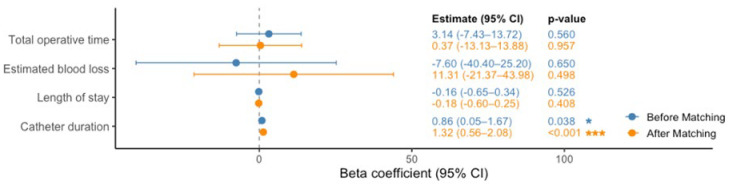 Figure 1
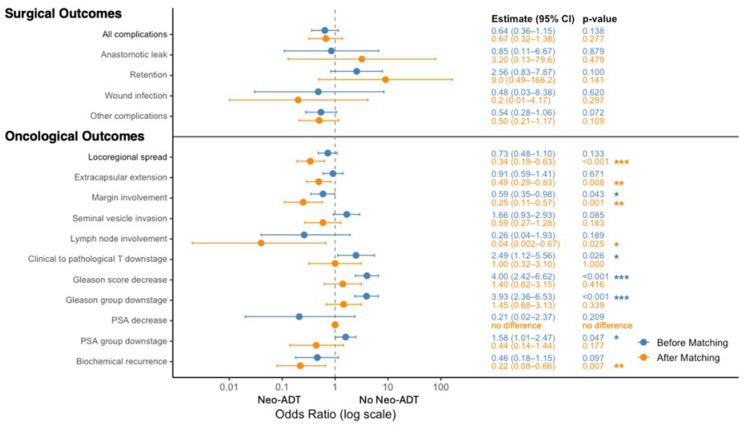 Figure 2
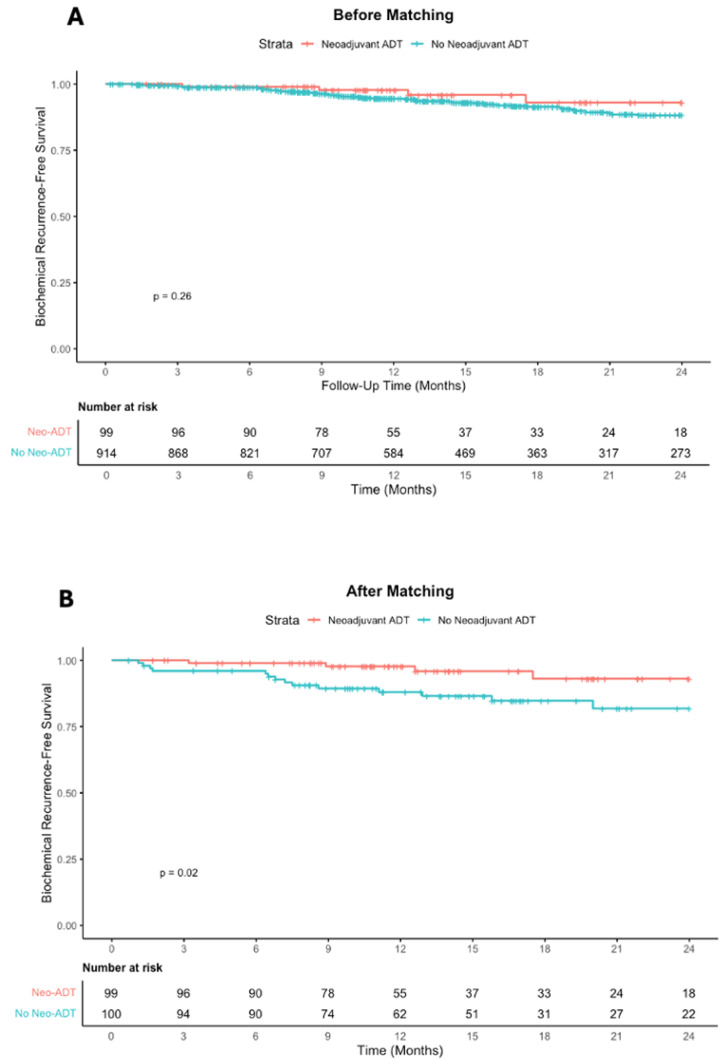 Figure 3
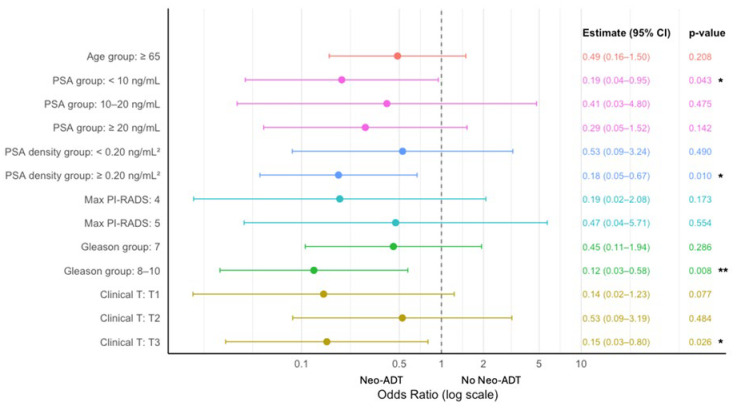 Figure 4
Peer Reviews
No public reviews on file for this paper yet. If you reviewed it on a platform where reviews are public (OpenReview, ICLR, NeurIPS, ICML), you can paste yours below so the community can read it here.
Videos
No videos yet. Explain this paper in a talk, walkthrough, or lecture? Add one.
Taxonomy
TopicsProstate Cancer Diagnosis and Treatment · Prostate Cancer Treatment and Research · Urinary Bladder and Prostate Research