Non-Destructive Assessment of Beef Freshness Using Visible and Near-Infrared Spectroscopy with Interpretable Machine Learning
Ruoxin Chen, Wei Ning, Xufen Xie, Jingran Bi, Gongliang Zhang, Hongman Hou

TL;DR
This study introduces a non-destructive method using light and machine learning to assess beef freshness, offering accurate predictions and insights into key wavelengths.
Contribution
A novel PSOGA-XGBoost model with SHAP interpretation is proposed for accurate and interpretable beef freshness assessment.
Findings
The PSOGA-XGBoost model achieved high prediction accuracy (R2p values up to 0.95) for beef freshness indicators.
SHAP identified key wavelengths (e.g., 1236 nm for TVB-N) that are critical for freshness assessment.
The method provides interpretable results, enhancing transparency in beef quality monitoring.
Abstract
Beef freshness is a critical indicator of meat quality and safety, and its rapid, non-destructive detection is of significant importance for ensuring consumer health and enhancing quality control throughout the meat industry chain. This study developed a novel methodology for non-destructive beef freshness assessment using visible and near-infrared (Vis-NIR) spectroscopy combined with machine learning, explainable artificial intelligence (xAI) techniques, and the SHapley Additive exPlanations (SHAP) framework. An improved hybrid heuristic method, particle swarm optimization–genetic algorithm (PSOGA), was used for feature selection, optimizing the wavelength subset for predicting beef quality indicators, including total volatile basic nitrogen (TVB-N) and color parameters (L*, a*, and b*). The eXtreme Gradient Boosting (XGBoost) was employed for regression modeling, and the results…
Genes, proteins, chemicals, diseases, species, mutations and cell lines named across the full text — each resolved to its canonical identifier and authoritative record.
Click any figure to enlarge with its caption.
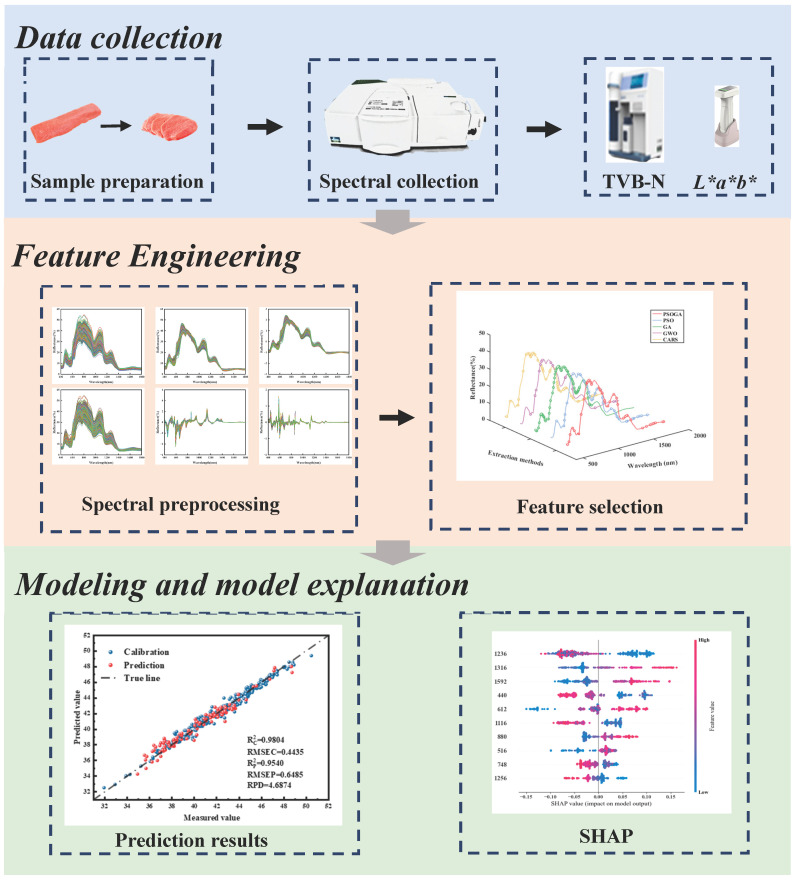 Figure 1
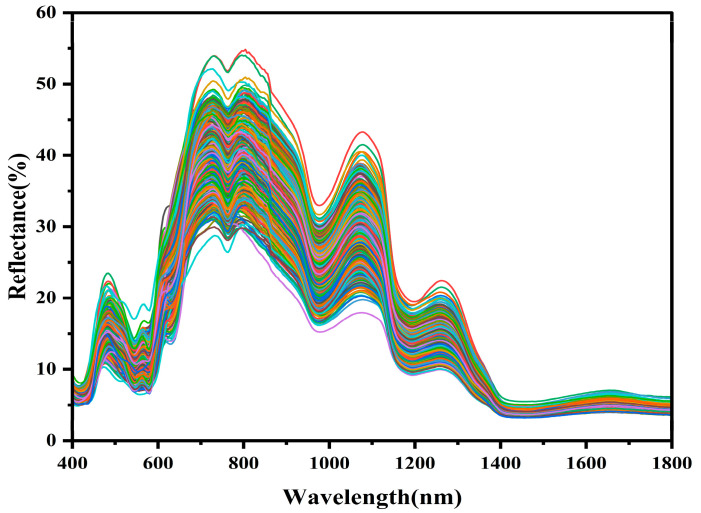 Figure 2
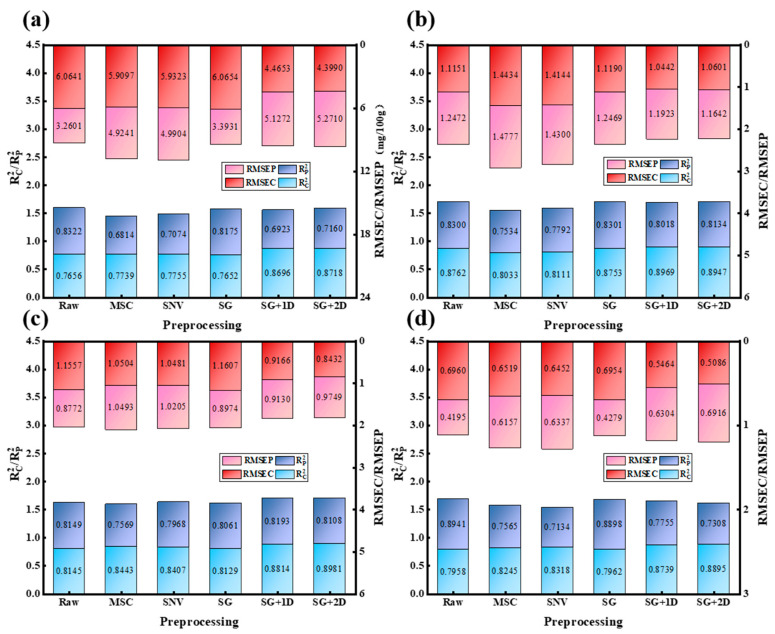 Figure 3
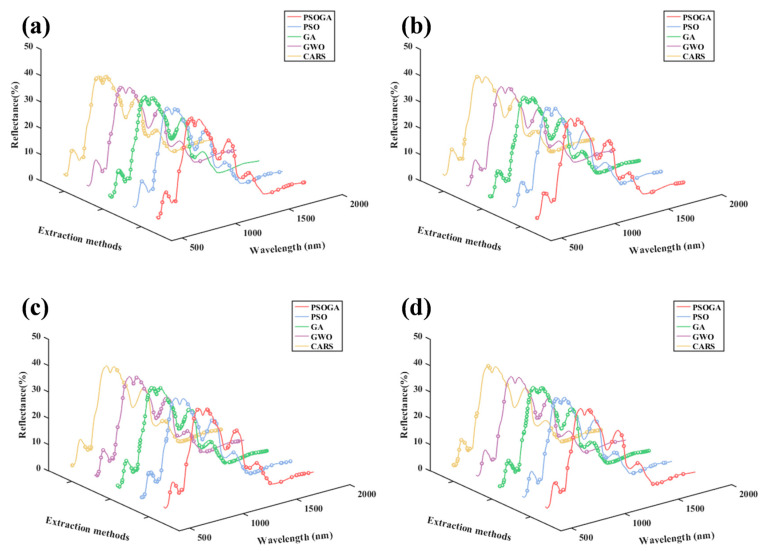 Figure 4
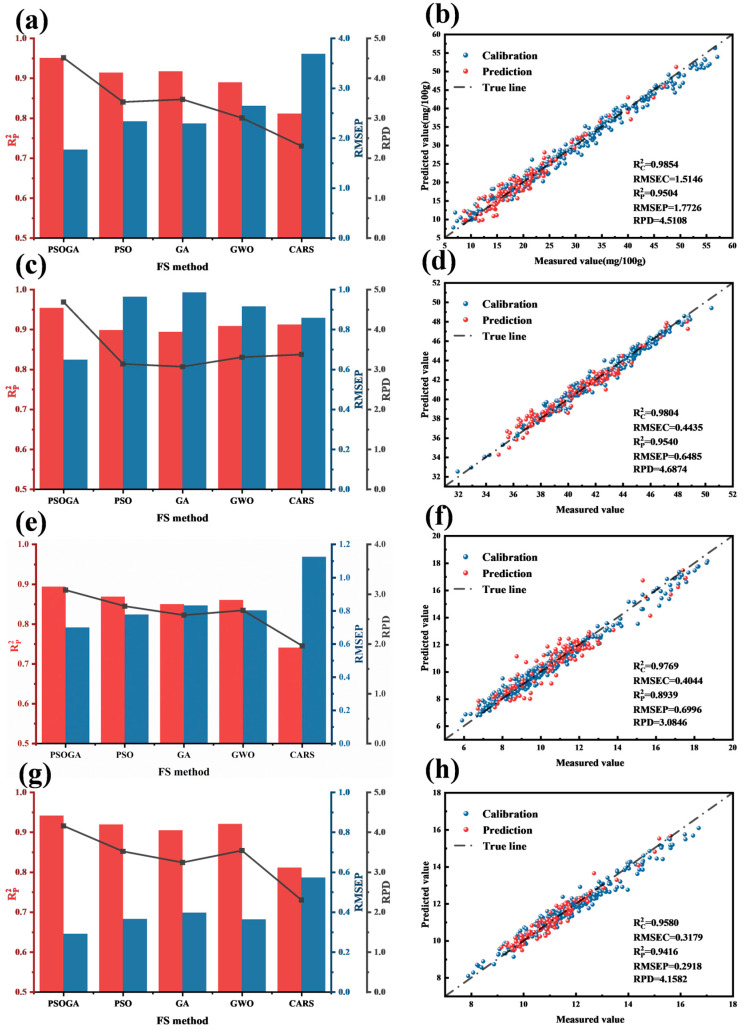 Figure 5
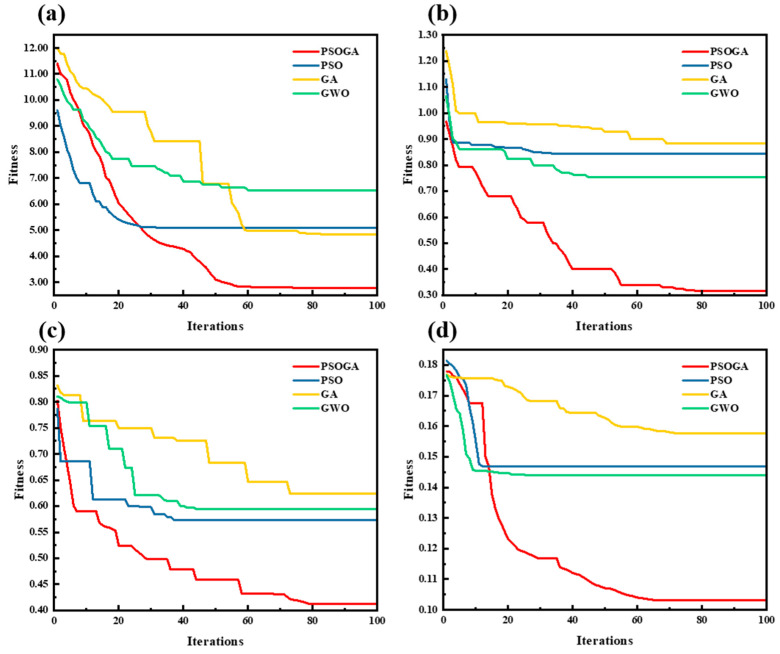 Figure 6
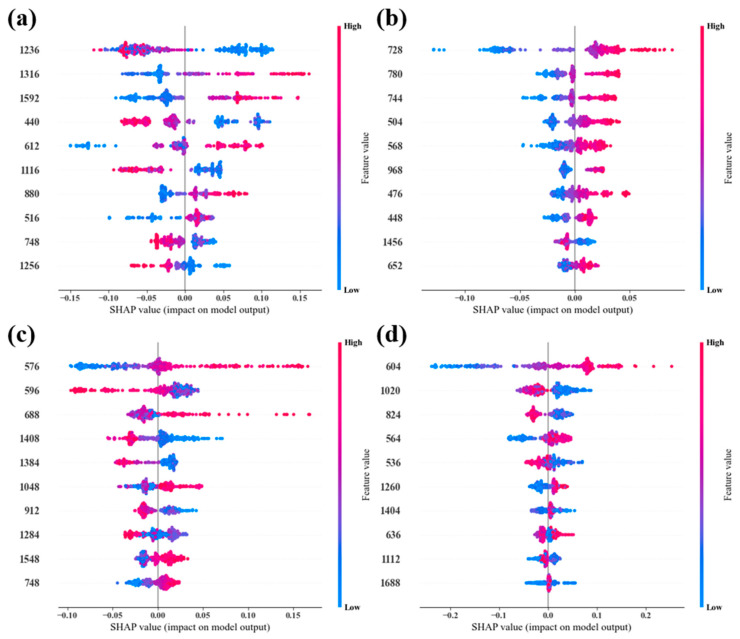 Figure 7
Peer Reviews
No public reviews on file for this paper yet. If you reviewed it on a platform where reviews are public (OpenReview, ICLR, NeurIPS, ICML), you can paste yours below so the community can read it here.
Videos
No videos yet. Explain this paper in a talk, walkthrough, or lecture? Add one.
Taxonomy
TopicsSpectroscopy and Chemometric Analyses · Listeria monocytogenes in Food Safety · Water Quality Monitoring and Analysis