Mo2TiC2/WSe2 nanoarchitectures: in situ grown nanoflowers for efficient hydrogen electrocatalysis
Antonia Kagkoura, Sergii A. Sergiienko, Anastasios Papavasileiou, Jan Luxa, Zhongquan Liao, Zdeněk Sofer

TL;DR
This paper introduces a new hybrid material combining Mo2TiC2 and WSe2 to improve hydrogen production through electrocatalysis.
Contribution
The study presents a one-step method to create a Mo2TiC2/WSe2 hybrid with strong interfacial coupling for efficient hydrogen evolution.
Findings
The hybrid shows low overpotential and fast charge transfer for hydrogen evolution.
It demonstrates excellent long-term stability compared to individual components.
The one-step hydrothermal method simplifies the synthesis of the hybrid structure.
Abstract
The combination of 2D materials provides a powerful strategy to enhance electrocatalytic hydrogen evolution. Efficient hydrogen electrocatalysis is achieved by interfacing conductive Mo2TiC2 MXene with catalytic WSe2 nanoflowers via a one-step hydrothermal route. The hybrid exhibits low overpotential, fast charge transfer, and long-term stability, outperforming pristine components and establishing Mo2TiC2/WSe2 as a promising hydrogen evolution reaction platform. A straightforward solvothermal route yields a Mo2TiC2/WSe2 hybrid with strong interfacial coupling, delivering enhanced HER activity and excellent long-term stability.
Genes, proteins, chemicals, diseases, species, mutations and cell lines named across the full text — each resolved to its canonical identifier and authoritative record.
Click any figure to enlarge with its caption.
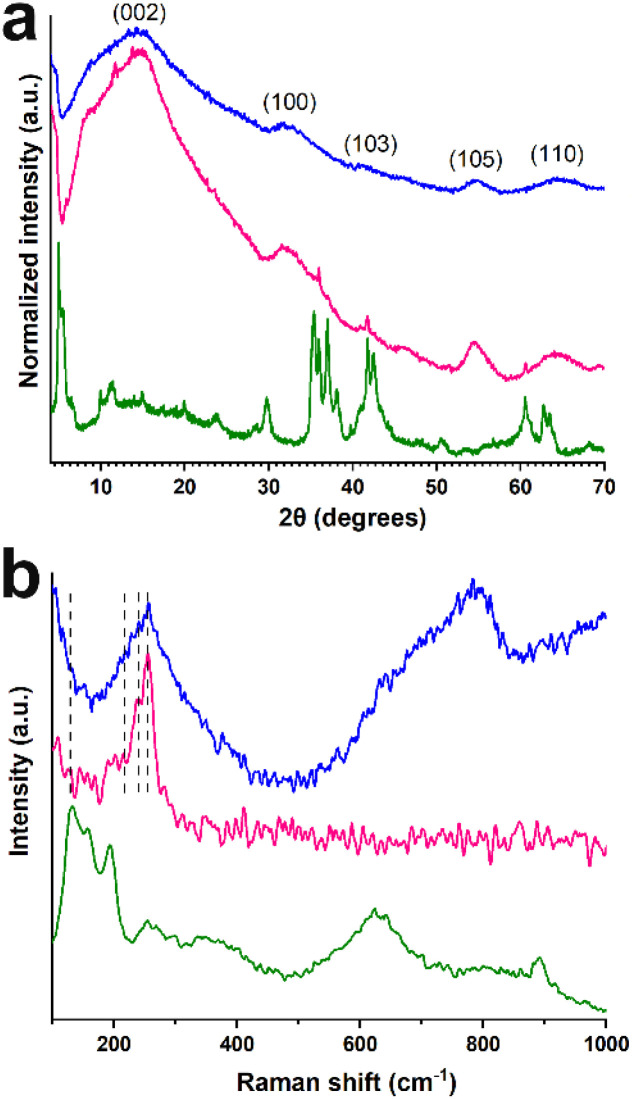 Figure 1
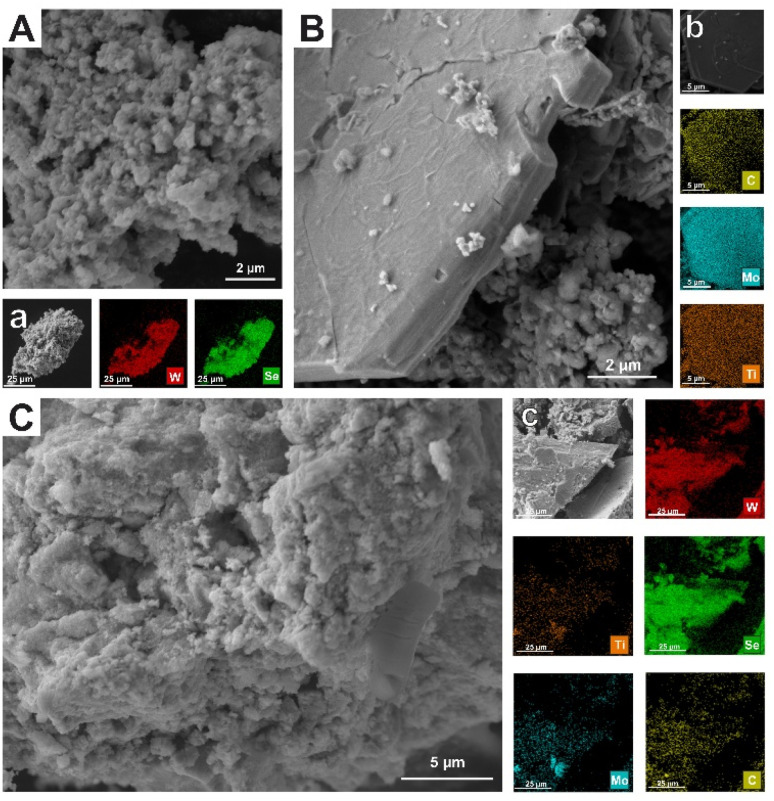 Figure 2
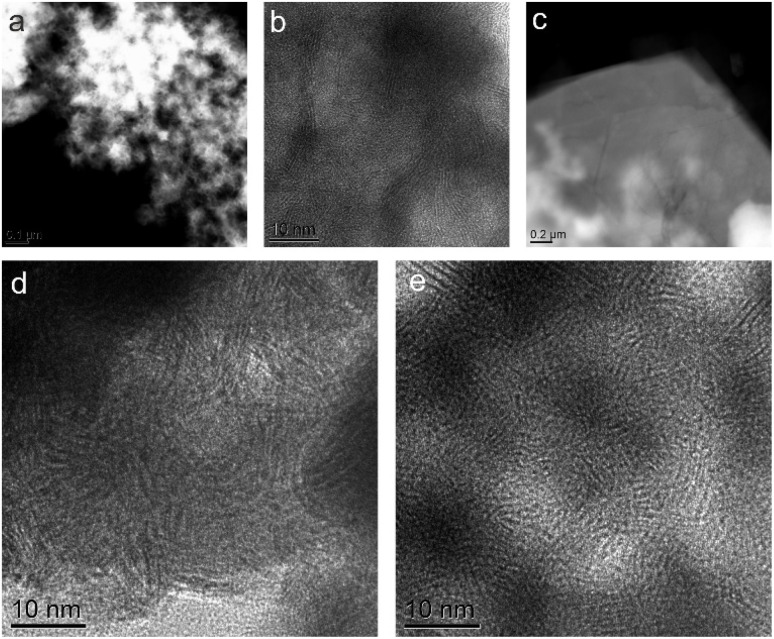 Figure 3
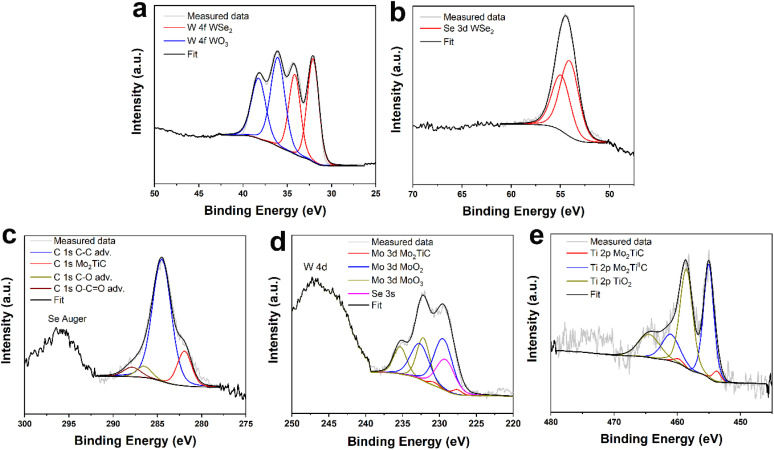 Figure 4
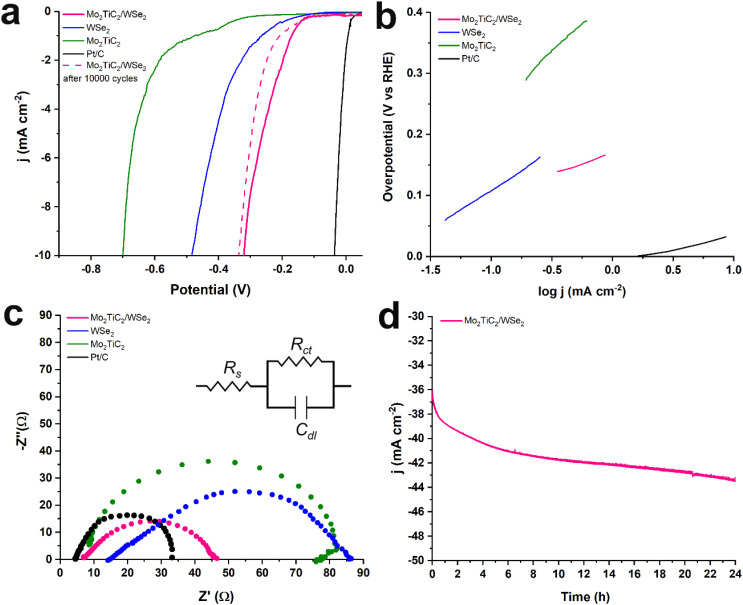 Figure 5
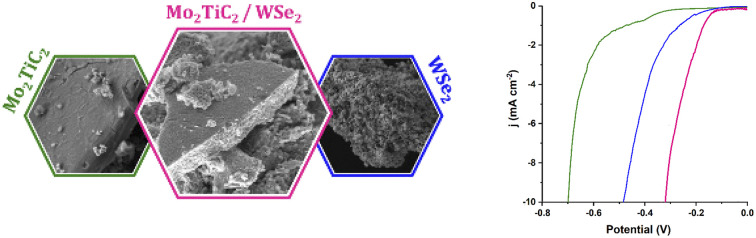 Figure 6
Peer Reviews
No public reviews on file for this paper yet. If you reviewed it on a platform where reviews are public (OpenReview, ICLR, NeurIPS, ICML), you can paste yours below so the community can read it here.
Videos
No videos yet. Explain this paper in a talk, walkthrough, or lecture? Add one.
Taxonomy
TopicsMXene and MAX Phase Materials · Electrocatalysts for Energy Conversion · Ammonia Synthesis and Nitrogen Reduction