Integrating Large Language Models into Traffic Systems: Integration Levels, Capability Boundaries, and an Information-Theoretic Perspective
Wenwen Tu, Junfan Li, Feng Xiao, Xiaosa Wang, Yong Lu

TL;DR
This paper explores how large language models can be integrated into traffic systems, highlighting their strengths and limitations through an information-theoretic perspective.
Contribution
The paper introduces a novel information-theoretic framework to analyze LLM integration in traffic systems and proposes hybrid architectures for future research.
Findings
LLMs excel in managing high semantic entropy tasks like contextual understanding and knowledge integration.
Classical models are better suited for real-time control and safety verification due to their low entropy requirements.
A hybrid intelligence approach is needed to bridge semantic and physical modeling in traffic systems.
Abstract
Large language models (LLMs) are fundamentally transforming intelligent traffic systems by enabling semantic abstraction, probabilistic reasoning, and multimodal information fusion across heterogeneous data. This review examines existing research on LLM integration, ranging from data representation to autonomous agents, through an information-theoretic lens, conceptualizing LLMs as entropy-minimizing probabilistic systems that shape their capabilities in uncertainty modeling and semantic compression. We identify core integration patterns and analyze fundamental limitations arising from the inherent mismatch between discrete, entropy-driven LLM reasoning and the continuous, causal, and safety-critical nature of physical traffic environments. This reflects a deep structural tension rather than mere technical gaps. We delineate clear boundaries: LLMs are indispensable for managing high…
Genes, proteins, chemicals, diseases, species, mutations and cell lines named across the full text — each resolved to its canonical identifier and authoritative record.
Click any figure to enlarge with its caption.
 Figure 1
 Figure 2
 Figure 3
 Figure 4
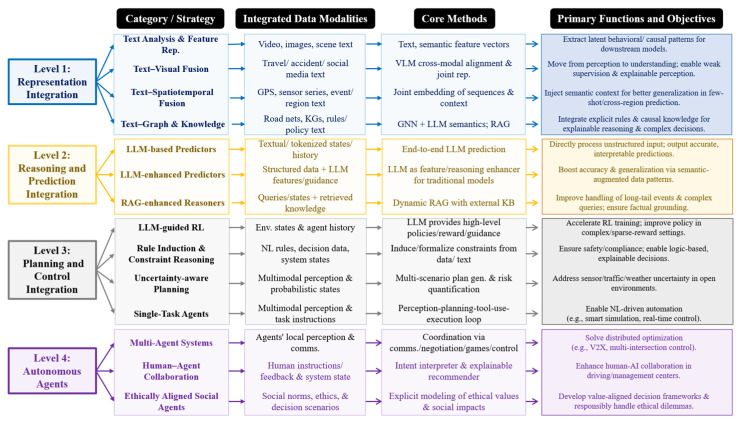 Figure 5
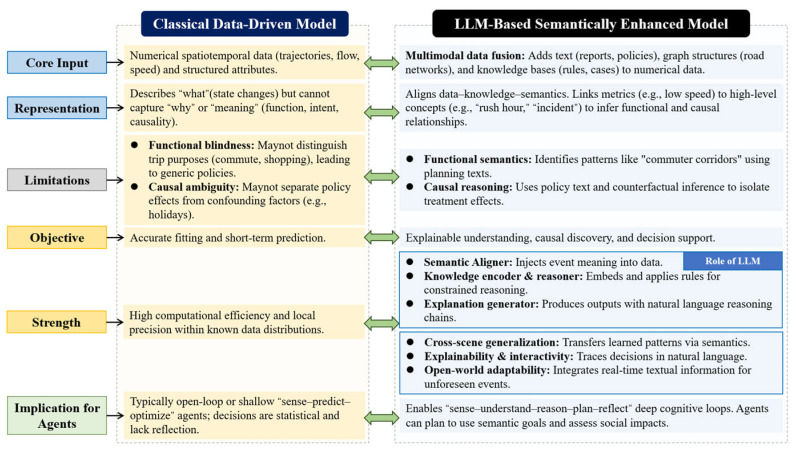 Figure 6
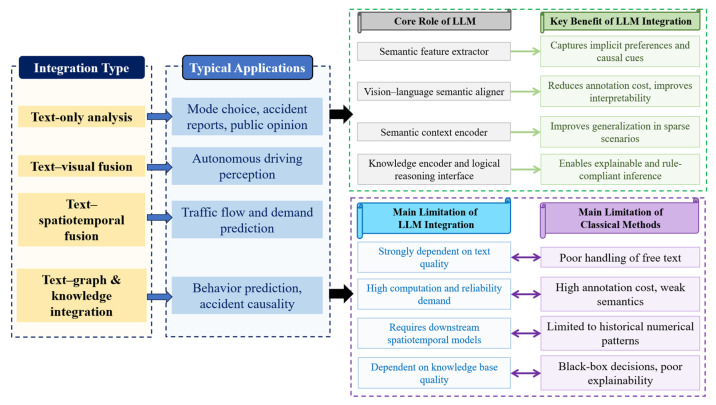 Figure 7
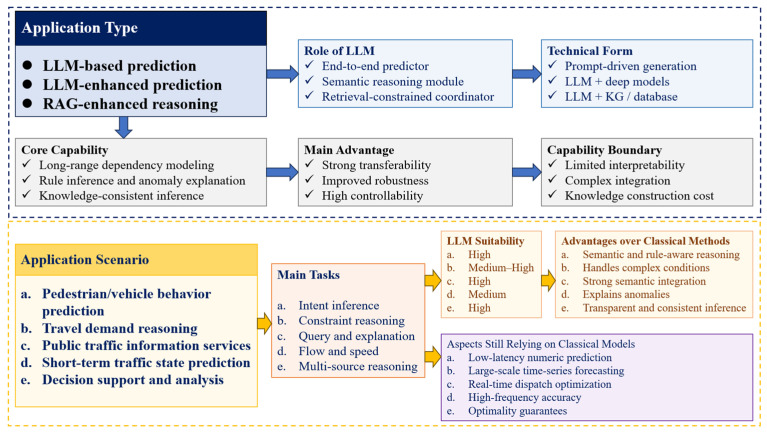 Figure 8
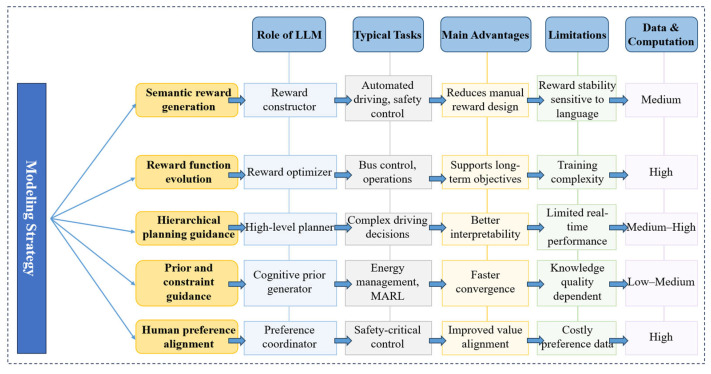 Figure 9
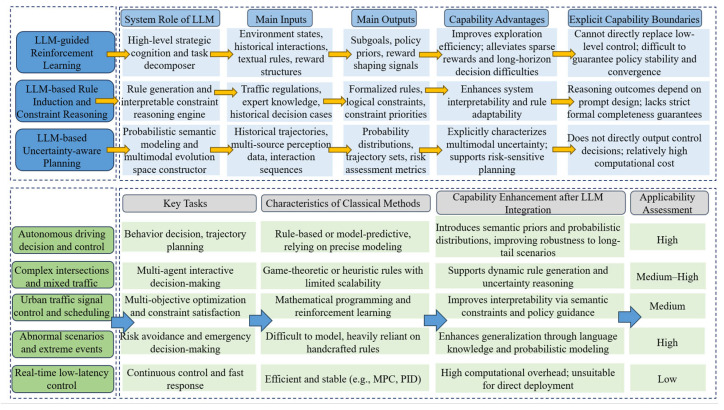 Figure 10
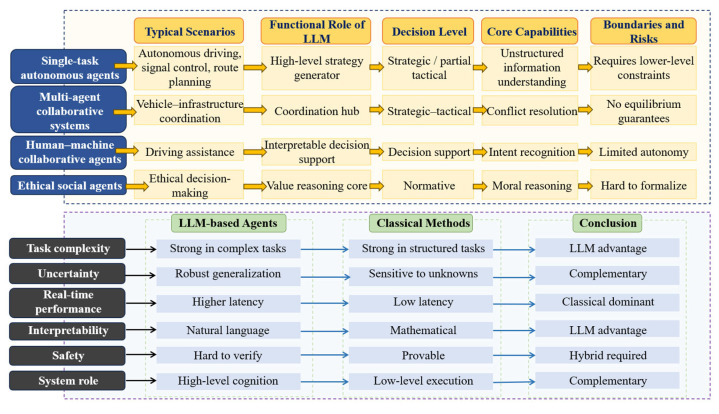 Figure 11
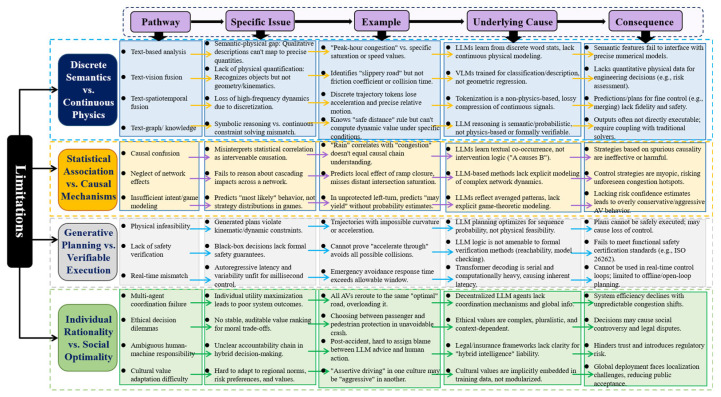 Figure 12
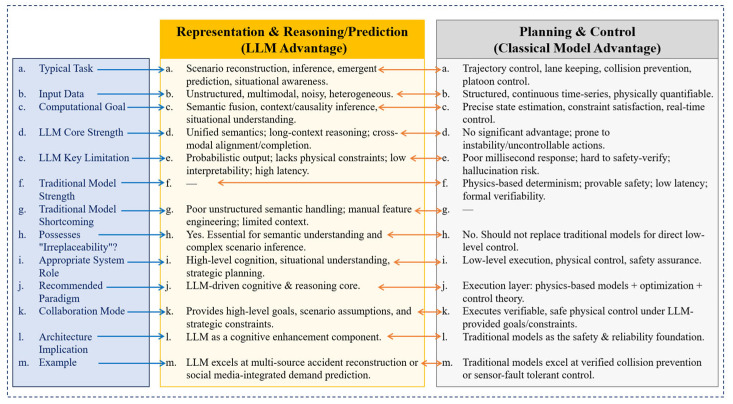 Figure 13
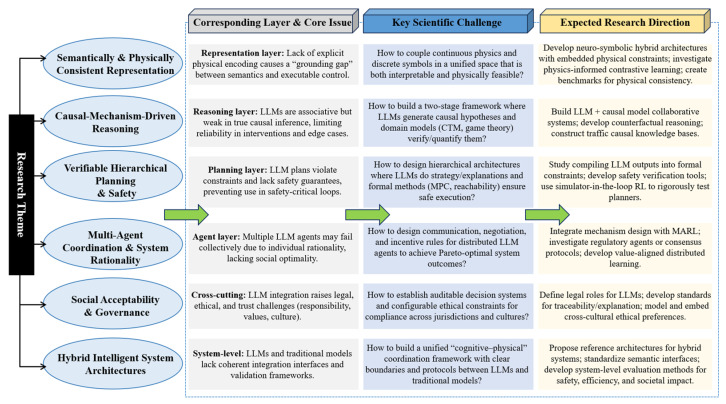 Figure 14
Peer Reviews
No public reviews on file for this paper yet. If you reviewed it on a platform where reviews are public (OpenReview, ICLR, NeurIPS, ICML), you can paste yours below so the community can read it here.
Videos
No videos yet. Explain this paper in a talk, walkthrough, or lecture? Add one.
Taxonomy
TopicsAdversarial Robustness in Machine Learning · Topic Modeling · Traffic Prediction and Management Techniques