Incremental Value of Apical Longitudinal Strain in Predicting High-Risk Apical Aneurysms in Patients with Hypertrophic Cardiomyopathy
Xin Hu, Xueqing Cheng, Yuwei Bao, Jie Tian, Shiliang Liu, Yaqin Yang, Qi Xu, Bingyi Zhang, Youbin Deng, Yongping Lu, Yani Liu

TL;DR
This study shows that apical longitudinal strain can better predict high-risk outcomes in HCM patients with apical aneurysms, even when traditional risk scores are low.
Contribution
Apical longitudinal strain improves risk prediction for HCM patients with apical aneurysms beyond existing models.
Findings
Abnormal apical longitudinal strain average significantly increases the risk of adverse events.
Adding apical LS-avg to risk scores improves risk assessment by 67.7% and 66.2%.
Apical LS-avg helps identify high-risk patients with low SCD scores and small aneurysms.
Abstract
Background: Apical aneurysms have long been considered a critical risk marker for poor clinical outcomes in hypertrophic cardiomyopathy (HCM) individuals. This study aims to identify apical features associated with adverse outcomes and explore their incremental predictive value beyond the traditional sudden cardiac death (SCD) risk score model. Methods: From December 2019 to November 2024, 2318 HCM patients were diagnosed at Tongji Hospital. Ultimately, 65 HCM patients with apical aneurysms were included in the analysis, each having undergone conventional and contrast echocardiography, as well as speckle tracking echocardiography (STE). Results: With a median follow-up of 26 months, composite events occurred in 25 (38%) patients, while none occurred in 40 (62%). Multivariate Cox regression revealed that abnormal apical longitudinal strain average (LS-avg) significantly increased…
Genes, proteins, chemicals, diseases, species, mutations and cell lines named across the full text — each resolved to its canonical identifier and authoritative record.
Click any figure to enlarge with its caption.
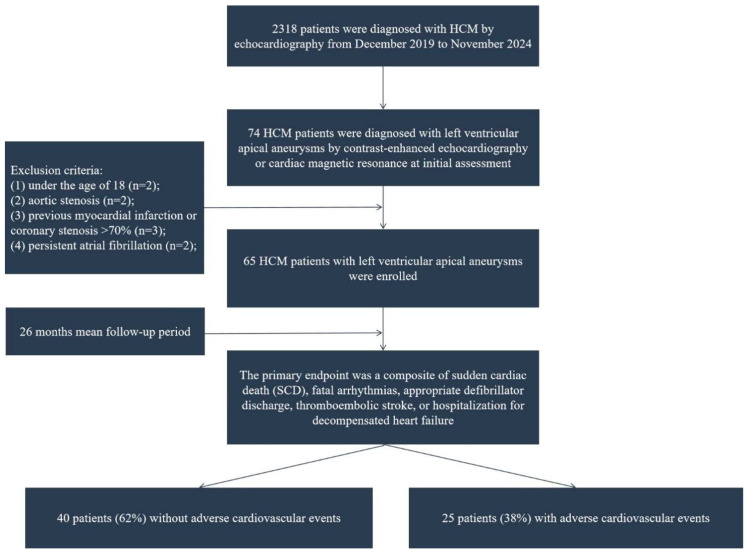 Figure 1
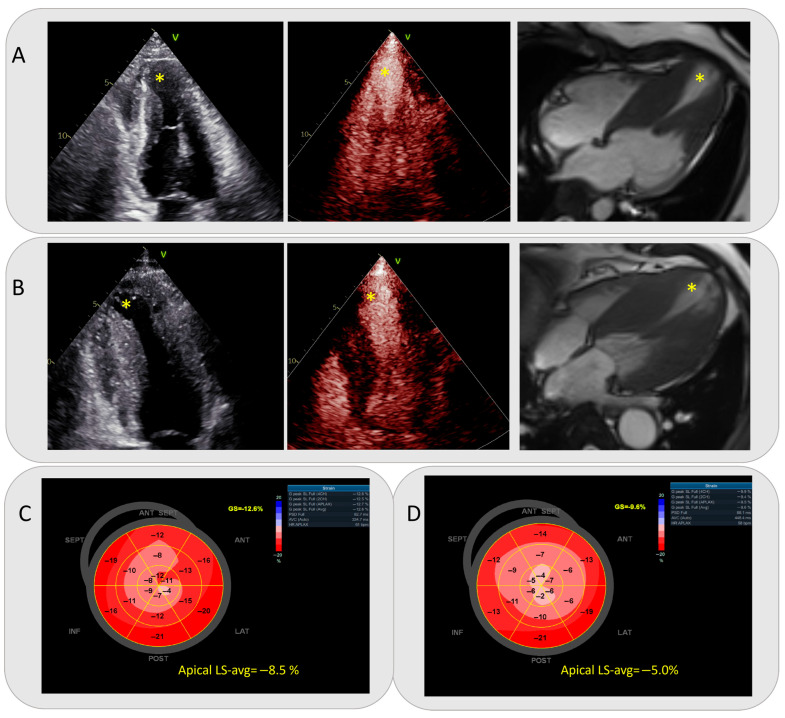 Figure 2
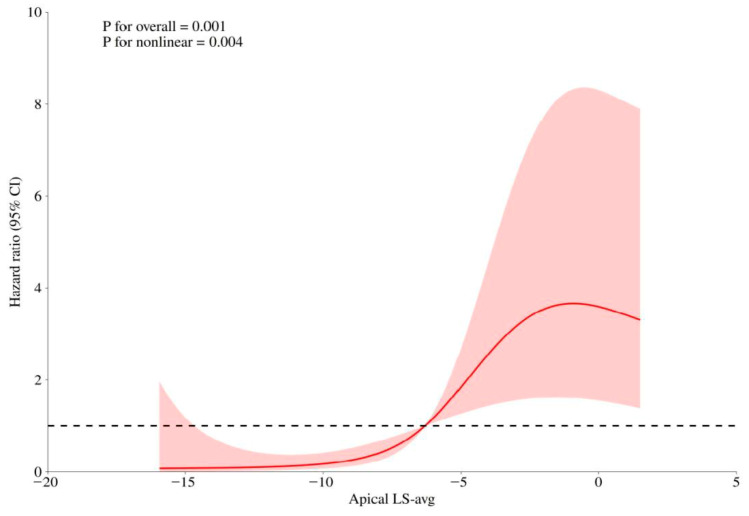 Figure 3
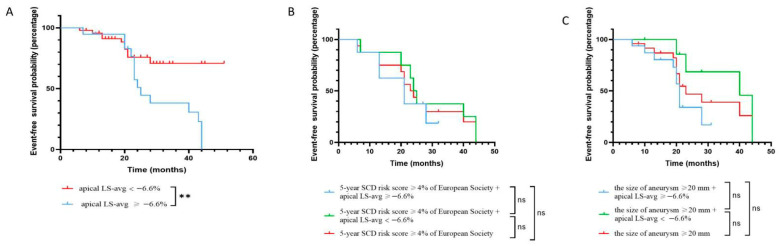 Figure 4
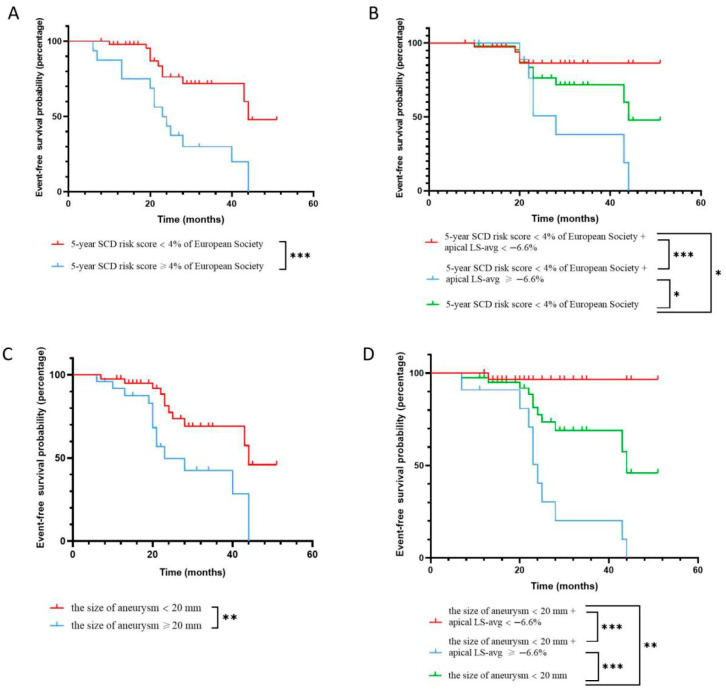 Figure 5
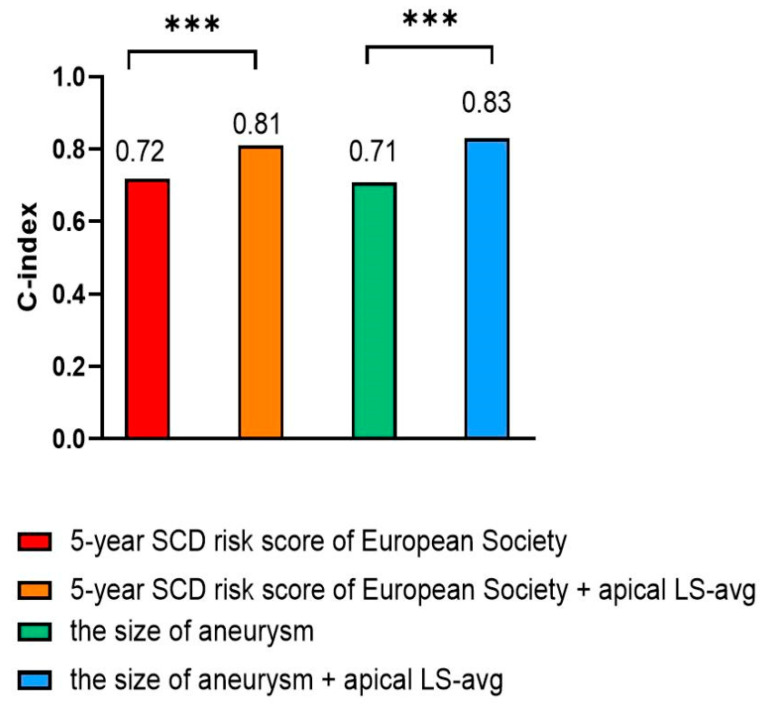 Figure 6
Peer Reviews
No public reviews on file for this paper yet. If you reviewed it on a platform where reviews are public (OpenReview, ICLR, NeurIPS, ICML), you can paste yours below so the community can read it here.
Videos
No videos yet. Explain this paper in a talk, walkthrough, or lecture? Add one.
Taxonomy
TopicsCardiomyopathy and Myosin Studies · Coronary Artery Anomalies · Cardiac Imaging and Diagnostics