Spreading Degree Modulates Floral Aroma Development in Green Tea: Integrated GC-E-Nose, Metabolomics, and Molecular Docking Reveals Key Odorants and Olfactory Receptor Interactions
Jiajing Hu, Xianxiu Zhou, Guangyue Hou, Jiahao Tang, Yongwen Jiang, Haibo Yuan, Daliang Shi, Yanqin Yang

TL;DR
This study shows how adjusting the spreading process in green tea production can enhance floral aromas by identifying key odorants and their interactions with olfactory receptors.
Contribution
The study identifies five key odorants and their interaction with OR1D2, revealing how spreading degree affects floral aroma in green tea.
Findings
Spreading degree significantly modulates green tea's aroma profile, especially promoting floral notes.
38 volatile compounds showed spreading-dependent accumulation, with five key odorants identified as contributors to floral aroma.
Molecular docking showed strong binding of these odorants to OR1D2 via hydrogen bonding and hydrophobic interactions.
Abstract
The spreading process constitutes a pivotal stage in green tea manufacturing. This study integrated GC-E-Nose with targeted metabolomics to comprehensively elucidate the dynamic changes in sensory characteristics and aroma substances of green tea across varying spreading degrees. Our findings demonstrated that spreading degree significantly modulated green tea’s aroma profile, with lighter degree particularly promoting the development of desirable floral aroma. GC-MS/MS quantification identified 70 volatile compounds, among which 38 exhibited spreading-dependent differential accumulation (VIP > 1.0, p < 0.05). Five key odorants, including indole, β-ionone, nerolidol, cis-jasmone, and β-damascenone, were highlighted as essential contributors to the floral aroma. Molecular docking simulations indicated stronger binding affinities between these five odorants and the olfactory receptor…
Genes, proteins, chemicals, diseases, species, mutations and cell lines named across the full text — each resolved to its canonical identifier and authoritative record.
Click any figure to enlarge with its caption.
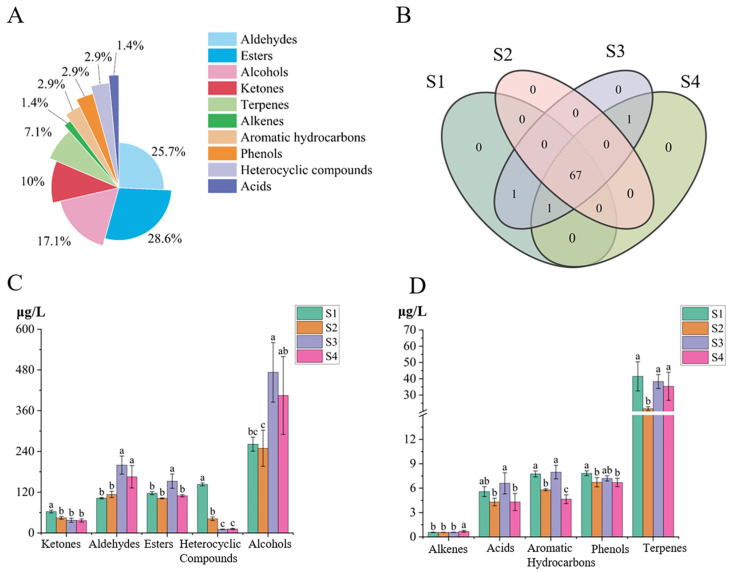 Figure 1
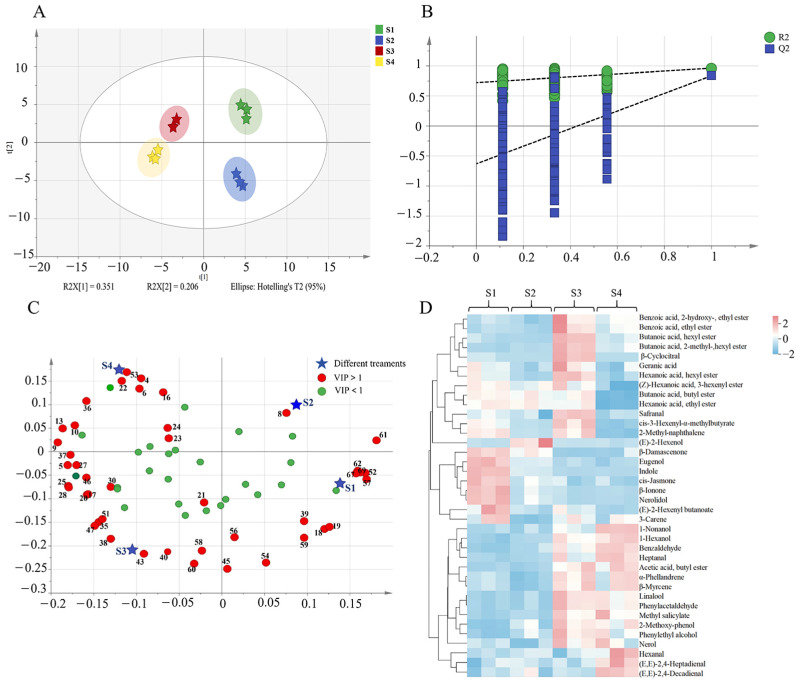 Figure 2
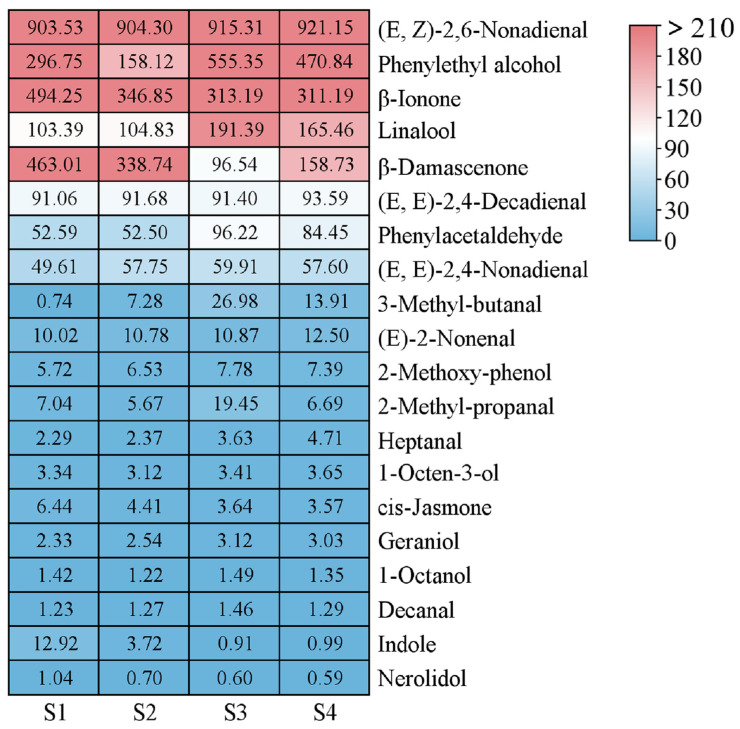 Figure 3
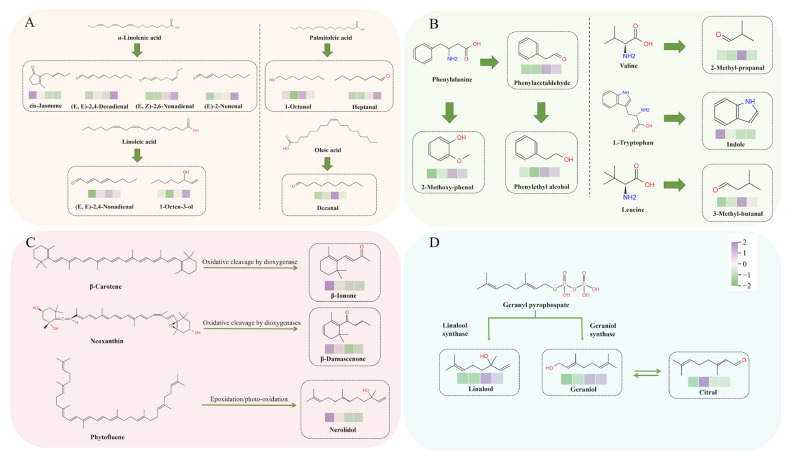 Figure 4
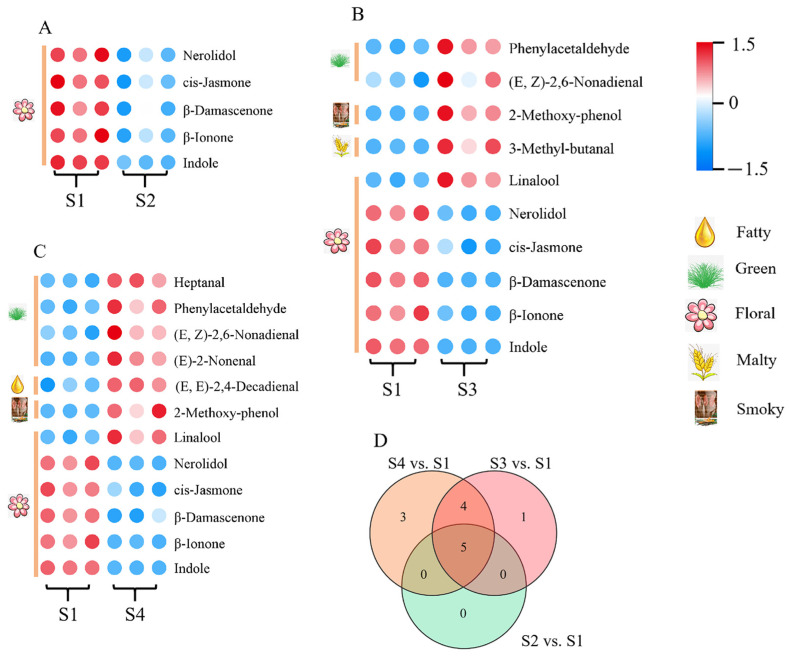 Figure 5
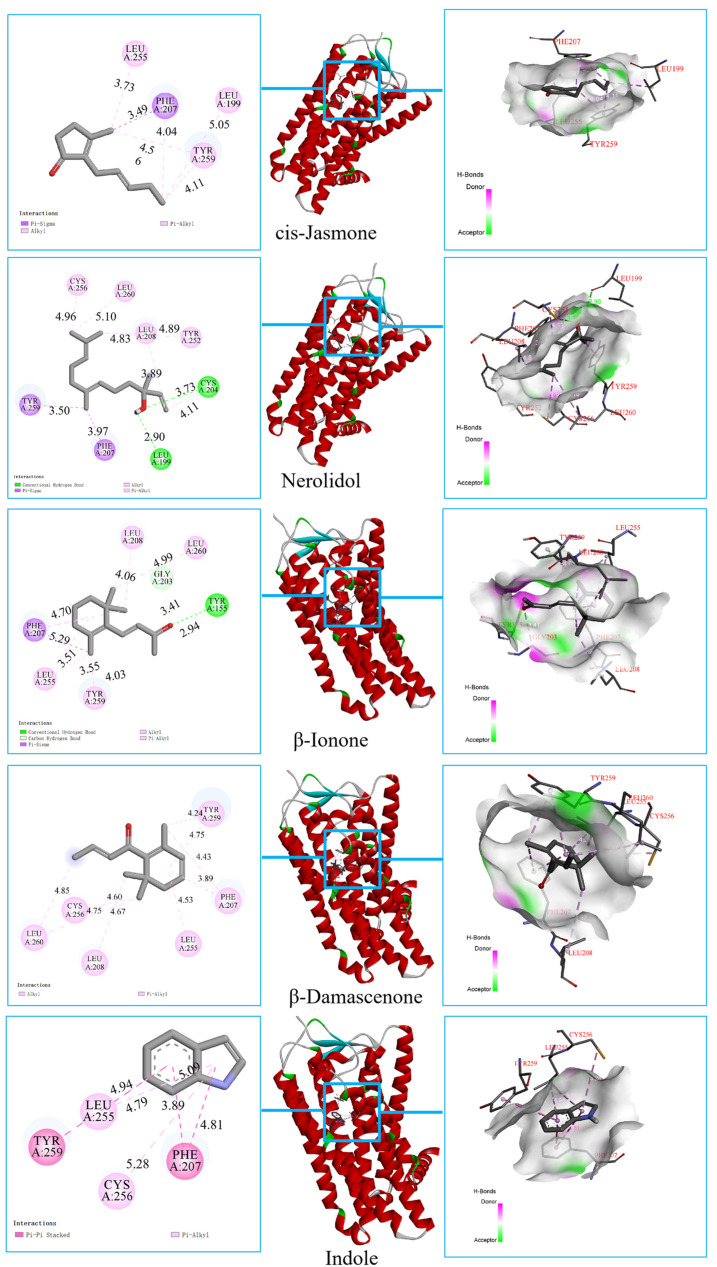 Figure 6
Peer Reviews
No public reviews on file for this paper yet. If you reviewed it on a platform where reviews are public (OpenReview, ICLR, NeurIPS, ICML), you can paste yours below so the community can read it here.
Videos
No videos yet. Explain this paper in a talk, walkthrough, or lecture? Add one.
Taxonomy
TopicsTea Polyphenols and Effects · Fermentation and Sensory Analysis · Olfactory and Sensory Function Studies