Evaluation of native macroalgae species of the Southeast U.S. and Caribbean for use in integrated multi-trophic aquaculture (IMTA)
Haley L. Lasco, Hilary G. Close, Ronald H. Hoenig, Phillip R. Gillette, Daniel D. Benetti, John D. Stieglitz

TL;DR
This study evaluates native seaweed species for use in aquaculture systems to reduce fish waste and improve sustainability.
Contribution
The study provides new data on how specific macroalgae species can effectively reduce fish effluent nutrients and their nutritional profiles.
Findings
Agardhiella subulata reduced TAN levels in fish effluent below detectable limits at a density of 6.73 kg/m³.
Caulerpa racemosa had the highest protein content (25.49%), and Ulva lactuca had the highest carbohydrate content (61.48%).
Ulva lactuca efficiently uptook and incorporated carbon from effluent water.
Abstract
This study assessed the comparative performance of candidate marine macroalgae species under integrated multi-trophic aquaculture (IMTA) culture conditions in a system culturing yellowtail snapper (Ocyurus chrysurus) at a commercial-scale biomass density. The nutrient-rich effluent water from the marine finfish culture tank supplied replicated macroalgae raceways containing four candidate species of macroalgae (Agardhiella subulata, Caulerpa racemosa, Gracilaria caudata, and Ulva lactuca) native to the Southeast U.S. and Caribbean regions. Water temperature, dissolved oxygen (DO), salinity, alkalinity, pH, phosphate, and total ammonia nitrogen (TAN) readings were sampled daily, and dissolved CO2 was calculated over the course of the trials. Each species of macroalgae was analyzed for protein, fat, fiber, ash, minerals, and metals. Additionally, the carbon and nitrogen content and stable…
Genes, proteins, chemicals, diseases, species, mutations and cell lines named across the full text — each resolved to its canonical identifier and authoritative record.
Click any figure to enlarge with its caption.
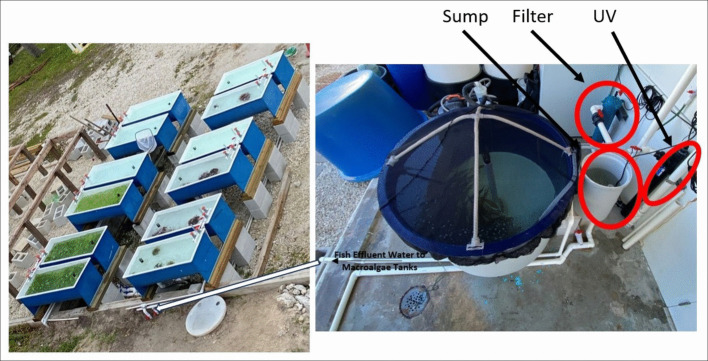 Figure 1
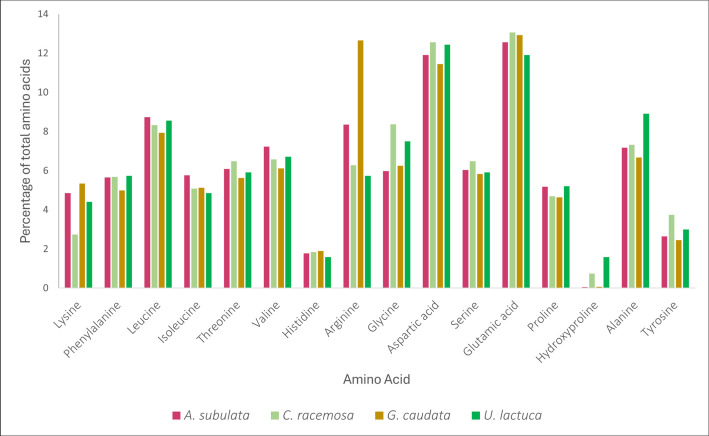 Figure 2
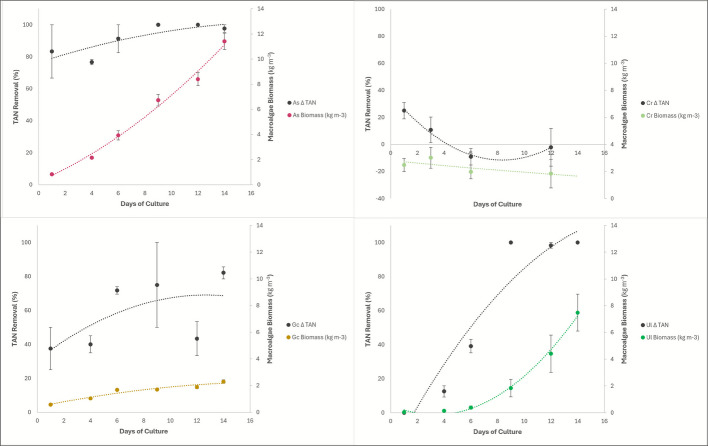 Figure 3
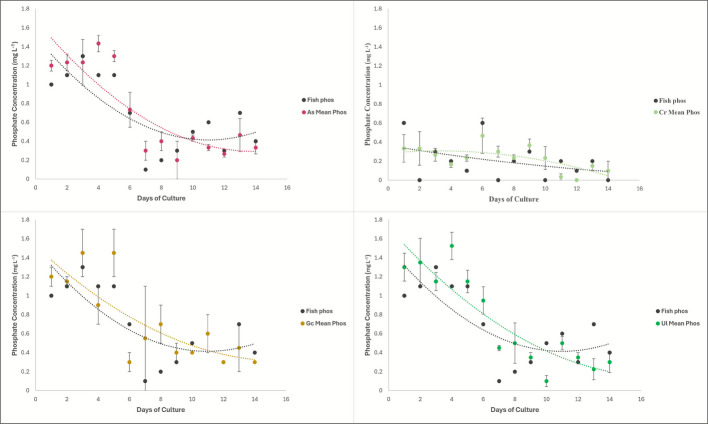 Figure 4
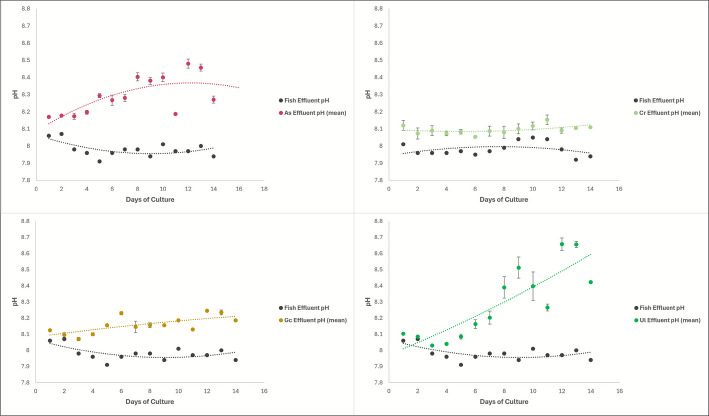 Figure 5
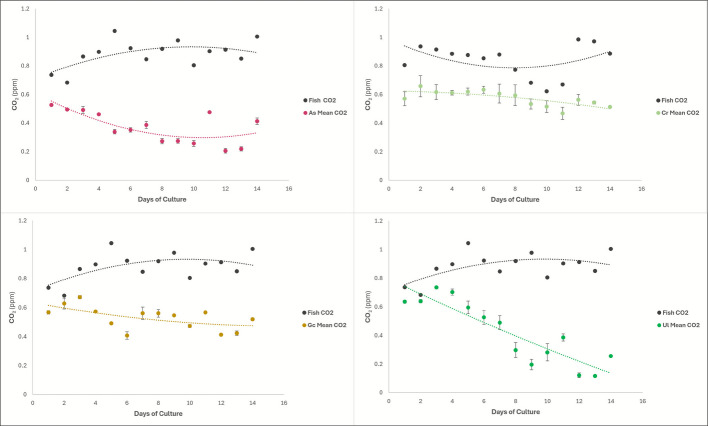 Figure 6
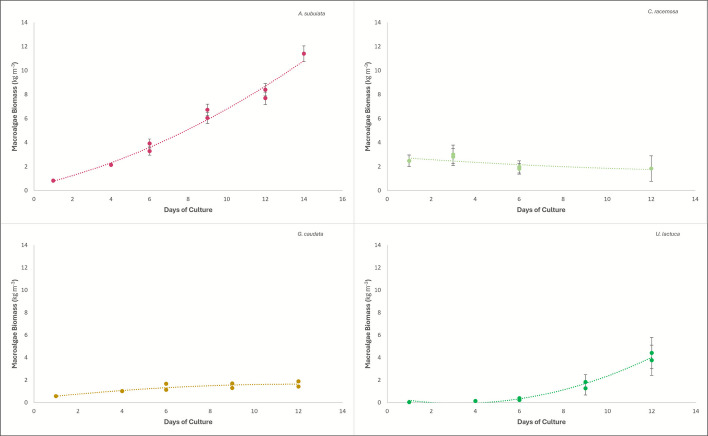 Figure 7
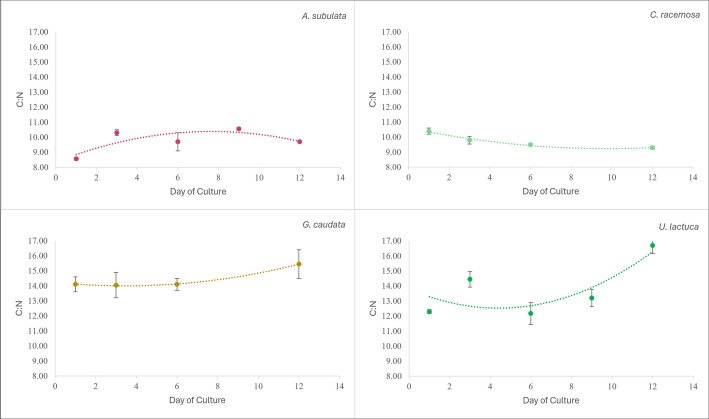 Figure 8
Peer Reviews
No public reviews on file for this paper yet. If you reviewed it on a platform where reviews are public (OpenReview, ICLR, NeurIPS, ICML), you can paste yours below so the community can read it here.
Videos
No videos yet. Explain this paper in a talk, walkthrough, or lecture? Add one.
Taxonomy
TopicsSeaweed-derived Bioactive Compounds · Marine and coastal plant biology · Marine Bivalve and Aquaculture Studies