A Spatially Distributed Perturbation Strategy with Smoothed Gradient Sign Method for Adversarial Analysis of Image Classification Systems
Yanwei Xu, Jun Li, Dajun Chang, Yuanfang Dong

TL;DR
This paper introduces a new adversarial attack method that improves effectiveness while minimizing visual distortion in image classification systems.
Contribution
The novel SD-SGSM framework uses spatially distributed perturbations and gradient smoothing for more effective and visually coherent adversarial attacks.
Findings
SD-SGSM achieves 99.9% attack success rate on CIFAR-10 with minimal distortion.
The method preserves high structural similarity (SSIM 0.947) compared to other attacks.
Spatial distribution and gradient smoothing work together to enhance attack potency and fidelity.
Abstract
As deep learning models are increasingly embedded as critical components within complex socio-technical systems, understanding and evaluating their systemic robustness against adversarial perturbations has become a fundamental concern for system safety and reliability. Deep neural networks (DNNs) are highly effective in visual recognition tasks but remain vulnerable to adversarial perturbations, which can compromise their reliability in safety-critical applications. Existing attack methods often distribute perturbations uniformly across the input, ignoring the spatial heterogeneity of model sensitivity. In this work, we propose the Spatially Distributed Perturbation Strategy with Smoothed Gradient Sign Method (SD-SGSM), a adversarial attack framework that exploits decision-dependent regions to maximize attack effectiveness while minimizing perceptual distortion. SD-SGSM integrates three…
Genes, proteins, chemicals, diseases, species, mutations and cell lines named across the full text — each resolved to its canonical identifier and authoritative record.
Click any figure to enlarge with its caption.
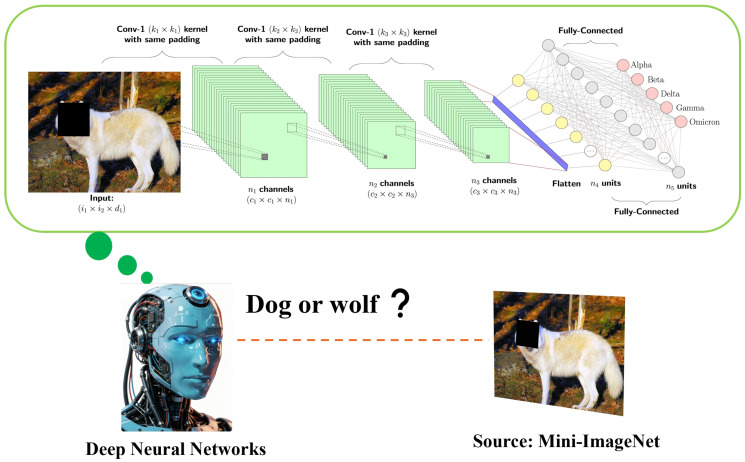 Figure 1
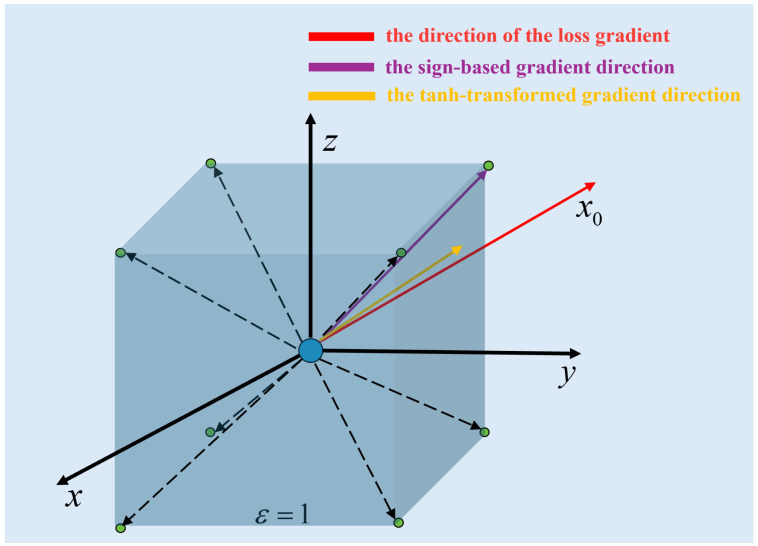 Figure 2
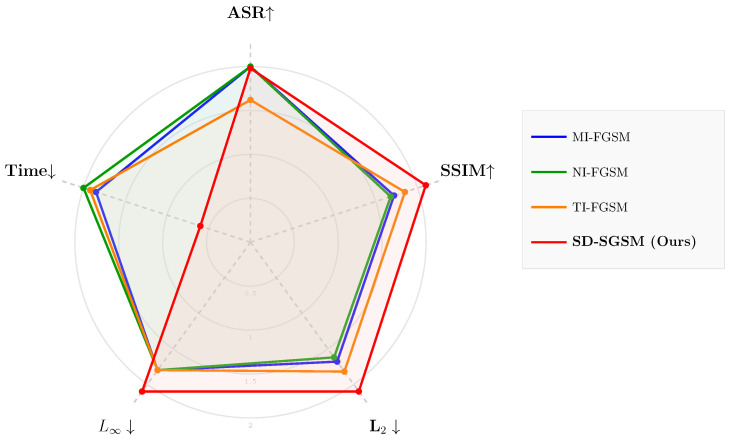 Figure 3
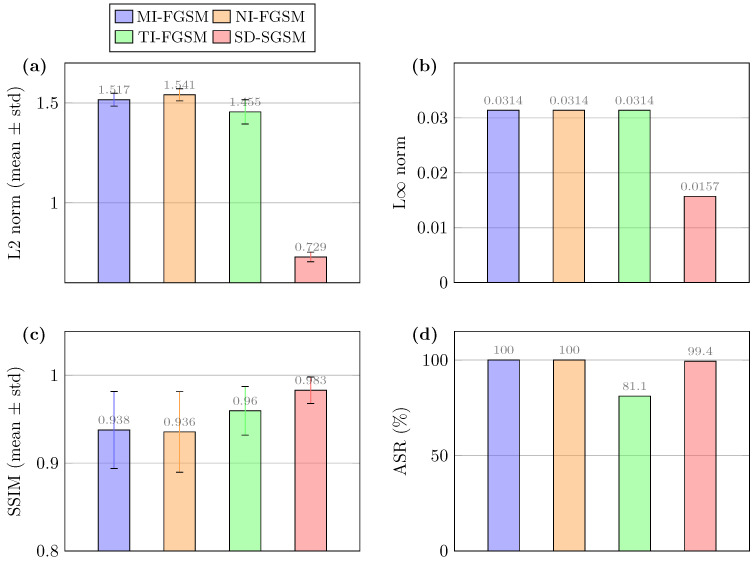 Figure 4
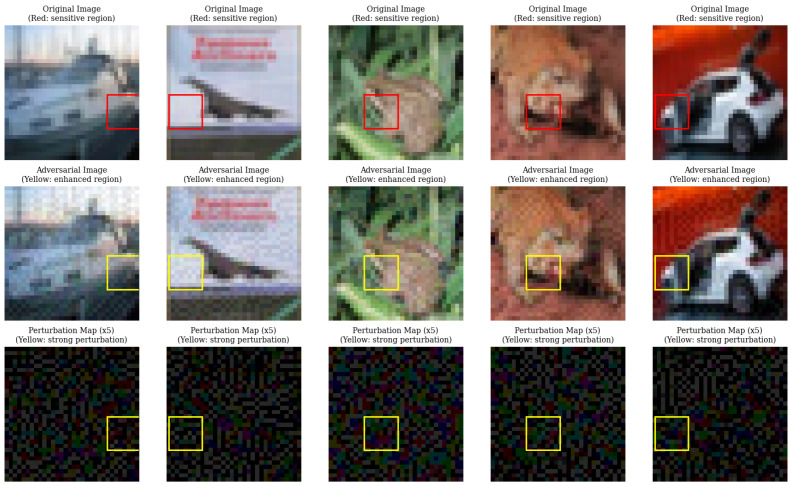 Figure 5
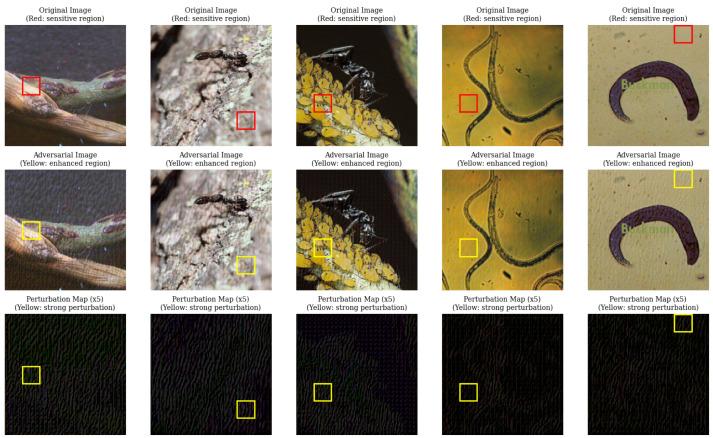 Figure 6
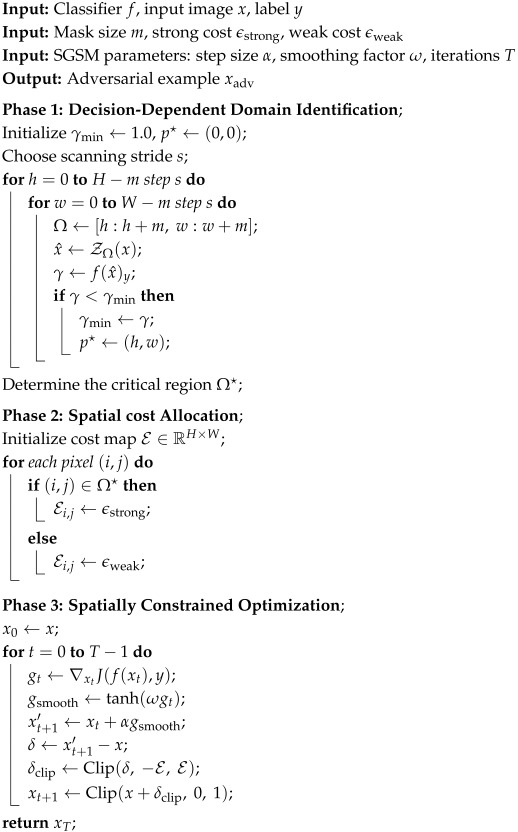 Figure 7
Peer Reviews
No public reviews on file for this paper yet. If you reviewed it on a platform where reviews are public (OpenReview, ICLR, NeurIPS, ICML), you can paste yours below so the community can read it here.
Videos
No videos yet. Explain this paper in a talk, walkthrough, or lecture? Add one.
Taxonomy
TopicsAdversarial Robustness in Machine Learning · Explainable Artificial Intelligence (XAI) · Ethics and Social Impacts of AI