Development and Evaluation of a Lyophilized Plasma-Based Internal Quality Control for Human Immunodeficiency Virus Rapid Diagnostic Tests
Siriphailin Jomjunyoung, Wanvisa Treebuphachatsakul, Supaporn Suparak, Nam K. Tran, Gerald J. Kost, Napaporn Apiratmateekul

TL;DR
Researchers developed a stable, lyophilized plasma control for HIV rapid diagnostic tests that works across multiple brands and maintains quality without strict storage conditions.
Contribution
A novel lyophilized plasma-based internal quality control material with trehalose for HIV RDTs, demonstrating compatibility and long-term stability.
Findings
Trehalose-stabilized lyophilized plasma maintained reactivity and signal intensity under accelerated stability testing.
The control material was compatible with five HIV RDT brands and remained stable for 6 months at 4 ± 2 °C and 25 ± 5 °C.
Signal intensity showed no significant decline (p > 0.05), indicating long-term stability.
Abstract
Background/Objectives: Rapid diagnostic tests (RDTs) for human immunodeficiency virus (HIV) are widely used, but most kits lack standardized internal quality control (IQC) materials. In this study, we aimed to develop and evaluate a plasma-based IQC compatible with five HIV RDT brands and with proven long-term stability. Methods: Control samples at three reactivity levels were tested with five HIV RDT kits in lyophilized and liquid forms. Lyophilized samples were produced with and without trehalose, whereas liquid samples were prepared with and without StabilZyme™ SELECT Stabilizer (Stabilizer). Accelerated stability testing was performed at 37 °C and 45 °C for 28 days, and the most stable formulation was selected for long-term storage at 4 ± 2 °C and 25 ± 5 °C. Stability was assessed based on test-line visibility and signal intensity. Signal-intensity trends were analyzed using simple…
Genes, proteins, chemicals, diseases, species, mutations and cell lines named across the full text — each resolved to its canonical identifier and authoritative record.
Click any figure to enlarge with its caption.
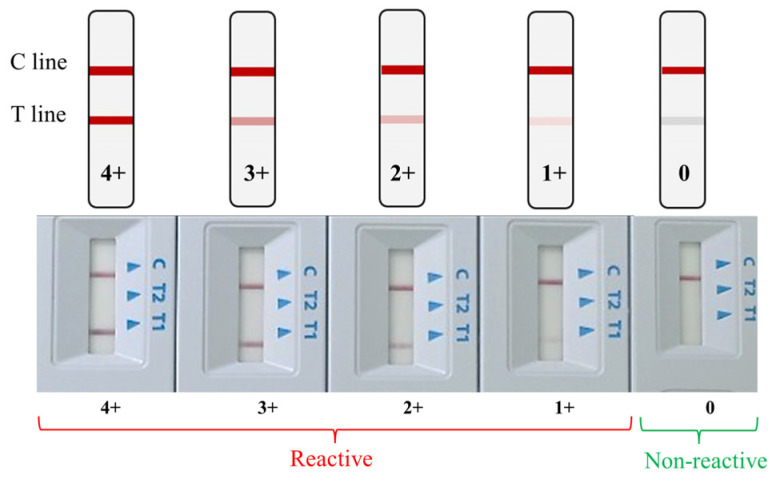 Figure 1
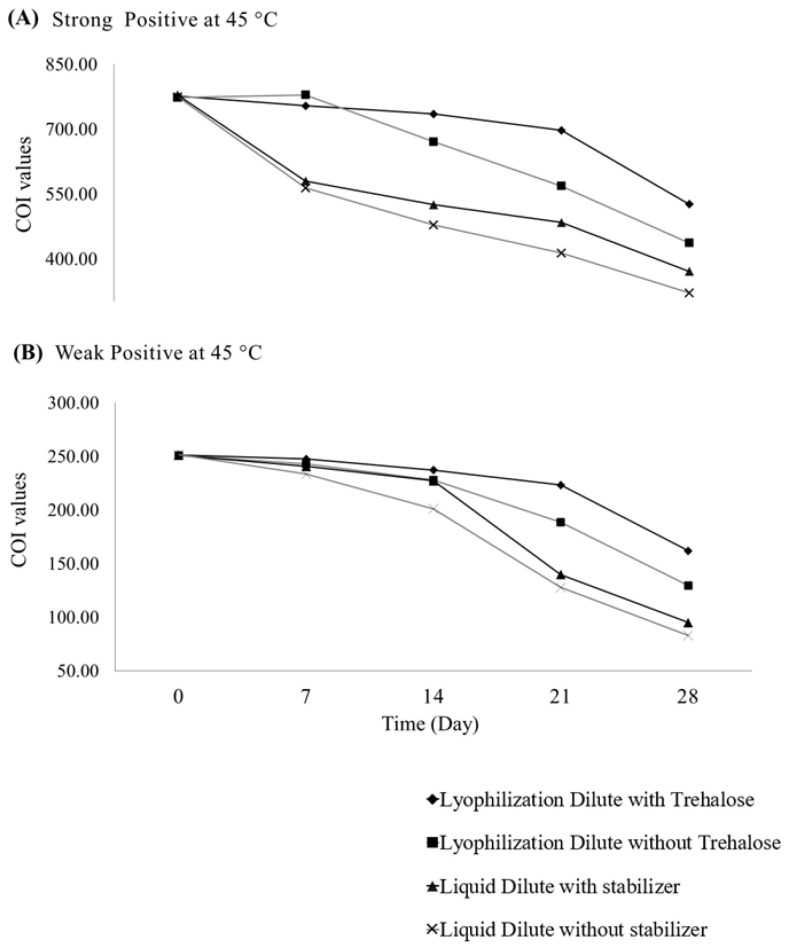 Figure 2
Peer Reviews
No public reviews on file for this paper yet. If you reviewed it on a platform where reviews are public (OpenReview, ICLR, NeurIPS, ICML), you can paste yours below so the community can read it here.
Videos
No videos yet. Explain this paper in a talk, walkthrough, or lecture? Add one.
Taxonomy
TopicsHIV Research and Treatment · HIV-related health complications and treatments · Biological Research and Disease Studies