Improving the Quality of Care Coordination for Children and Young People with Intellectual Disability/Developmental Disorder in the Emergency Department Post CPD-QI Intervention (Motivated for Change Program)
Yu-Na Kim, Natalie Ong, Gail Tomsic, Ruth Bowron, Jacqueline Milne, Abbie Lucien, Karl Pobre, Shefali Jani

TL;DR
A training program improved emergency care coordination for children with intellectual disabilities by enhancing communication and using practical tools.
Contribution
The study demonstrates how disability-focused training and tools like the Top 5 Tile can improve care coordination in pediatric emergency departments.
Findings
Post-intervention, staff more consistently engaged parents and used the Top 5 Tile for information continuity.
Child life therapists played a key role in advocating for families and modeling inclusive practices.
Training improved communication and proactive care planning, though systemic constraints remained.
Abstract
What are the main findings? Care coordination elements were identified in emergency department care for children and young people with ID/DD.Care coordination practices were more evident and intentional after implementation of the Motivated for Change training program. Care coordination elements were identified in emergency department care for children and young people with ID/DD. Care coordination practices were more evident and intentional after implementation of the Motivated for Change training program. What are the implications of the main findings? Disability-focused training and practical system-level tools (e.g., the Top 5 Tile) can strengthen care coordination in paediatric emergency settings.Embedding reasonable adjustments and integrating child life therapists or dedicated liaison roles support child-centred communication and family partnerships for children and young…
Genes, proteins, chemicals, diseases, species, mutations and cell lines named across the full text — each resolved to its canonical identifier and authoritative record.
Click any figure to enlarge with its caption.
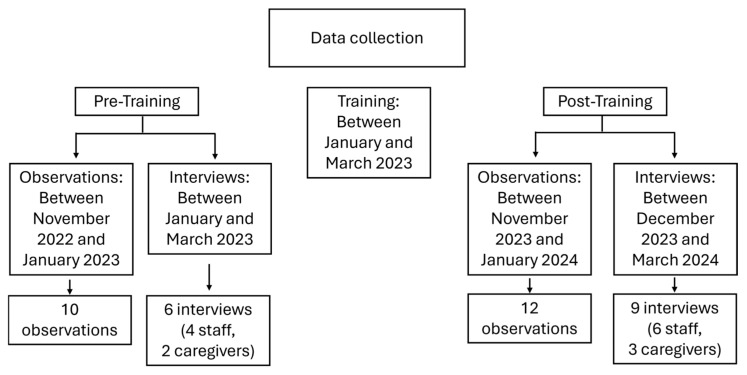 Figure 1
Peer Reviews
No public reviews on file for this paper yet. If you reviewed it on a platform where reviews are public (OpenReview, ICLR, NeurIPS, ICML), you can paste yours below so the community can read it here.
Videos
No videos yet. Explain this paper in a talk, walkthrough, or lecture? Add one.
Taxonomy
TopicsDown syndrome and intellectual disability research · Family and Disability Support Research · Adolescent and Pediatric Healthcare