Prognostic Impact of Baseline Neutrophil-to-Lymphocyte Ratio and Its On-Treatment Change on Survival Outcomes in Advanced Small-Cell Lung Cancer: A Retrospective Analysis
Masashi Ishihara, Hao Chen, Reina Asaga, Hikaru Suzuki, Shinichiro Yamamoto, Maju Kawamoto, Hitoshi Hoshiya, Hiroki Kazahari, Ryosuke Ochiai, Shigeru Tanzawa, Takeshi Honda, Yasuko Ichikawa, Kiyotaka Watanabe, Nobuhiko Seki

TL;DR
This study shows that changes in a blood marker called NLR during treatment can help predict survival outcomes in patients with advanced small-cell lung cancer.
Contribution
The study introduces the combined use of baseline and on-treatment neutrophil-to-lymphocyte ratio (NLR) as a novel prognostic tool in extensive-stage small-cell lung cancer.
Findings
Higher baseline NLR and increases in NLR during treatment are significantly associated with shorter survival in patients with ES-SCLC.
Combining baseline NLR and on-treatment changes identifies distinct prognostic groups, with the worst outcomes for those with both high baseline NLR and increased NLR.
Baseline NLR as a continuous variable inversely correlates with time to treatment failure and overall survival.
Abstract
Extensive-stage small-cell lung cancer is an aggressive disease, and predicting patient outcome remains difficult in clinical practice. Simple and widely accessible biomarkers are needed to enable clinicians to better stratify prognosis during the course of treatment. One such marker is the neutrophil-to-lymphocyte ratio (NLR), which can be calculated from routine blood tests and reflects inflammation in the body. In this study, we assessed whether baseline and 6-week NLR were associated with survival in patients with ES-SCLC treated with chemotherapy. We found that patients with higher baseline values and those with increases within six weeks of treatment initiation had poorer survival outcomes. These results suggest that early monitoring of this blood-based marker may help identify patients at higher risk and support treatment decision-making using routinely collected clinical data.…
Genes, proteins, chemicals, diseases, species, mutations and cell lines named across the full text — each resolved to its canonical identifier and authoritative record.
Click any figure to enlarge with its caption.
 Figure 1
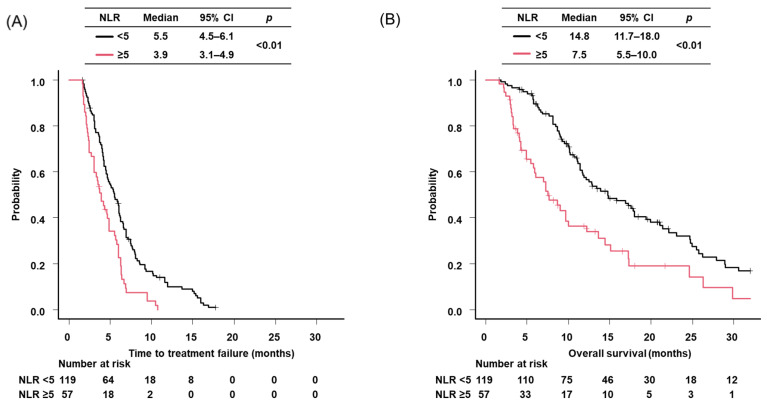 Figure 2
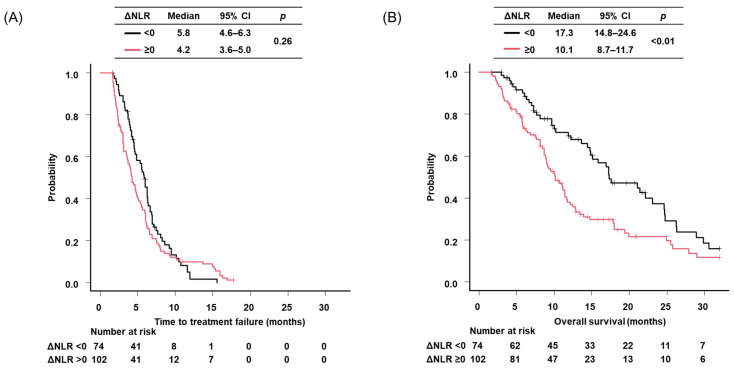 Figure 3
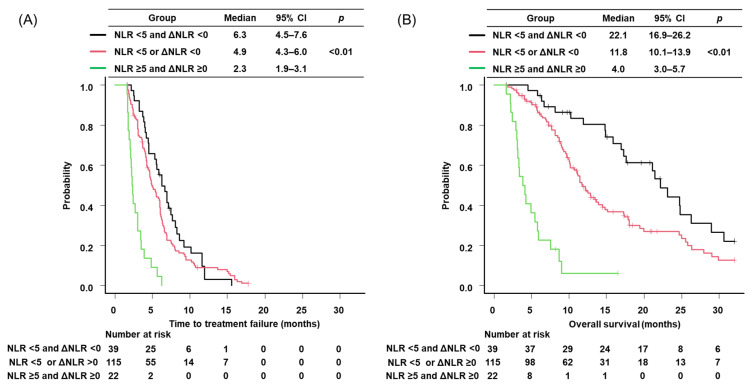 Figure 4
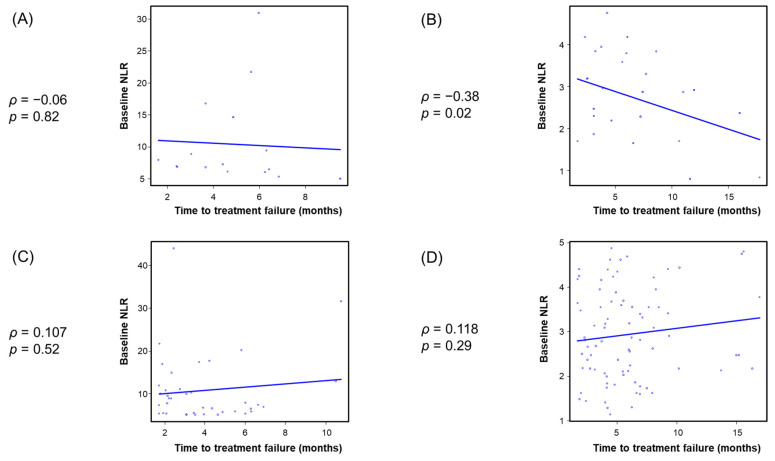 Figure 5
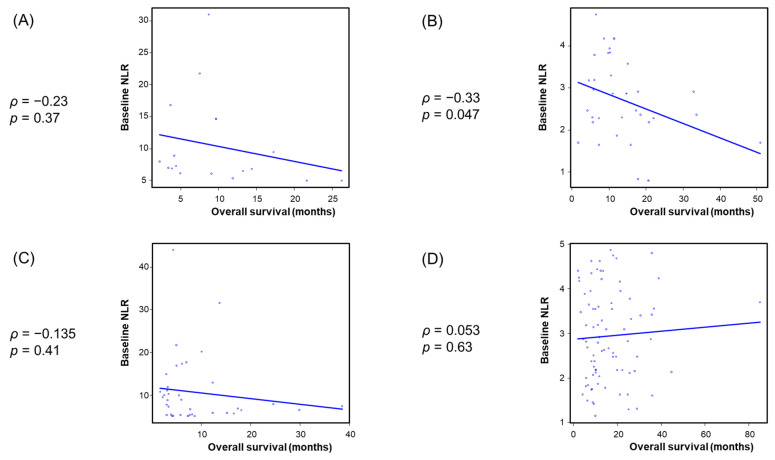 Figure 6
Peer Reviews
No public reviews on file for this paper yet. If you reviewed it on a platform where reviews are public (OpenReview, ICLR, NeurIPS, ICML), you can paste yours below so the community can read it here.
Videos
No videos yet. Explain this paper in a talk, walkthrough, or lecture? Add one.
Taxonomy
TopicsInflammatory Biomarkers in Disease Prognosis · Lung Cancer Research Studies · Inflammation biomarkers and pathways