Redefining Pituitary Neuroendocrine Tumors in MEN1: Prevalence, Clinical Behavior, and Implications for Long-Term Surveillance
Roberta Modica, Alessia Liccardi, Roberto Minotta, Elio Benevento, Gianfranco Di Iasi, Massimo Di Nola, Michele Coletta, Annamaria Colao

TL;DR
This study shows that pituitary tumors in MEN1 are common but mostly harmless, often requiring only careful monitoring rather than aggressive treatment.
Contribution
The study provides new insights into the prevalence and management of pituitary tumors in MEN1, advocating for personalized surveillance strategies.
Findings
Almost half of MEN1 patients developed pituitary tumors, mostly small and detected through screening.
Most tumors were managed with medication or monitoring, with surgery needed only for larger tumors.
Tumor recurrence was uncommon, and no sex-related differences were observed in outcomes.
Abstract
Multiple endocrine neoplasia type 1 is a rare inherited condition that causes tumors in several hormone-producing glands, including the pituitary gland. In this study, we analyzed pituitary tumors in over 100 patients followed at a single specialized center over two decades. Almost half of the patients developed a pituitary tumor, most often small lesions detected through regular screening. About half of the tumors produced excess hormones, mainly prolactin, while the others were hormonally inactive. Most tumors were successfully managed with medication or careful monitoring, and surgery was required only in a minority of cases, usually for larger tumors. Tumor recurrence was uncommon, and no meaningful differences were observed between men and women. Overall, our findings suggest that pituitary tumors in this condition are generally less aggressive than previously thought. These…
Genes, proteins, chemicals, diseases, species, mutations and cell lines named across the full text — each resolved to its canonical identifier and authoritative record.
Click any figure to enlarge with its caption.
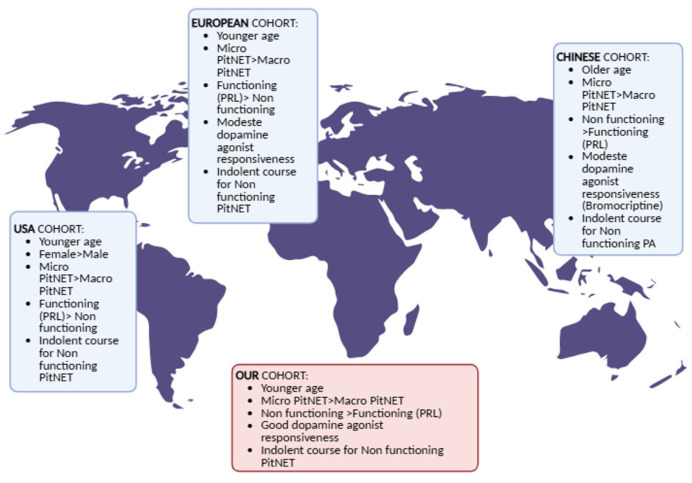 Figure 1
Peer Reviews
No public reviews on file for this paper yet. If you reviewed it on a platform where reviews are public (OpenReview, ICLR, NeurIPS, ICML), you can paste yours below so the community can read it here.
Videos
No videos yet. Explain this paper in a talk, walkthrough, or lecture? Add one.
Taxonomy
TopicsPituitary Gland Disorders and Treatments · Neuroendocrine Tumor Research Advances · Adrenal and Paraganglionic Tumors