Comprehensive Sonographic Paradigm and Trend Pattern of Median Nerve Indices in Carpal Tunnel Syndrome from Wrist to Forearm: What We Need to Know
Adeena Khan, Fawaz T. Salamah, Syed S. Habib, Waleed Fawzy, Fawzia AlRouq, Huthayfah T. Alkhliwi, Mamoona Sultan, Ahmed O. Alsabih

TL;DR
This study identifies optimal ultrasound measurement sites and patterns for diagnosing carpal tunnel syndrome by comparing median nerve indices in the wrist and forearm.
Contribution
The paper introduces a comprehensive sonographic approach using differences and ratios of median nerve measurements to improve CTS diagnosis.
Findings
Hypoechoic, vascular, and compressed median nerves were more common in CTS cases than controls.
The proximal to inlet and 12 cm forearm sites showed highest diagnostic accuracy for CTS.
Differences and ratios between median nerve measurements outperformed isolated values in diagnosing CTS.
Abstract
Objective: The study aim was panoramic sonographic inspection of the median nerve (MN) from the wrist to the forearm in cases and controls. Additionally, integration of comparisons at various levels may aid in identifying principal ultrasound parameters of carpal tunnel syndrome (CTS). Methods: Dynamic, static, and panoramic sonographies of 65 healthy and 83 CTS hands were performed. Multileveled qualitative (MN and flexor retinaculum morphology) and quantitative (cross-sectional area CSA, differences, and ratios) MN variables for CTS, followed by comparative statistical analysis to predict values and patterns of MN, were derived. Results: Subjectively, hypoechoic, vascular, compressed, hypomobile MN and bowed thickened flexor retinaculum were significantly more prevalent in cases (28.9–66.3%) than in controls (0–7.7%). Objectively, the proximal to inlet (pi) and the forearm at 12 cm…
Genes, proteins, chemicals, diseases, species, mutations and cell lines named across the full text — each resolved to its canonical identifier and authoritative record.
Click any figure to enlarge with its caption.
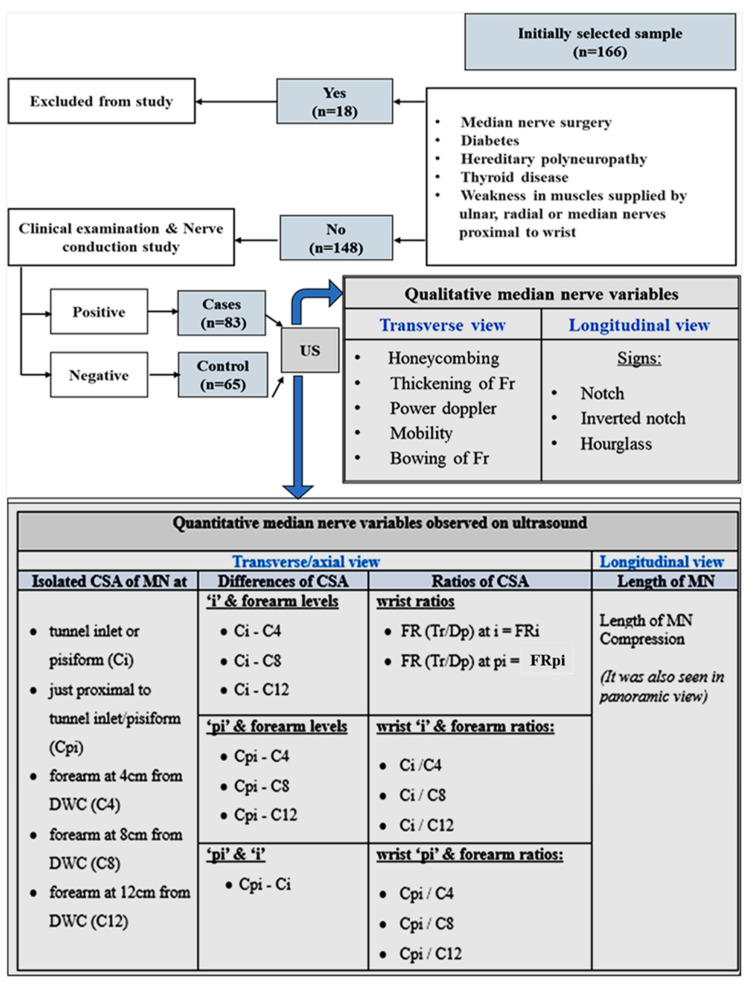 Figure 1
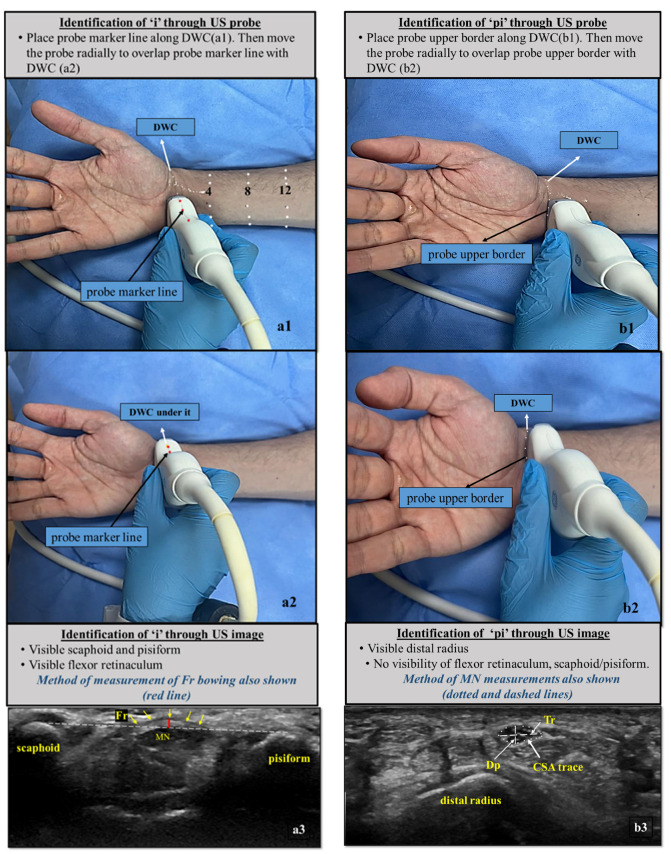 Figure 2
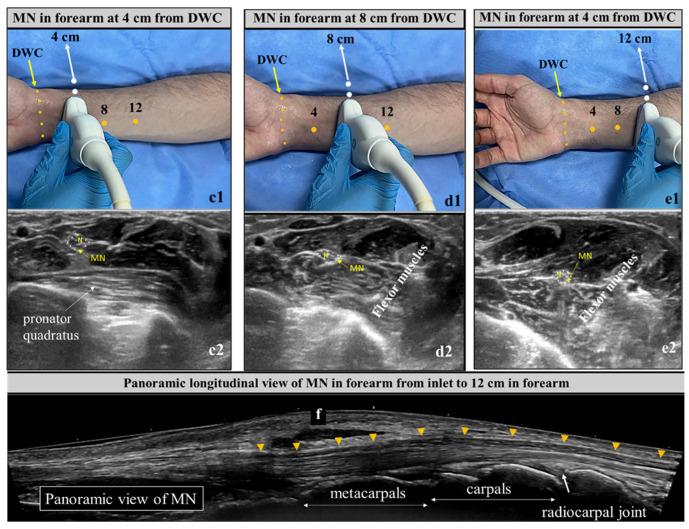 Figure 3
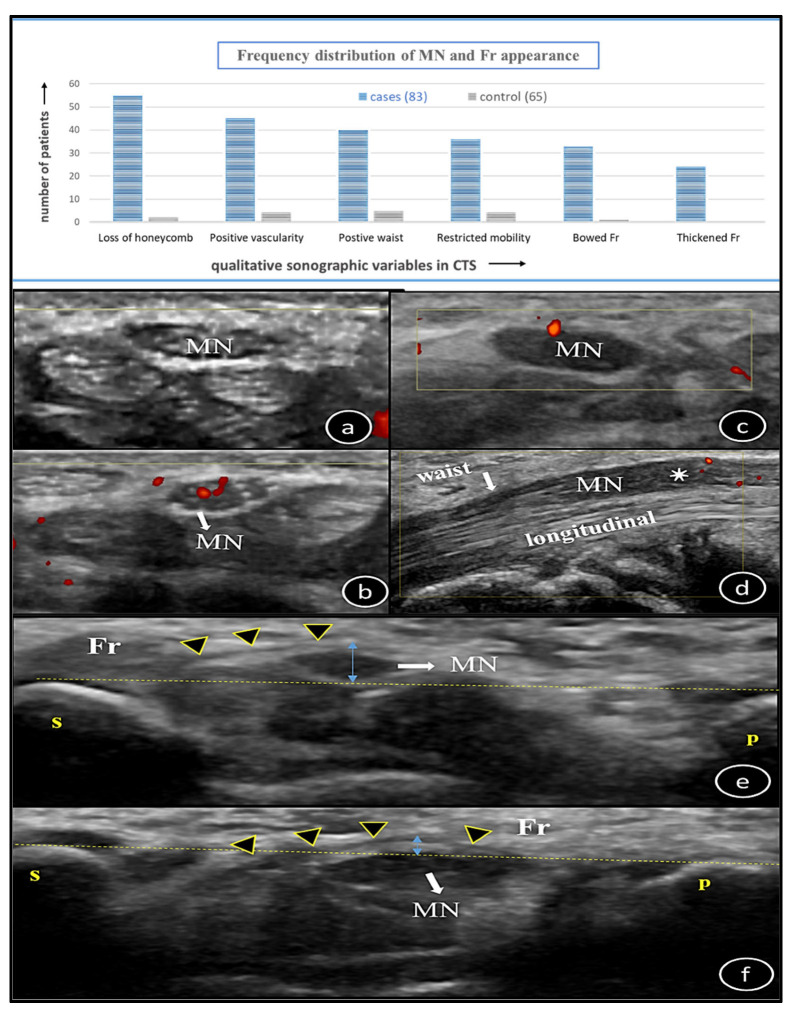 Figure 4
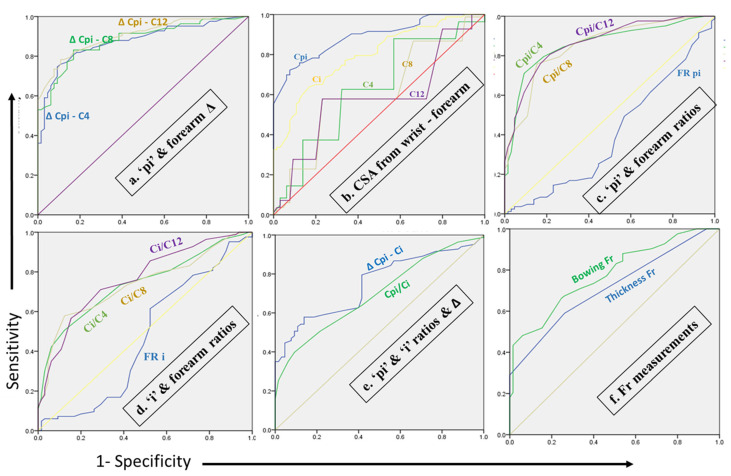 Figure 5
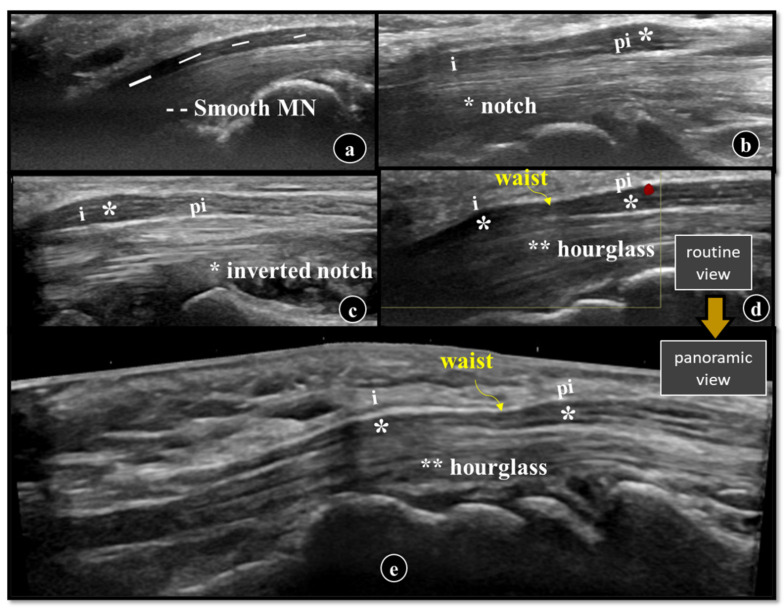 Figure 6
Peer Reviews
No public reviews on file for this paper yet. If you reviewed it on a platform where reviews are public (OpenReview, ICLR, NeurIPS, ICML), you can paste yours below so the community can read it here.
Videos
No videos yet. Explain this paper in a talk, walkthrough, or lecture? Add one.
Taxonomy
TopicsPeripheral Nerve Disorders · Orthopedic Surgery and Rehabilitation · Motor Control and Adaptation