Non-Invasive Assessment of Treatment Response in Actinic Keratosis: A Clinically Oriented Multimodal Review
Gianluca Pistore, Luca Ambrosio, Antonio Di Guardo, Anna Rita Panebianco, Giovanni Di Lella, Claudio Conforti, Giovanni Pellacani, Francesco Moro, Paolo Marchetti, Damiano Abeni, Luca Fania, Francesco Ricci

TL;DR
This paper reviews non-invasive imaging tools to better assess treatment success in actinic keratosis, aiming to reduce recurrences and unnecessary biopsies.
Contribution
The paper introduces a multimodal framework integrating advanced imaging techniques for more accurate non-invasive monitoring of actinic keratosis treatment response.
Findings
Reflectance confocal microscopy and line-field optical coherence tomography detect residual disease not visible clinically.
High-frequency ultrasound tracks superficial dermal remodeling after field-directed therapies.
Dermoscopy alone may miss subclinical persistence, highlighting the need for multimodal strategies.
Abstract
Actinic keratoses are common skin lesions caused by long-term sun damage and may progress to skin cancer. After field-directed treatments, such as photodynamic therapy or topical drugs, lesions often appear clinically healed, but microscopic disease may persist and lead to recurrence. This review explains why clinical examination and dermoscopy alone may not be sufficient to assess treatment success, and discusses how non-invasive imaging techniques can improve follow-up. We summarize how advanced tools, including reflectance confocal microscopy, line-field optical coherence tomography, and high-frequency ultrasound can detect subtle residual disease and tissue recovery that are not visible to the naked eye. We also describe emerging optical approaches that analyze tissue chemistry. By integrating these methods in a multimodal strategy, clinicians may better evaluate treatment response,…
Genes, proteins, chemicals, diseases, species, mutations and cell lines named across the full text — each resolved to its canonical identifier and authoritative record.
Click any figure to enlarge with its caption.
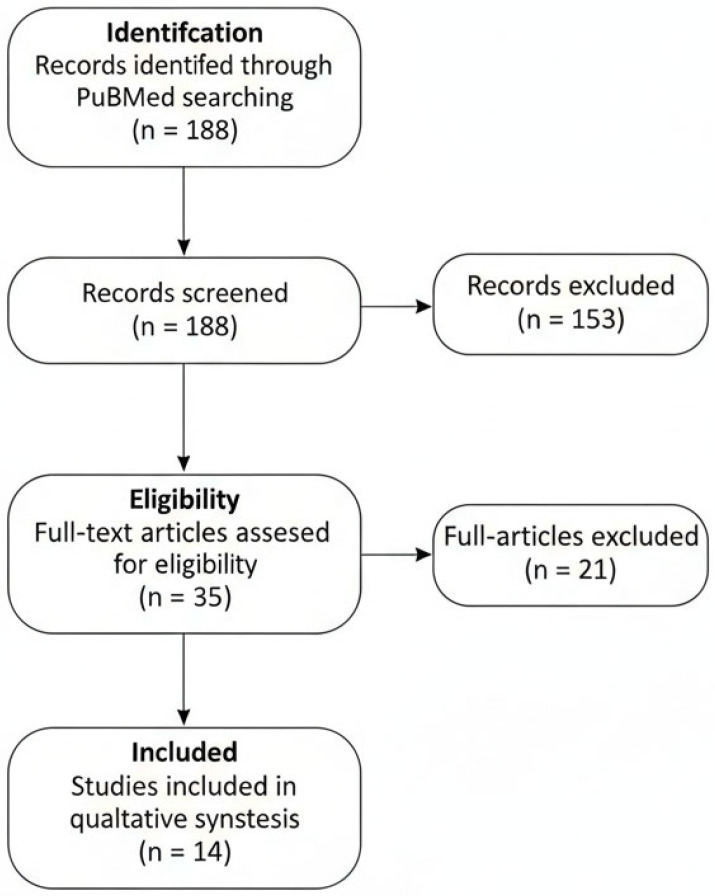 Figure 1
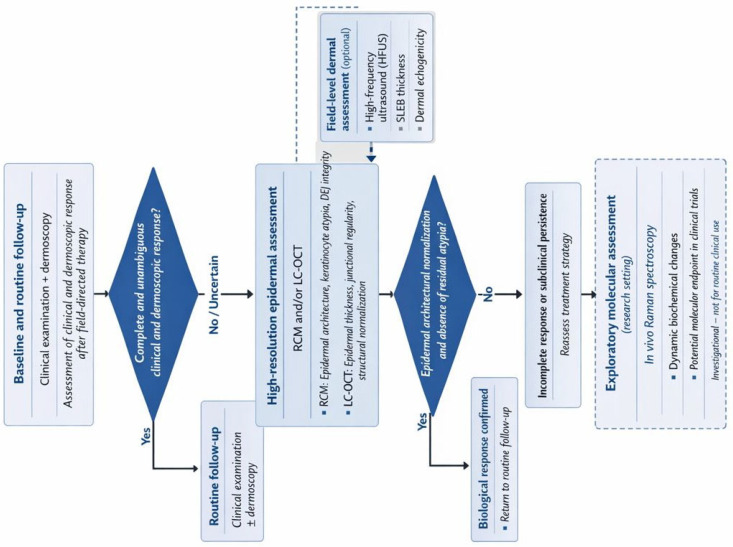 Figure 2
Peer Reviews
No public reviews on file for this paper yet. If you reviewed it on a platform where reviews are public (OpenReview, ICLR, NeurIPS, ICML), you can paste yours below so the community can read it here.
Videos
No videos yet. Explain this paper in a talk, walkthrough, or lecture? Add one.
Taxonomy
TopicsNonmelanoma Skin Cancer Studies · Cutaneous Melanoma Detection and Management · Skin Protection and Aging