Three-Dimensional Displacement of Upper Cervical Vertebrae in Severe Mandibular Deviation Caused by Condylar Hyperplasia: A Tomographic Segmentation Study
Claudia Milena Ramírez, Rodrigo Cárdenas-Perilla, Luis Eduardo Almeida, Diego Fernando López

TL;DR
This study examines how severe jaw deviation caused by condylar hyperplasia affects the 3D positioning of upper cervical vertebrae using CT scans.
Contribution
The study introduces a CT-based segmentation method to analyze 3D cervical displacement in patients with condylar hyperplasia.
Findings
C2 and C3 show increased lateral inclination toward the side of mandibular deviation.
C2 Pitch negatively correlates with the severity of mandibular deviation.
Strong correlations between Pitch and Yaw angles in C1 and C2 suggest synchronized motion.
Abstract
Objective: To evaluate the three-dimensional (3D) angular displacement (Roll, Yaw, and Pitch) of the upper cervical vertebrae (C1, C2, and C3) in patients with severe mandibular deviation (MD) due to condylar hyperplasia (CH), utilizing a computed tomography (CT)-based segmentation approach. Methods: This retrospective cross-sectional study included 50 patients with MD ≥ 6 mm caused by hemimandibular elongation (HE) or a hybrid form (HF) of CH. The skull, mandible, and cervical vertebrae (C1–C3) were segmented using 3D Slicer software. Angular deviations (Pitch, Yaw, Roll) were measured relative to the Frankfurt plane. Patients were categorized by the side of CH (right or left), and intergroup comparisons were performed using Kruskal–Wallis and Mann–Whitney U tests. Spearman’s correlation analyses assessed associations between MD magnitude and cervical angles. Results: CH was…
Genes, proteins, chemicals, diseases, species, mutations and cell lines named across the full text — each resolved to its canonical identifier and authoritative record.
Click any figure to enlarge with its caption.
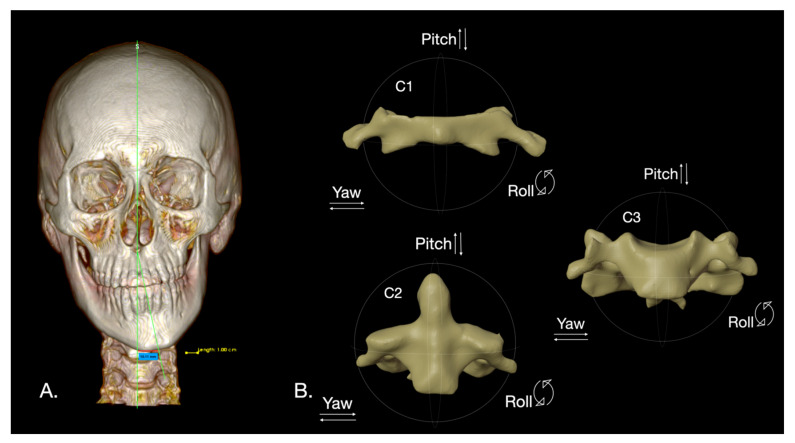 Figure 1
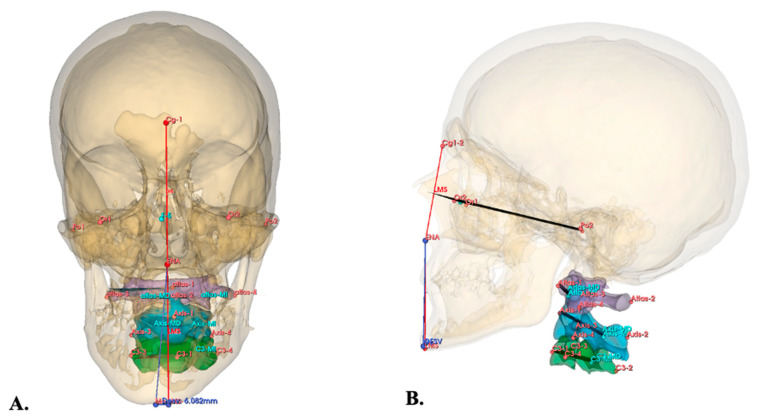 Figure 2
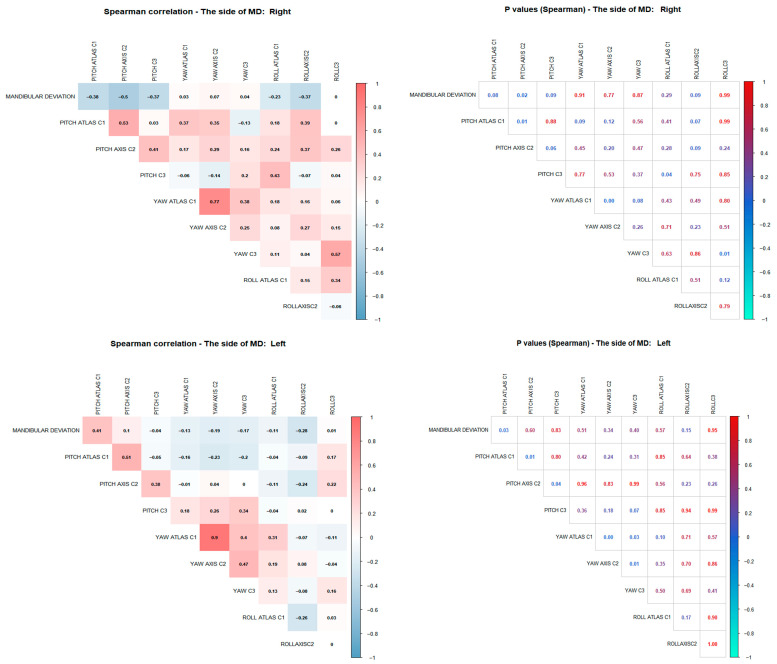 Figure 3
Peer Reviews
No public reviews on file for this paper yet. If you reviewed it on a platform where reviews are public (OpenReview, ICLR, NeurIPS, ICML), you can paste yours below so the community can read it here.
Videos
No videos yet. Explain this paper in a talk, walkthrough, or lecture? Add one.
Taxonomy
TopicsTemporomandibular Joint Disorders · Orthodontics and Dentofacial Orthopedics · Facial Trauma and Fracture Management