Non-Destructive Freshness Assessment of Atlantic Salmon (Salmo salar) via Hyperspectral Imaging and an SPA-Enhanced Transformer Framework
Zhongquan Jiang, Yu Li, Mincheng Xie, Hanye Zhang, Haiyan Zhang, Guangxin Yang, Peng Wang, Tao Yuan, Xiaosheng Shen

TL;DR
This paper introduces a non-destructive method using hyperspectral imaging and a Transformer model to assess the freshness of Atlantic salmon efficiently and accurately.
Contribution
The novel framework combines hyperspectral imaging with a Transformer deep learning model enhanced by the Successive Projections Algorithm for freshness assessment.
Findings
The Transformer model with Savitzky-Golay smoothing achieved high accuracy (R² ≥ 0.97) for predicting freshness indicators.
Using 30 characteristic wavelengths selected by SPA maintained high precision while improving computational efficiency sixfold.
The study confirms the effectiveness of attention-based deep learning in hyperspectral data analysis for food freshness.
Abstract
Monitoring the freshness of Salmo salar within cold chain logistics is paramount for ensuring food safety. However, conventional physicochemical and microbiological assays are impeded by inherent limitations, including destructiveness and significant time latency, rendering them inadequate for the real-time, non-invasive inspection demands of modern industry. Here, we present a novel detection framework synergizing hyperspectral imaging (400–1000 nm) with the Transformer deep learning architecture. Through a rigorous comparative analysis of twelve preprocessing protocols and four feature wavelength selection algorithms (Lasso, Genetic Algorithm, Successive Projections Algorithm, and Random Frog), prediction models for Total Volatile Basic Nitrogen (TVB-N) and Total Viable Count (TVC) were established. Furthermore, the capacity of the Transformer to capture long-range spectral…
Genes, proteins, chemicals, diseases, species, mutations and cell lines named across the full text — each resolved to its canonical identifier and authoritative record.
Click any figure to enlarge with its caption.
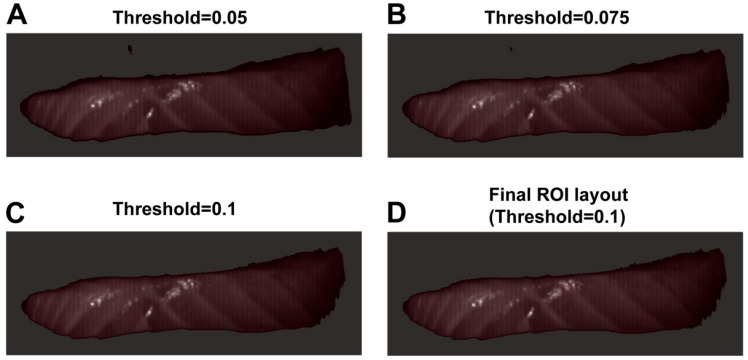 Figure 1
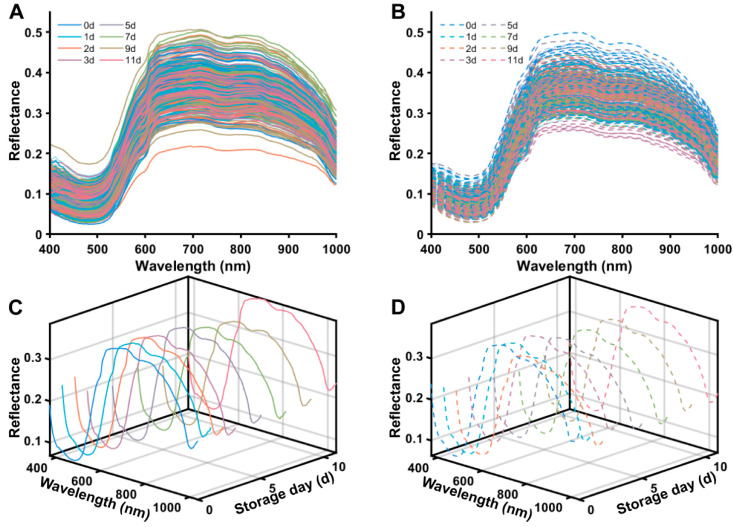 Figure 2
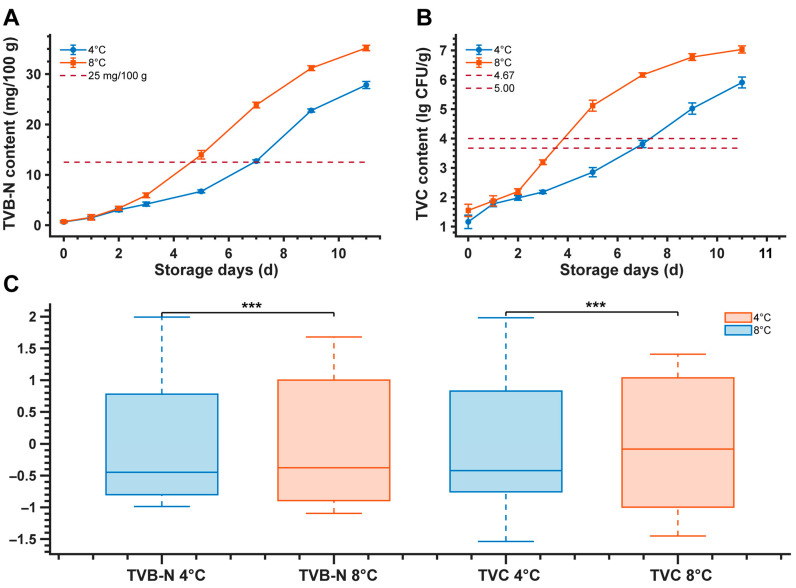 Figure 3
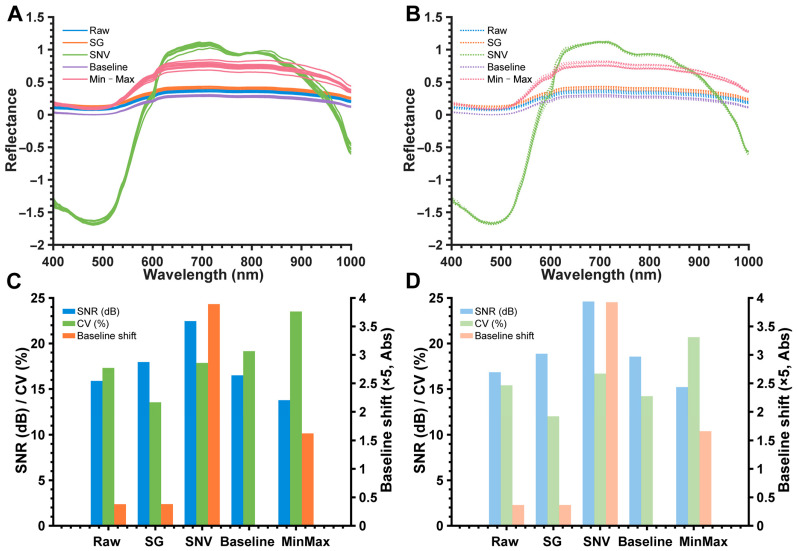 Figure 4
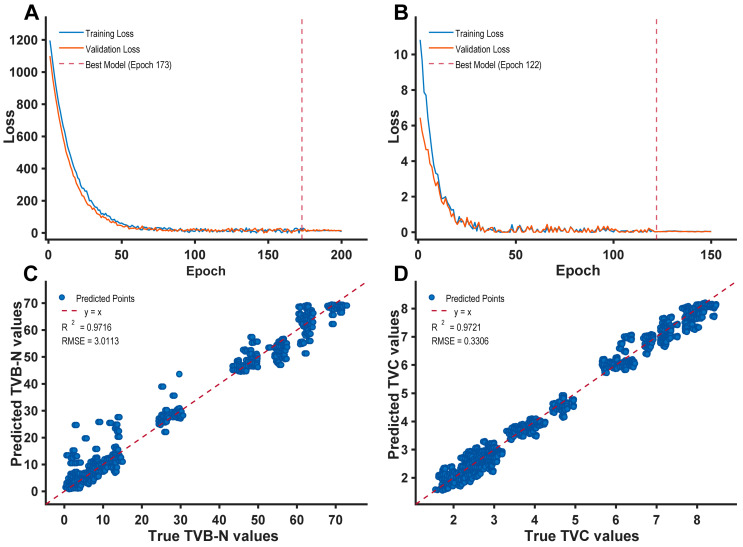 Figure 5
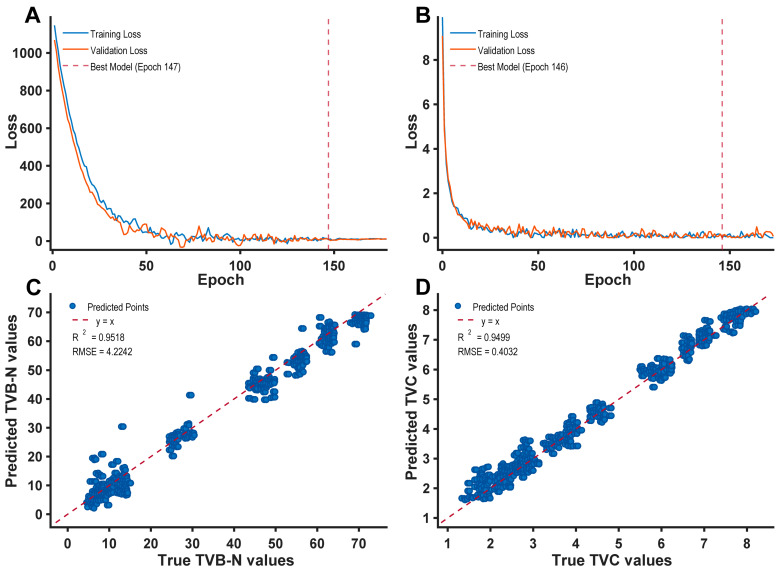 Figure 6
Peer Reviews
No public reviews on file for this paper yet. If you reviewed it on a platform where reviews are public (OpenReview, ICLR, NeurIPS, ICML), you can paste yours below so the community can read it here.
Videos
No videos yet. Explain this paper in a talk, walkthrough, or lecture? Add one.
Taxonomy
TopicsSpectroscopy and Chemometric Analyses · Water Quality Monitoring and Analysis · Water Quality Monitoring Technologies