Growing Up in Families with Parenting Stress and Conflict: Longitudinal Psychosocial Risk Patterns, Behavioral Problems and the Moderating Role of the Home Learning Environment
Susanne M. Ulrich, Anja Linberg, Sabine Düval, Susanne Kuger

TL;DR
Children in families with high parenting stress and conflict show more behavioral problems, and typical home learning activities may not help if interactions are strained.
Contribution
The study reveals that home learning activities can sometimes worsen behavioral problems in high-stress families, emphasizing the importance of interaction quality over quantity.
Findings
Children in parenting-stress/conflict-burdened families show higher behavioral problems than those in low-burdened families.
Home learning activities act as protective factors in most families but increase behavioral problems in high-stress families.
Universal social/educational services may not mitigate risks in families with poor interaction quality.
Abstract
What are the main findings? The assessed risk inventory from early childhood intervention can be used to identify psychosocial risk patterns and child development problems: children in parenting-stress/conflict-burdened and multiple-burdened families showed significantly higher levels of behavioral problems than children in low- or only economically burdened families.Home learning activities generally act as protective factors, but in families with high parenting stress and conflict, increased educational activity and use of universal social/educational services were associated with higher behavioral problems, suggesting that emotional and relational quality of interactions may outweigh quantity. The assessed risk inventory from early childhood intervention can be used to identify psychosocial risk patterns and child development problems: children in parenting-stress/conflict-burdened…
Genes, proteins, chemicals, diseases, species, mutations and cell lines named across the full text — each resolved to its canonical identifier and authoritative record.
Click any figure to enlarge with its caption.
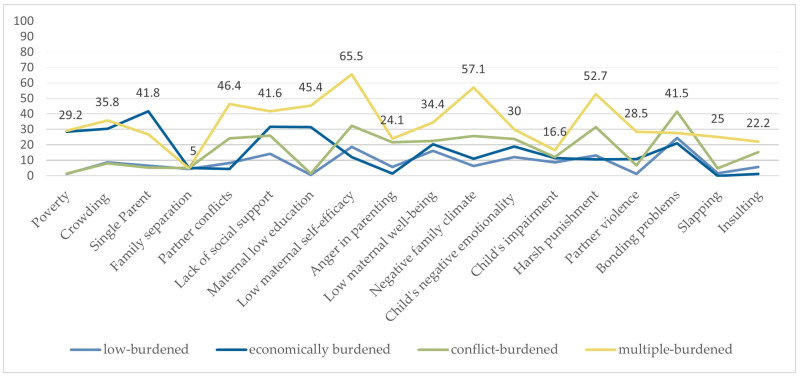 Figure 1
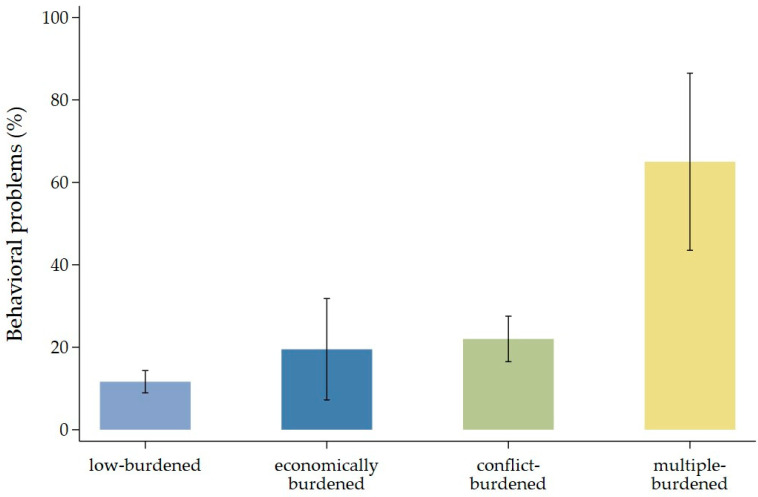 Figure 2
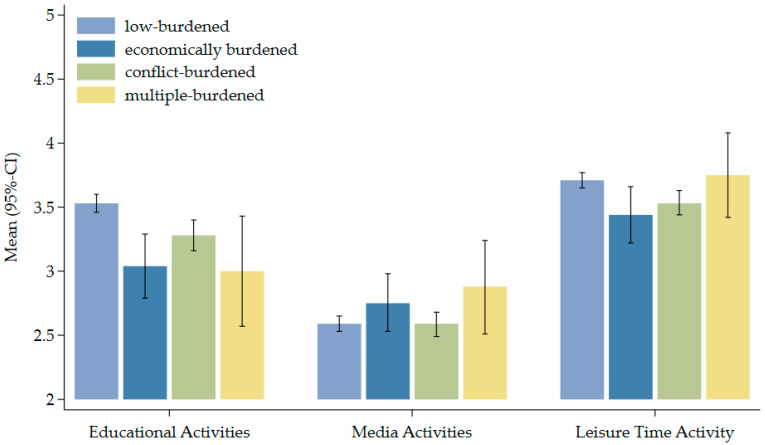 Figure 3
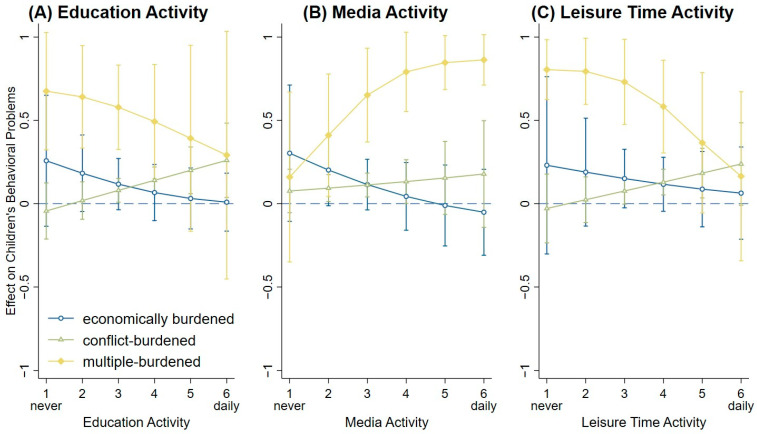 Figure 4
Peer Reviews
No public reviews on file for this paper yet. If you reviewed it on a platform where reviews are public (OpenReview, ICLR, NeurIPS, ICML), you can paste yours below so the community can read it here.
Videos
No videos yet. Explain this paper in a talk, walkthrough, or lecture? Add one.
Taxonomy
TopicsChild and Adolescent Psychosocial and Emotional Development · Early Childhood Education and Development · Parental Involvement in Education