DXA-Derived Visceral and Subcutaneous Adipose Tissue and Postmenopausal Breast Cancer Mortality
Jennifer W. Bea, Shelby G. Ziller, Dylan Decker, Denise J. Roe, Andrew O. Odegaard, Heather M. Ochs-Balcom, Sarah M. Lima, Bette Caan, Jean Wactawski-Wende, Margaret S. Pichardo, Holly Harris, Zhao Chen

TL;DR
This study finds that both deep belly fat and surface belly fat are equally linked to higher breast cancer death risk in postmenopausal women.
Contribution
Shows visceral and subcutaneous abdominal fat are similarly associated with breast cancer mortality in the prevention setting.
Findings
Higher baseline visceral and subcutaneous adipose tissue were each linked to 49% and 40% increased breast cancer mortality risk.
Time-varying models confirmed similar associations between belly fat and mortality over time.
738 breast cancer cases and 87 breast cancer-related deaths were observed over 27 years of follow-up.
Abstract
Prior research shows that higher levels of body fat, particularly deep belly fat that hugs the organs, can increase the risk of postmenopausal breast cancer. After a breast cancer diagnosis, belly fat has also been implicated in death. However, it is unclear if belly fat increases the risk of dying from breast cancer among women that have never been diagnosed with cancer before. This study showed that greater amounts of fat in two different fat compartments in the belly (i.e., surface subcutaneous and deep visceral) were equally associated with death from breast cancer. Future studies are needed to determine if these detailed measurements of belly fat are necessary for prediction of death from breast cancer or if simple measures like BMI and waist circumference are sufficient. Background: Elevated abdominal adipose tissue at time of diagnosis is associated with breast cancer mortality.…
Genes, proteins, chemicals, diseases, species, mutations and cell lines named across the full text — each resolved to its canonical identifier and authoritative record.
Click any figure to enlarge with its caption.
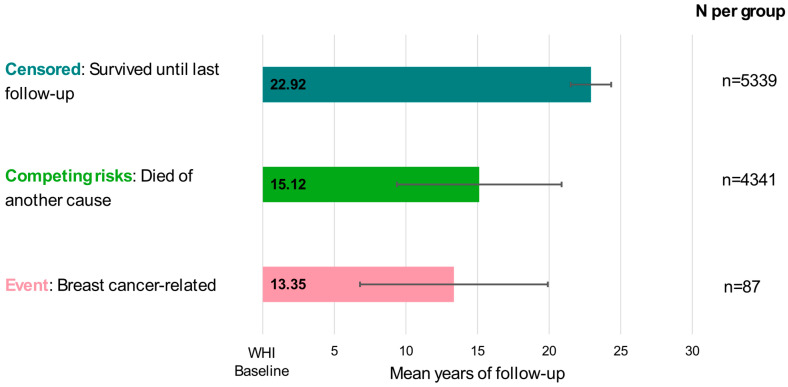 Figure 1
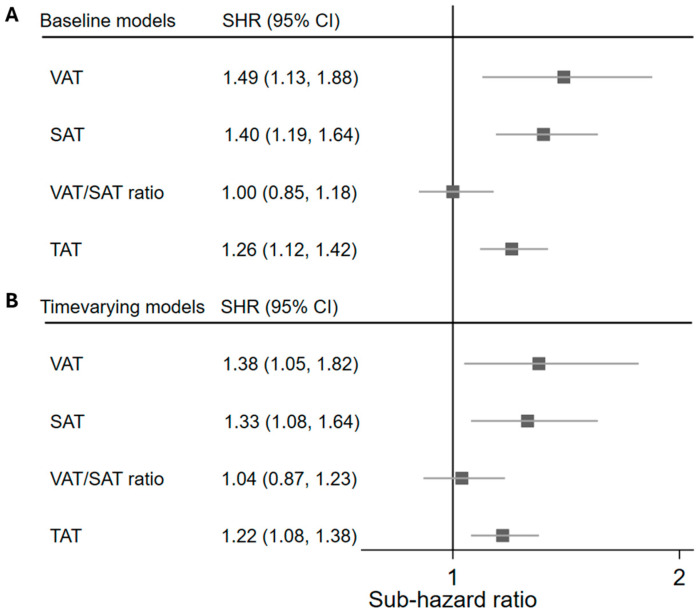 Figure 2
Peer Reviews
No public reviews on file for this paper yet. If you reviewed it on a platform where reviews are public (OpenReview, ICLR, NeurIPS, ICML), you can paste yours below so the community can read it here.
Videos
No videos yet. Explain this paper in a talk, walkthrough, or lecture? Add one.
Taxonomy
TopicsCancer Risks and Factors · Adipokines, Inflammation, and Metabolic Diseases · Nutrition and Health in Aging