MRI-Based Bladder Cancer Staging via YOLOv11 Segmentation and Deep Learning Classification
Phisit Katongtung, Kanokwatt Shiangjen, Watcharaporn Cholamjiak, Krittin Naravejsakul

TL;DR
This paper introduces an AI framework using MRI scans to automatically stage bladder cancer, aiming to improve consistency in diagnosis.
Contribution
The novel contribution is an automated deep learning framework combining YOLOv11 segmentation and multiple classifiers for MRI-based bladder cancer staging.
Findings
The framework achieved high accuracy and AUC in differentiating non–muscle-invasive from muscle-invasive bladder cancer.
All evaluated models showed comparable performance in MRI-based staging with strong point estimates of accuracy.
Calibration analysis revealed consistent probabilistic behavior of predicted stage probabilities.
Abstract
Background: Accurate staging of bladder cancer is critical for guiding clinical management, particularly the distinction between non–muscle-invasive (T1) and muscle-invasive (T2–T4) disease. Although MRI offers superior soft-tissue contrast, image interpretation remains opera-tor-dependent and subject to inter-observer variability. This study proposes an automated deep learning framework for MRI-based bladder cancer staging to support standardized radio-logical interpretation. Methods: A sequential AI-based pipeline was developed, integrating hybrid tumor segmentation using YOLOv11 for lesion detection and DeepLabV3 for boundary refinement, followed by three deep learning classifiers (VGG19, ResNet50, and Vision Transformer) for MRI-based stage prediction. A total of 416 T2-weighted MRI images with radiology-derived stage labels (T1–T4) were included, with data augmentation applied…
Genes, proteins, chemicals, diseases, species, mutations and cell lines named across the full text — each resolved to its canonical identifier and authoritative record.
Click any figure to enlarge with its caption.
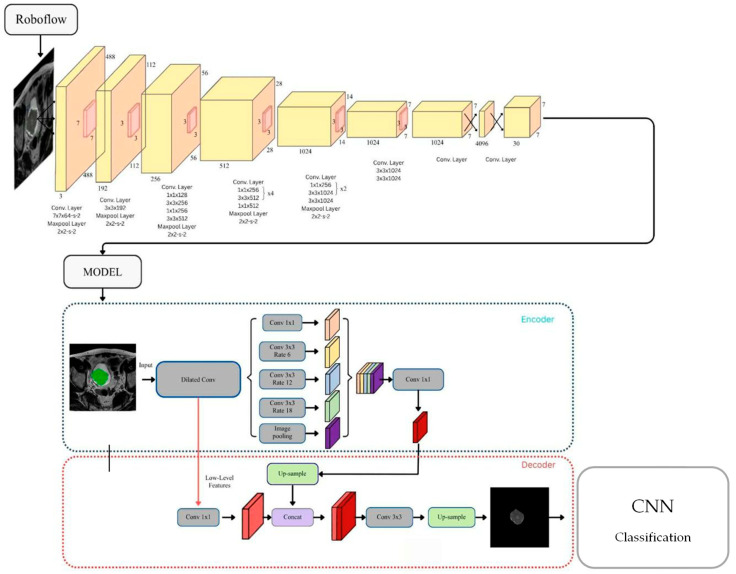 Figure 1
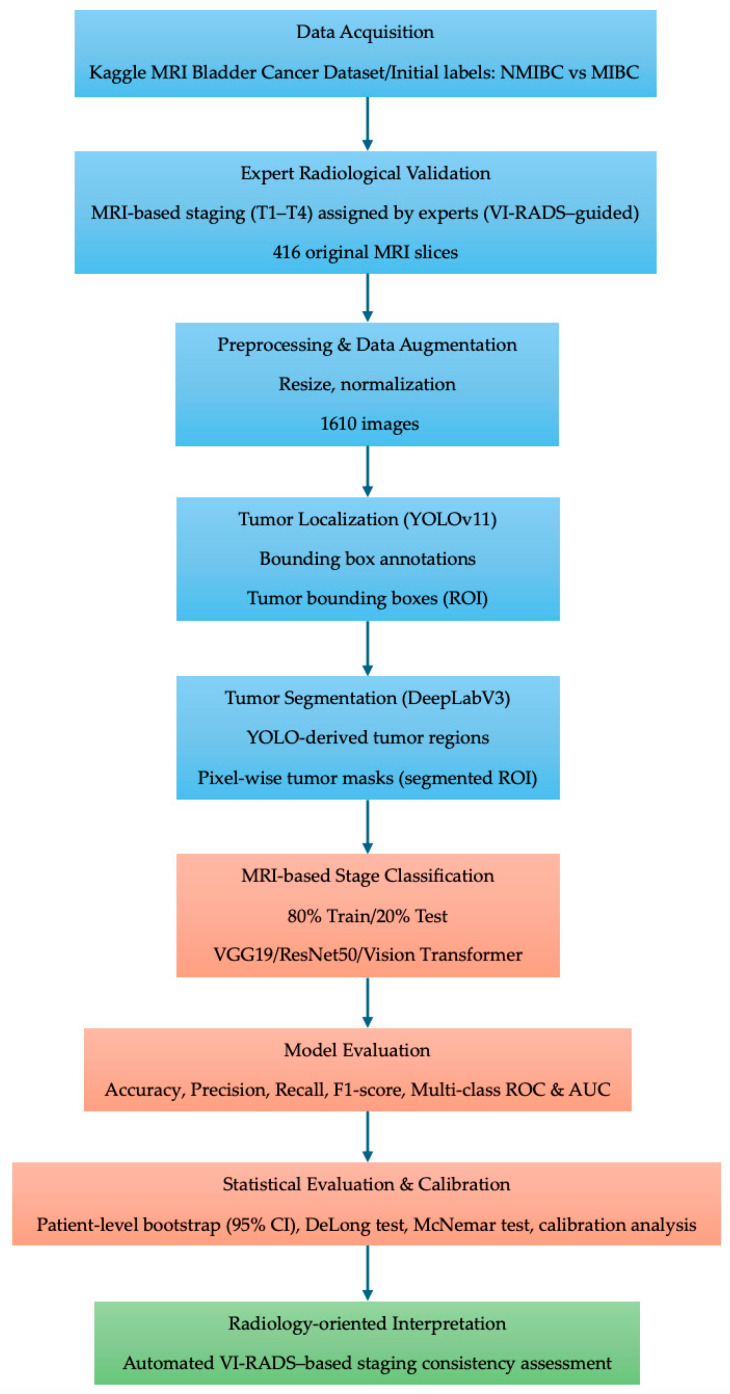 Figure 2
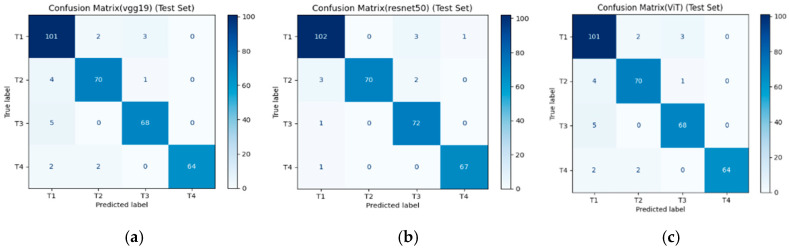 Figure 3
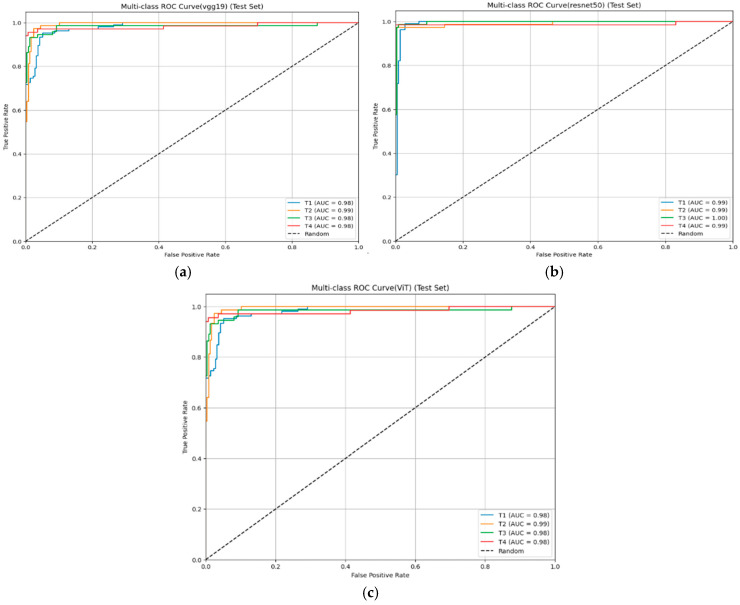 Figure 4
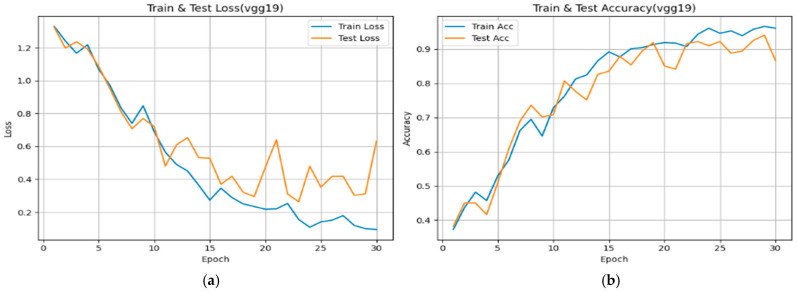 Figure 5
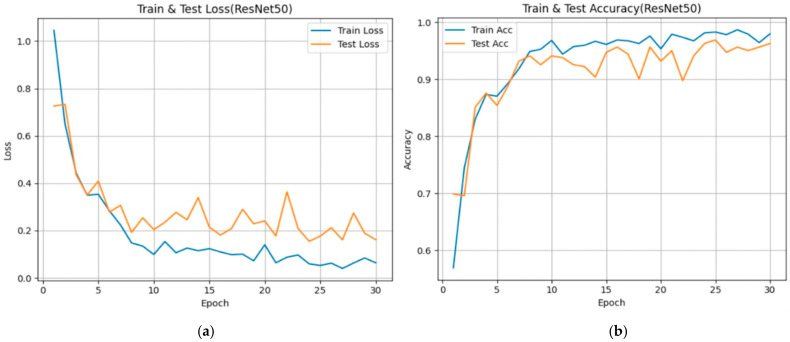 Figure 6
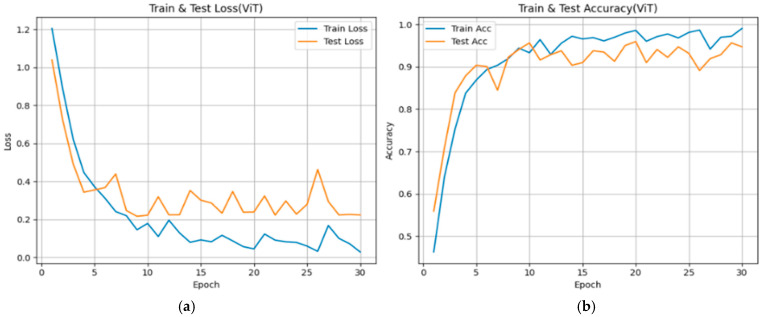 Figure 7
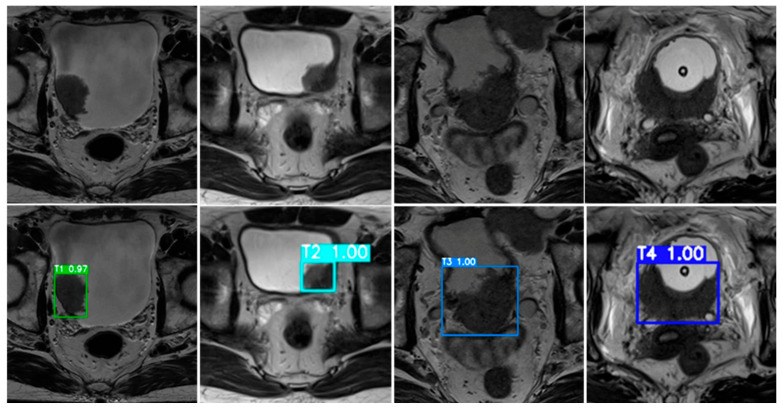 Figure 8
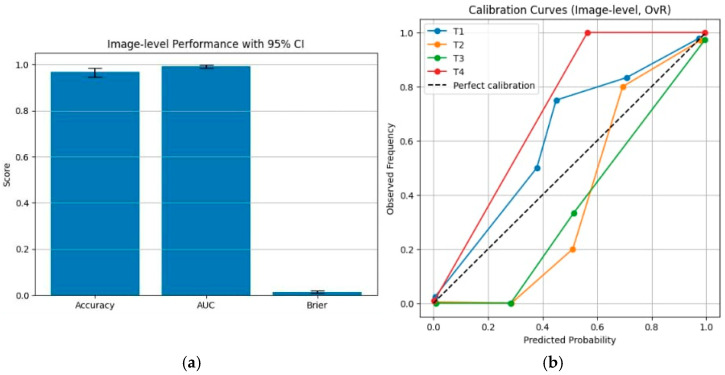 Figure 9
Peer Reviews
No public reviews on file for this paper yet. If you reviewed it on a platform where reviews are public (OpenReview, ICLR, NeurIPS, ICML), you can paste yours below so the community can read it here.
Videos
No videos yet. Explain this paper in a talk, walkthrough, or lecture? Add one.
Taxonomy
TopicsBladder and Urothelial Cancer Treatments · Radiomics and Machine Learning in Medical Imaging · Prostate Cancer Diagnosis and Treatment