Challenges of Retained Thoracoamniotic Shunts in the Neonatal Period: A Case Report
Alejandro Madurga, María Victoria López Canelada, María Velayos, Carlos De la Torre, Eugenia Antolín Alvarado, Jose Luis Encinas, María Álvarez Barrial

TL;DR
A case report shows that retained thoracoamniotic shunts can cause postnatal complications, requiring timely surgical removal for effective treatment.
Contribution
Highlights the need for active intervention and thoracoscopic removal in managing retained thoracoamniotic shunts causing neonatal complications.
Findings
Retained thoracoamniotic shunts can lead to delayed complications like recurrent pleural effusions.
Thoracoscopic removal is a safe and effective treatment for postnatal complications caused by retained shunts.
Abstract
What are the main findings? •Thoracoamniotic shunting can successfully resolve fetal hydrops and allow favorable perinatal outcomes, even in severe pleural effusions.•Retained or migrated thoracoamniotic shunts may cause delayed postnatal complications, including recurrent pleural effusions, despite initial neonatal stability. Thoracoamniotic shunting can successfully resolve fetal hydrops and allow favorable perinatal outcomes, even in severe pleural effusions. Retained or migrated thoracoamniotic shunts may cause delayed postnatal complications, including recurrent pleural effusions, despite initial neonatal stability. What are the implications of the main findings? •Conservative observation is not always sufficient for retained thoracoamniotic shunts, and clinical deterioration should prompt active intervention.•Thoracoscopic removal represents a safe, effective, and minimally…
Genes, proteins, chemicals, diseases, species, mutations and cell lines named across the full text — each resolved to its canonical identifier and authoritative record.
Click any figure to enlarge with its caption.
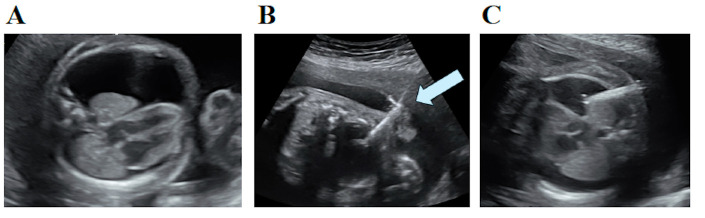 Figure 1
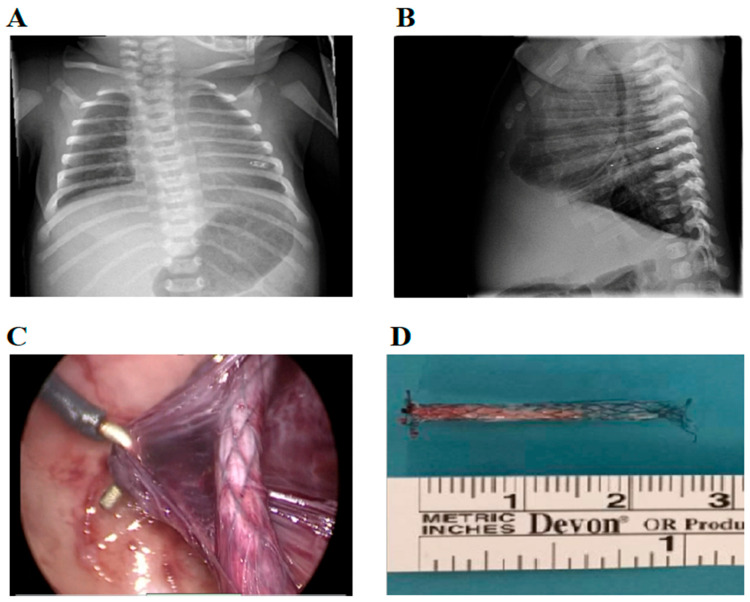 Figure 2
Peer Reviews
No public reviews on file for this paper yet. If you reviewed it on a platform where reviews are public (OpenReview, ICLR, NeurIPS, ICML), you can paste yours below so the community can read it here.
Videos
No videos yet. Explain this paper in a talk, walkthrough, or lecture? Add one.
Taxonomy
TopicsLymphatic Disorders and Treatments · Pleural and Pulmonary Diseases · Congenital Diaphragmatic Hernia Studies