Prospective Bi-Centric Real-World Outcomes of Upadacitinib in Biologic-Experienced Patients with Crohn’s Disease
Janina Lüke, Clara Zippel, Phil-Robin Tepasse, Frank Lenze, Markus Strauss, Arne Bokemeyer, Joost Buskermolen, Tina Schomacher, Julia Fischer, Jonel Trebicka, Richard Vollenberg

TL;DR
Upadacitinib is effective and safe for Crohn’s disease patients who have not responded to previous biologic treatments, offering a new therapeutic option.
Contribution
This study provides real-world evidence of upadacitinib's efficacy and safety in biologic-experienced Crohn’s disease patients.
Findings
More than half of patients achieved clinical remission within one year of upadacitinib treatment.
Upadacitinib improved intestinal inflammation in nearly half of the patients.
The medication was well-tolerated with minimal side effects.
Abstract
Crohn’s disease is a chronic inflammatory bowel condition that often requires biologics to control inflammation. However, some patients do not respond adequately to these treatments. Upadacitinib is a newer oral medication that works through a different mechanism than traditional biologics. This study examined whether upadacitinib is effective and safe in patients with Crohn’s disease who had failed previous biologic treatments. We followed 28 patients receiving upadacitinib for one year and measured their clinical symptoms, intestinal healing, and quality of life. More than half of patients achieved clinical remission, and the medication improved intestinal inflammation in nearly half of the patients. Most importantly, upadacitinib was well-tolerated with minimal side effects. These findings suggest that upadacitinib represents a valuable treatment option for patients with…
Genes, proteins, chemicals, diseases, species, mutations and cell lines named across the full text — each resolved to its canonical identifier and authoritative record.
Click any figure to enlarge with its caption.
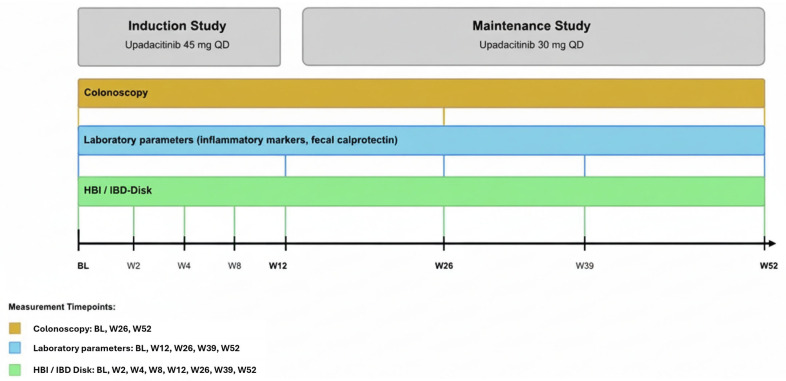 Figure 1
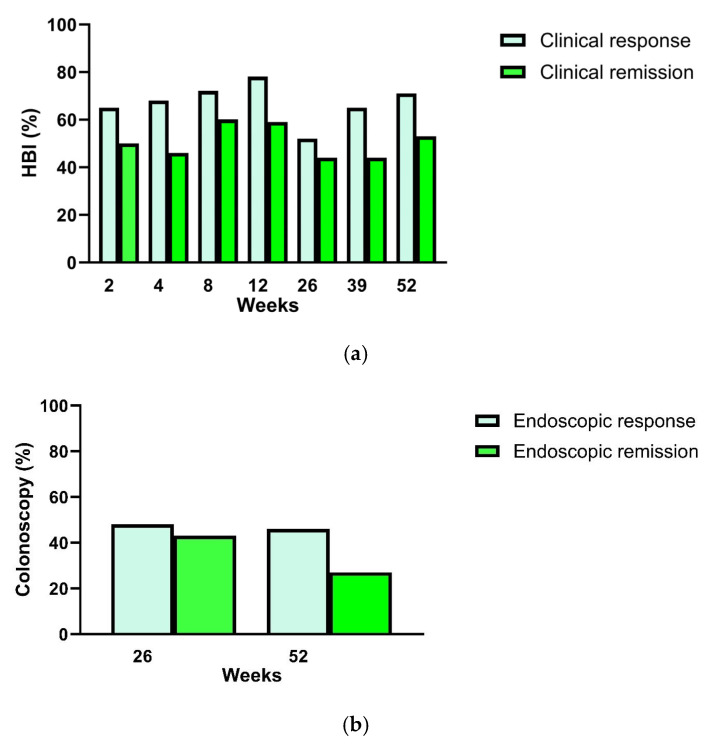 Figure 2
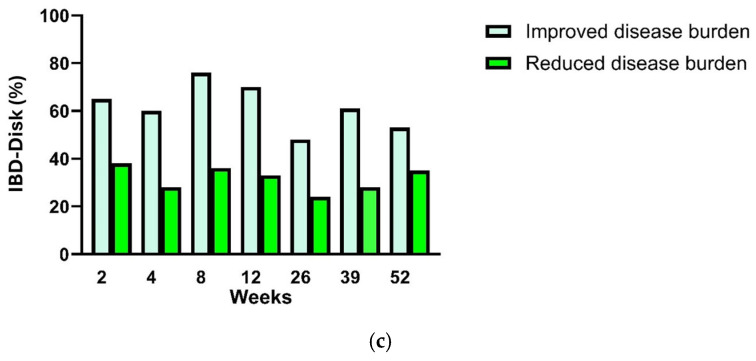 Figure 3
Peer Reviews
No public reviews on file for this paper yet. If you reviewed it on a platform where reviews are public (OpenReview, ICLR, NeurIPS, ICML), you can paste yours below so the community can read it here.
Videos
No videos yet. Explain this paper in a talk, walkthrough, or lecture? Add one.
Taxonomy
TopicsInflammatory Bowel Disease · Autoimmune and Inflammatory Disorders · Eosinophilic Esophagitis