Prevalence of Pre-Eruptive Intracoronal Resorption (PEIR) and Proposal of a Novel Classification: Retrospective Study with the Aid of Cone Beam Computed Tomography (CBCT)
Emmanuel Mazinis, Konstantinos Ioannidis, Shanon Patel, Vassilis Karagiannis, Christos Gogos

TL;DR
This study finds that nearly a third of unerupted teeth have a type of resorption called PEIR, which is more common in older adults and specific tooth positions, and proposes a new 3D classification system for better detection and treatment planning.
Contribution
The study introduces a novel 3D classification system for pre-eruptive intracoronal resorption (PEIR) and reports its prevalence using CBCT.
Findings
PEIR prevalence was 33.5%, most commonly affecting maxillary canines and molars.
PEIR was significantly associated with buccal tooth position and angulation.
Prevalence increased significantly in patients over 45 years old.
Abstract
Background/Objectives: Pre-eruptive intracoronal resorption (PEIR) in impacted or unerupted teeth often remains undiagnosed. The aim of this study was to investigate the prevalence of PEIR with the aid of cone beam computed tomography (CBCT) and propose a new three-dimensional (3D) classification for the analysis of the lesions. Methods: A total of 164 unerupted teeth diagnosed in CBCT scans, derived from an equivalent number of patients, were examined for the presence of PEIR, tooth type, angulation and position. A novel 3D classification system was proposed and all PEIR lesions were further classified. The classification system was used to stage PEIR lesions according to their extend from the enamel level apically, the circumferential spread and their proximity to the pulp chamber. Descriptive statistics were used to assess the prevalence and type of resorption. The association…
Genes, proteins, chemicals, diseases, species, mutations and cell lines named across the full text — each resolved to its canonical identifier and authoritative record.
Click any figure to enlarge with its caption.
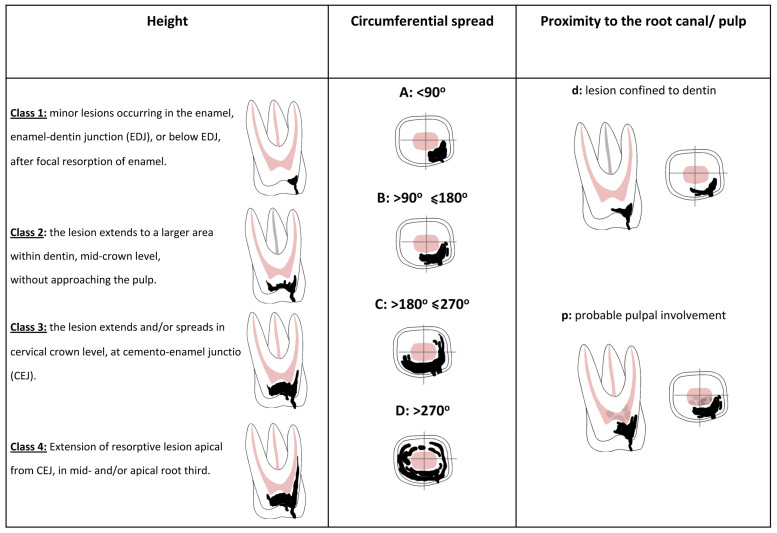 Figure 1
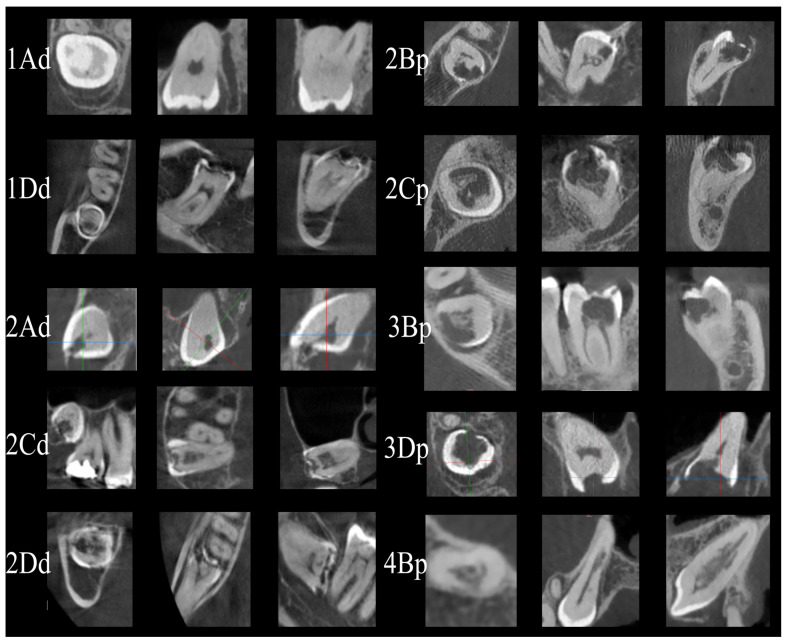 Figure 2
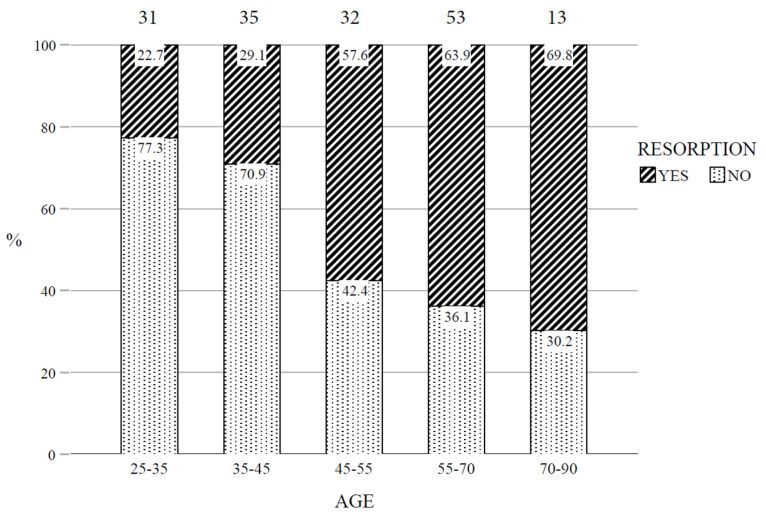 Figure 3
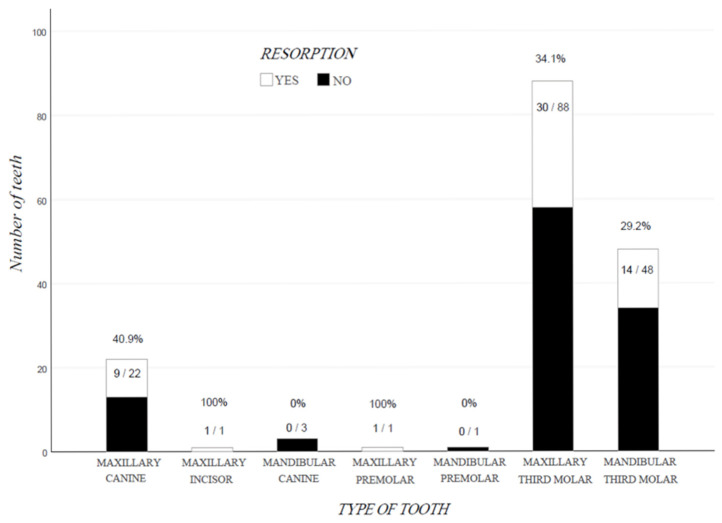 Figure 4
Peer Reviews
No public reviews on file for this paper yet. If you reviewed it on a platform where reviews are public (OpenReview, ICLR, NeurIPS, ICML), you can paste yours below so the community can read it here.
Videos
No videos yet. Explain this paper in a talk, walkthrough, or lecture? Add one.
Taxonomy
Topicsdental development and anomalies · Endodontics and Root Canal Treatments · Dental materials and restorations