Dysplastic Transformation in Sporadic Fundic Gland Polyps: Prevalence, Clinical and Endoscopic Characteristics in an Asian Cohort
Ming-Jung Meng, Tsung-Hsing Chen, Shih-Chiang Huang

TL;DR
This study examines how often benign stomach polyps become precancerous in an Asian population, finding that it is very rare and identifying features that may help doctors detect these cases.
Contribution
The study provides the first detailed analysis of dysplastic fundic gland polyps in an Asian cohort, highlighting clinical and endoscopic features for early detection.
Findings
Sporadic dysplastic fundic gland polyps occurred in 0.059% of patients in a 25-year Taiwanese cohort.
Dysplastic polyps were typically small, multiple, and located in the gastric body/fundus, with subtle endoscopic warning signs.
Low-grade dysplasia was more common than high-grade, and no cases were associated with Helicobacter pylori infection.
Abstract
Fundic gland polyps (FGPs) are common gastric polyps and are usually benign, but they can rarely develop dysplasia, a precancerous epithelial change. Because data from Asian populations are limited, we reviewed a 25-year single-center pathology archive in Taiwan (2000–2024). Among 35,806 unique patients with histologically confirmed FGPs, we identified 25 cases of FGPs with dysplasia. Most were sporadic (21/25), corresponding to a patient-level prevalence of 0.059%. Sporadic cases occurred at a median age of 48 years and were slightly more common in women (57.1%). Low-grade dysplasia predominated (90.5%). One-third of patients had documented proton pump inhibitor exposure before diagnosis (median documented duration: 36 months), whereas none had documented current Helicobacter pylori infection at the index evaluation. Endoscopically, dysplastic FGPs were typically small (median: 0.5…
Genes, proteins, chemicals, diseases, species, mutations and cell lines named across the full text — each resolved to its canonical identifier and authoritative record.
Click any figure to enlarge with its caption.
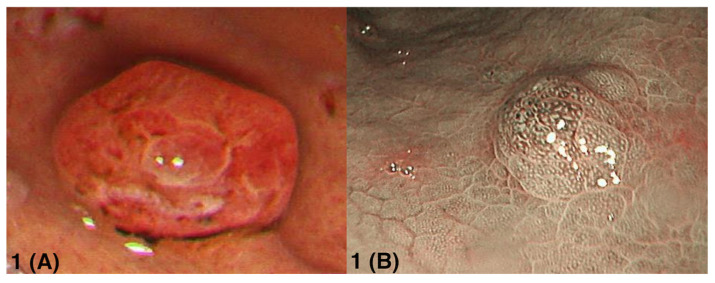 Figure 1
Peer Reviews
No public reviews on file for this paper yet. If you reviewed it on a platform where reviews are public (OpenReview, ICLR, NeurIPS, ICML), you can paste yours below so the community can read it here.
Videos
No videos yet. Explain this paper in a talk, walkthrough, or lecture? Add one.
Taxonomy
TopicsHelicobacter pylori-related gastroenterology studies · Gastric Cancer Management and Outcomes · Gastrointestinal Tumor Research and Treatment