Cross-Species Upregulation of MAGED2 in Liver Cancer Suggests a Role in Obesity-Driven Tumor Progression
Tara Bayat, Farzana Yeasmin Popy, Rebecca R. Florke Gee, Benjamin Barr, Yusuff Olayiwola, Juan Sebastian Solano Gutierrez, Denis Štepihar, Jorge Diaz-Riaño, Stephanie Myers, Kaja Blagotinšek Cokan, Damjana Rozman, Lauren Gollahon, Klementina Fon Tacer

TL;DR
A gene called MAGED2 is found to be more active in liver cancer in both humans and mice, suggesting it plays a role in obesity-related tumor growth.
Contribution
MAGED2 is identified as a conserved marker of liver cancer across species, revealing insights into obesity-driven tumor progression.
Findings
MAGED2 is significantly upregulated in mouse liver tumors and human HCC samples.
MAGED2 upregulation is associated with patient prognosis in human HCC.
Type I MAGE genes are not expressed in mouse liver tumors, indicating species-specific regulation.
Abstract
Melanoma-associated antigens (MAGEs) are cancer-testis antigens (CTAs) aberrantly expressed in multiple cancer types, including hepatocellular carcinoma (HCC), and associated with aggressive phenotypes. Although MAGE proteins are widely studied as cancer immunotherapy targets, their roles in HCC and the regulation of their expression during liver pathogenesis in mouse models, including dietary effects, remain poorly understood. We analyzed Mage gene expression in liver tissues from 78 C3H/HeJ mice with chronic diet-induced obesity. While type I MAGE genes are frequently expressed in human HCC, we found no evidence of their expression in mouse liver tumors, suggesting species-specific regulation. In contrast, type II Maged2, previously reported to be upregulated in human HCC, was significantly increased in mouse liver tumors. Analysis of human HCC samples from The Cancer Genome Atlas…
Genes, proteins, chemicals, diseases, species, mutations and cell lines named across the full text — each resolved to its canonical identifier and authoritative record.
Click any figure to enlarge with its caption.
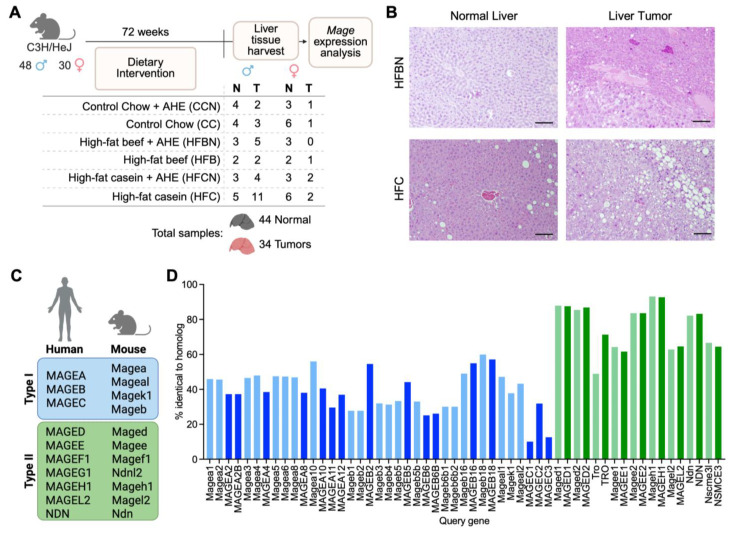 Figure 1
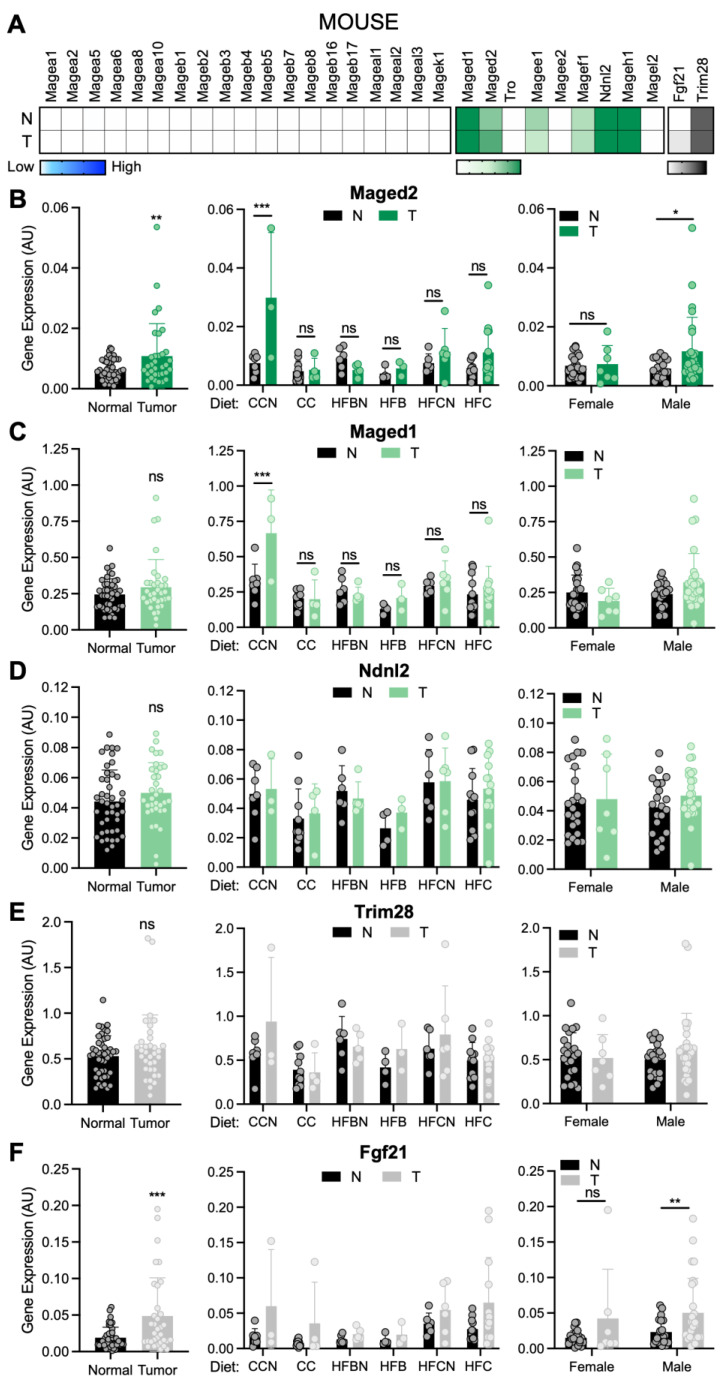 Figure 2
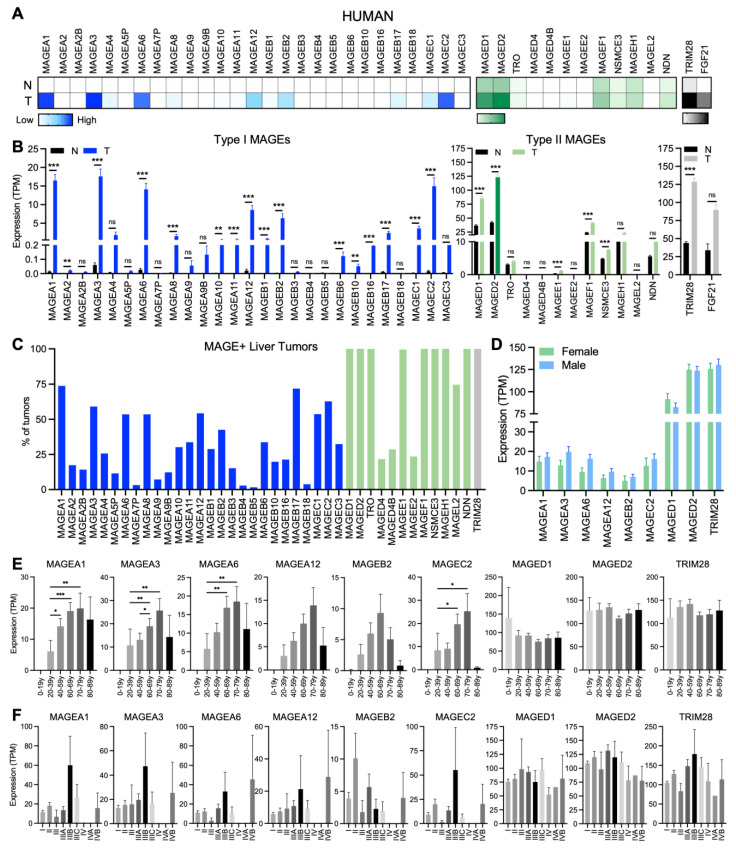 Figure 3
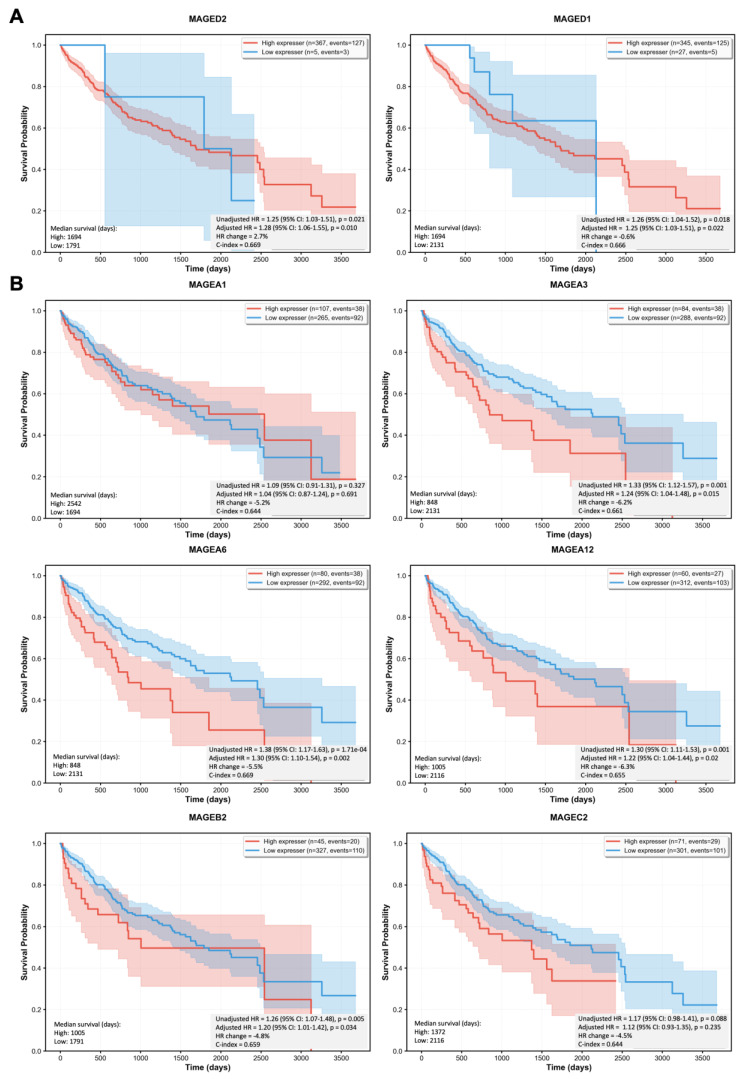 Figure 4
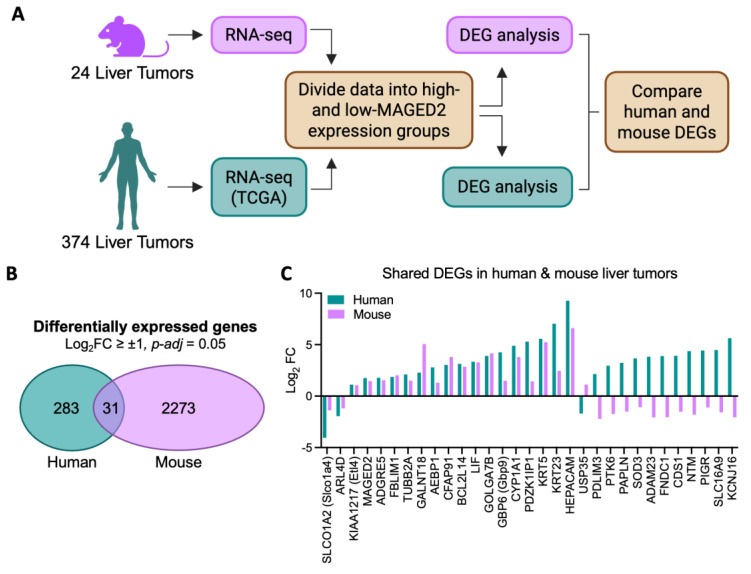 Figure 5
Peer Reviews
No public reviews on file for this paper yet. If you reviewed it on a platform where reviews are public (OpenReview, ICLR, NeurIPS, ICML), you can paste yours below so the community can read it here.
Videos
No videos yet. Explain this paper in a talk, walkthrough, or lecture? Add one.
Taxonomy
TopicsImmunotherapy and Immune Responses · Cancer Immunotherapy and Biomarkers · Viral-associated cancers and disorders