Prognostic Impact of POLE Exonuclease-Domain Mutations in Endometrial Cancer: A Systematic Review and Meta-Analysis
Ioana Hurmuz, Robert Barna, Aura Jurescu, Bianca Natarâș, Dorela-Codruța Lăzureanu, Iuliana-Anamaria Trăilă, Alexandru-Marius Furău, Sorina Tăban, Alis Dema

TL;DR
This study finds that specific POLE gene mutations in endometrial cancer are linked to better survival rates, suggesting a shift in how patients are classified and treated.
Contribution
The study provides a meta-analysis confirming that POLE exonuclease-domain mutations are strongly associated with improved survival outcomes in endometrial cancer.
Findings
POLE-mutant endometrial cancer patients have a 65% lower risk of death compared to non-mutant patients.
Disease-free survival is significantly better in POLE-mutant patients with a pooled hazard ratio of 0.22.
Cancer-specific survival rates are exceptionally high in POLE-mutant patients, often with zero events reported.
Abstract
Endometrial cancer, a common gynecological malignancy, has traditionally been classified by its appearance under the microscope. Still, this approach often misses key biological details that predict disease progression. Specific mutations in the POLE gene, which helps proofread DNA during cell division, create highly unstable tumors, yet surprisingly lead to better patient outcomes. This study reviews existing research and combines data from multiple studies to clarify the actual survival benefits of these patients with POLE mutations. The findings could help doctors better classify patients based on risk level, potentially allowing safer reductions in aggressive treatments for those with favorable mutations, improving care, and guiding future clinical trials. Background/Objectives: Traditional histopathological classification of endometrial cancer (EC) exhibits limited prognostic…
Genes, proteins, chemicals, diseases, species, mutations and cell lines named across the full text — each resolved to its canonical identifier and authoritative record.
Click any figure to enlarge with its caption.
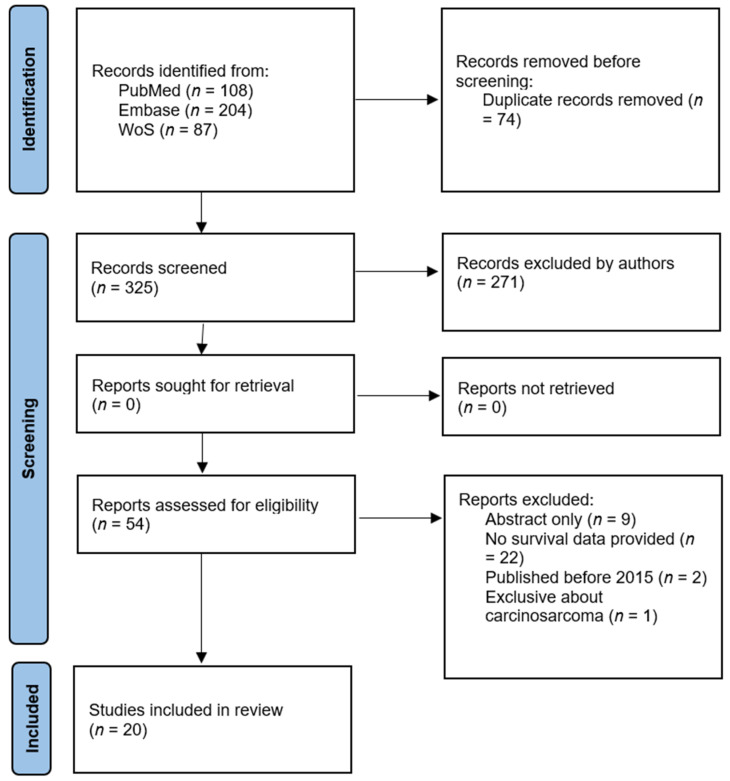 Figure 1
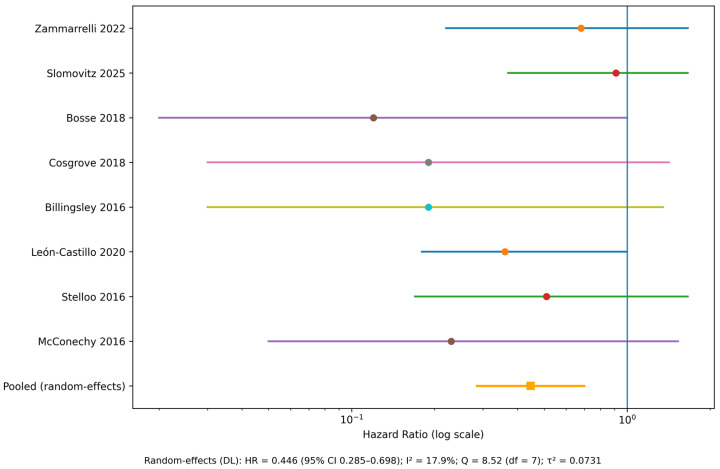 Figure 2
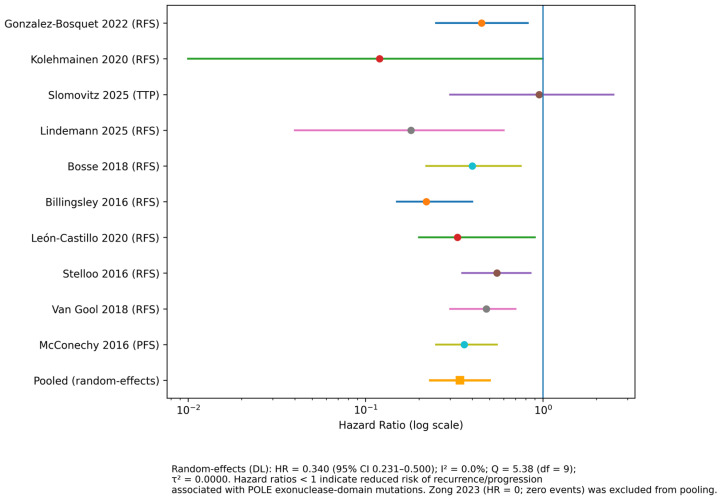 Figure 3
Peer Reviews
No public reviews on file for this paper yet. If you reviewed it on a platform where reviews are public (OpenReview, ICLR, NeurIPS, ICML), you can paste yours below so the community can read it here.
Videos
No videos yet. Explain this paper in a talk, walkthrough, or lecture? Add one.
Taxonomy
TopicsEndometrial and Cervical Cancer Treatments · Genetic factors in colorectal cancer · Cancer Genomics and Diagnostics