Auditory Middle Latency Response in Children with and Without Dichotic Deficits
Samar Babaee, Deborah Moncrieff

TL;DR
This study explores how brain responses to sounds differ in children with specific listening difficulties, finding that these responses match behavioral patterns.
Contribution
The study demonstrates that auditory middle latency responses can objectively differentiate subtypes of dichotic listening deficits in children.
Findings
Children with amblyaudia showed larger sound response amplitudes in the left ear, matching their behavioral asymmetry.
Children with dichotic dysaudia had delayed response latencies for right-ear stimulation at faster sound presentation rates.
Typically performing children showed small, expected asymmetries without significant latency delays.
Abstract
Background/Objectives: Amblyaudia (AMB) and dichotic dysaudia (DD) are distinct subtypes of dichotic listening deficits characterized by different behavioral profiles. AMB is associated with marked interaural asymmetry, whereas DD is defined by bilaterally poor but relatively symmetric performance. The present study investigated whether these behavioral distinctions are reflected in the auditory middle latency response (MLR). Specifically, we examined whether children with AMB exhibit asymmetric MLR patterns and whether children with DD demonstrate more symmetric responses, relative to typically performing (TYP) peers. Methods: Thirty-seven children aged 9–12 years with normal peripheral hearing were recruited through clinical referrals and community outreach. Participants were classified as AMB, DD, or TYP based on performance on standardized dichotic listening measures. MLRs were…
Genes, proteins, chemicals, diseases, species, mutations and cell lines named across the full text — each resolved to its canonical identifier and authoritative record.
Click any figure to enlarge with its caption.
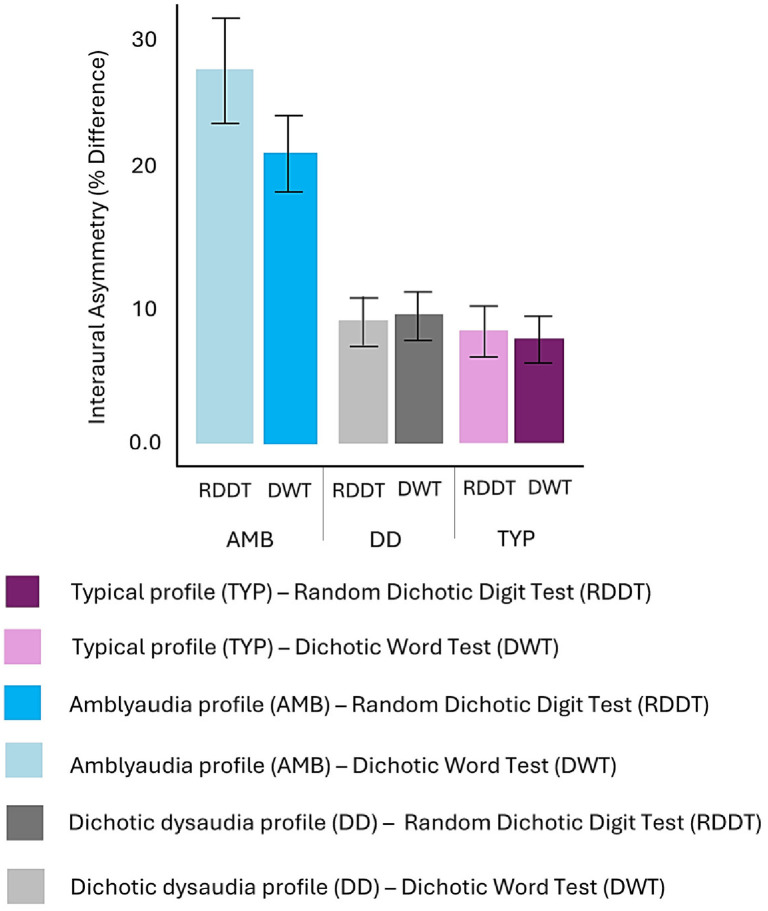 Figure 1
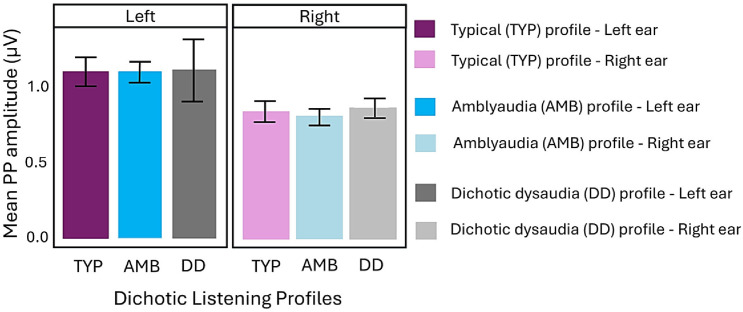 Figure 2
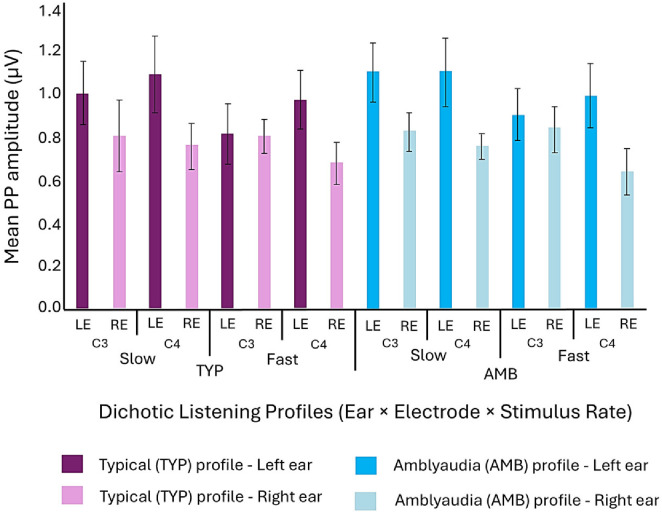 Figure 3
 Figure 4
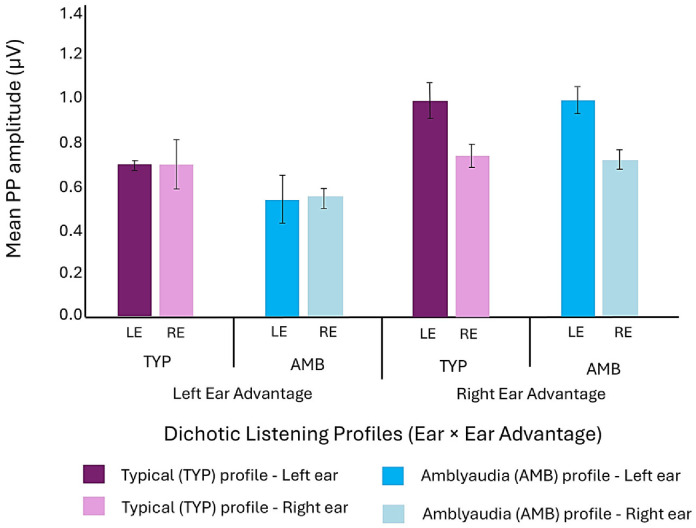 Figure 5
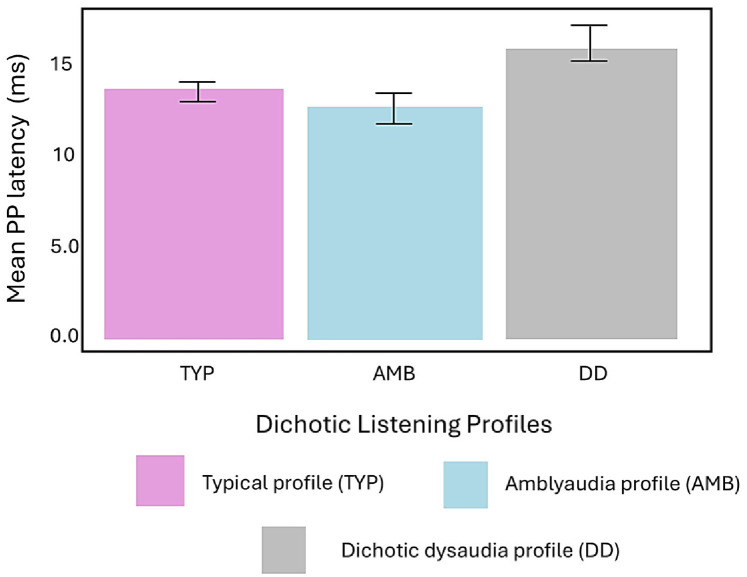 Figure 6
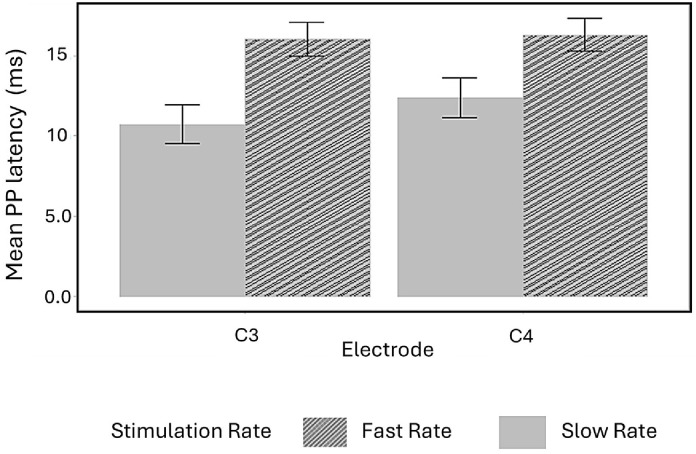 Figure 7
Peer Reviews
No public reviews on file for this paper yet. If you reviewed it on a platform where reviews are public (OpenReview, ICLR, NeurIPS, ICML), you can paste yours below so the community can read it here.
Videos
No videos yet. Explain this paper in a talk, walkthrough, or lecture? Add one.
Taxonomy
TopicsHearing, Cochlea, Tinnitus, Genetics · Neuroscience and Music Perception · Hearing Loss and Rehabilitation