Real-World Data on the Safety and Efficacy of SBRT for Central and Ultra-Central Lung Tumors: A Retrospective Multi-Center Cohort
Anna Zygogianni, Andromachi Kougioumtzopoulou, Kalliopi Platoni, Maria Protopapa, Zoi Liakouli, Ioannis M. Koukourakis, Despoina Alexiou, Theodoros Stroubinis, Christina Armpilia, Christos Antypas, Michalis Psarras, Despoina Stasinou, Ioannis Georgakopoulos, Vasileios Kouloulias

TL;DR
This study shows that stereotactic body radiotherapy (SBRT) is safe and effective for treating central and ultra-central lung tumors when delivered with careful planning.
Contribution
The study provides real-world evidence that SBRT can be safely used for central and ultra-central lung tumors with minimal toxicity.
Findings
SBRT achieved excellent local tumor control with very low rates of clinically relevant side effects.
No severe or treatment-related deaths were observed in the cohort.
Four-year local progression-free survival was 97.4% for the entire cohort.
Abstract
Stereotactic body radiotherapy (SBRT) is an effective treatment for patients with early-stage lung cancer who are not suitable for surgery. However, when lung tumors are located close to critical structures such as the airways, heart, or major blood vessels (so-called central and ultra-central tumors), treatment is more challenging and safety concerns remain. In this study, we evaluated the real-world outcomes of SBRT in patients with centrally and ultra-centrally located early-stage non–small cell lung cancer treated according to established planning principles. We found that SBRT achieved excellent local tumor control with very low rates of clinically relevant side effects, even for ultra-central tumors. Importantly, no severe or treatment-related deaths were observed. These findings suggest that, when careful treatment planning and strict protection of nearby organs are applied, SBRT…
Genes, proteins, chemicals, diseases, species, mutations and cell lines named across the full text — each resolved to its canonical identifier and authoritative record.
Click any figure to enlarge with its caption.
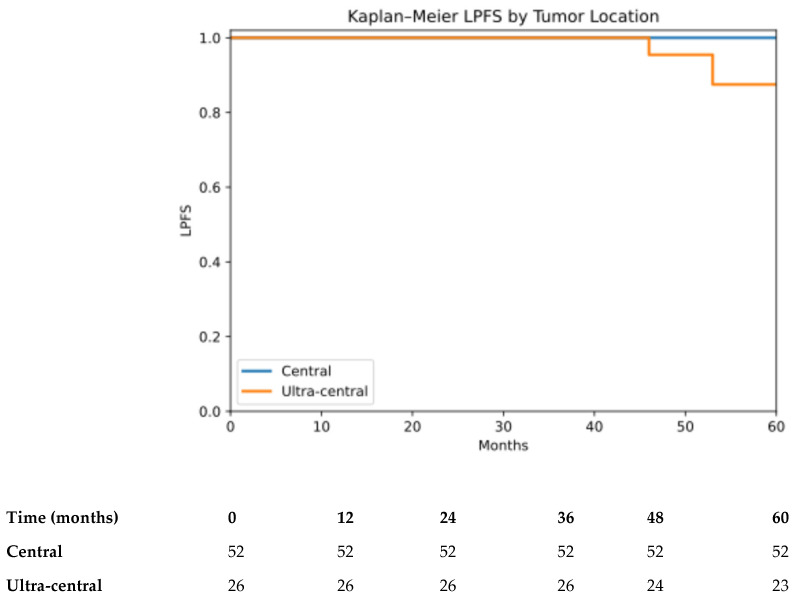 Figure 1
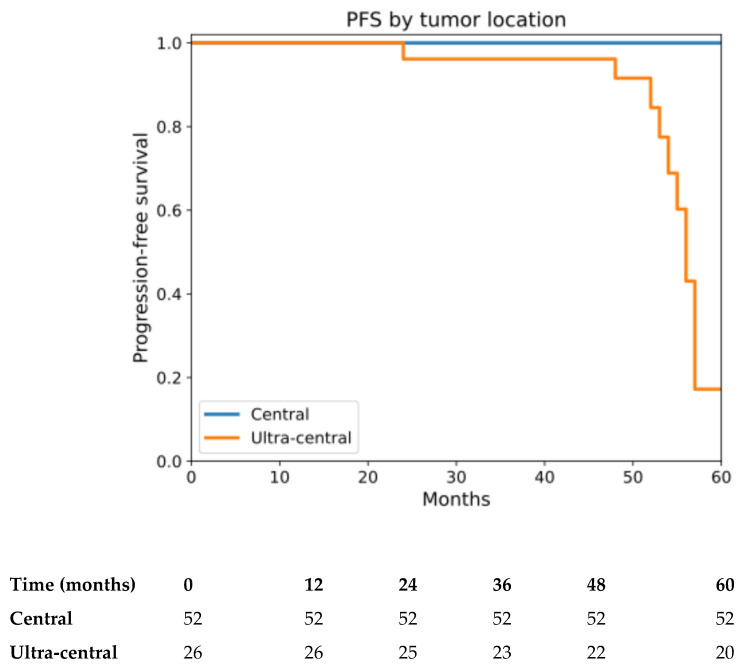 Figure 2
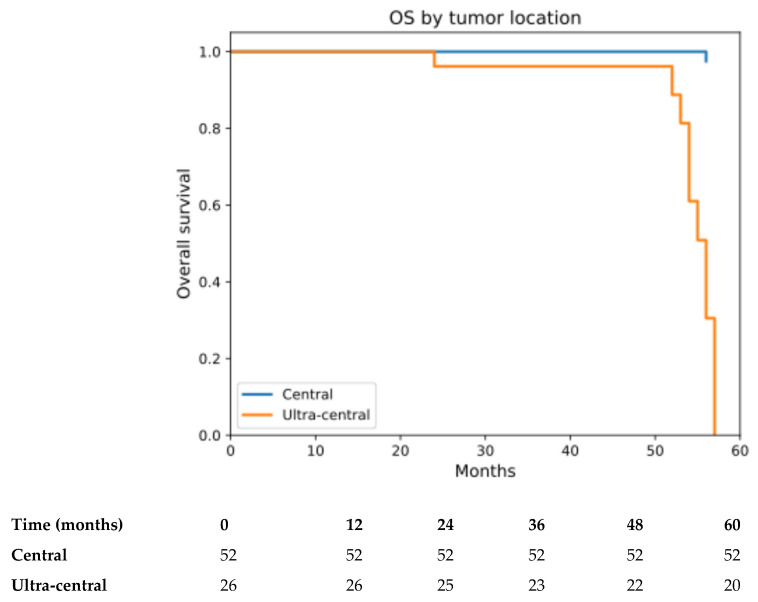 Figure 3
Peer Reviews
No public reviews on file for this paper yet. If you reviewed it on a platform where reviews are public (OpenReview, ICLR, NeurIPS, ICML), you can paste yours below so the community can read it here.
Videos
No videos yet. Explain this paper in a talk, walkthrough, or lecture? Add one.
Taxonomy
TopicsLung Cancer Diagnosis and Treatment · Radiomics and Machine Learning in Medical Imaging · Advanced Radiotherapy Techniques