Exploring the Impact of Polychlorinated Biphenyls (PCBs) on the Development of MASLD: A Comprehensive Review
Valeria Longo, Giuseppa Augello, Noemi Aloi, Alessandra Cusimano, Anna Licata, Emanuele Cannizzaro, Melchiorre Cervello, Maurizio Soresi, Paolo Colombo, Lydia Giannitrapani

TL;DR
This paper reviews how exposure to PCBs may contribute to liver disease, particularly MASLD, by disrupting key biological pathways and increasing health risks.
Contribution
The paper provides a comprehensive review of PCBs' role in MASLD, highlighting molecular mechanisms and suggesting potential biomarkers and therapeutic targets.
Findings
Chronic PCB exposure is linked to liver dysfunction and MASLD in both humans and experimental models.
PCBs disrupt liver homeostasis through pathways like AhR, CAR/PXR, causing oxidative stress and metabolic dysregulation.
PCBs are associated with steatosis, fibrosis, and liver cancer, emphasizing their public health impact.
Abstract
Experimental, epidemiological, and mechanistic evidence links polychlorinated bi-phenyl (PCB) exposure to liver injury, steatosis/steatohepatitis, fibrosis, and hepato-carcinogenesis, with a focus on congener profiles and susceptibility factors (e.g., sex, metabolic comorbidities). PCB-driven molecular pathways in hepatocytes and hepatic non-parenchymal cells, specifically in aryl hydrocarbon receptor (AhR), constitutive androstane receptor (CAR), and pregnane X receptor (PXR) signaling, oxidative stress, mitochondrial dysfunction, lipid metabolism reprogramming, inflammatory/immune responses, have implications for liver disease progression. What are the main findings? Chronic PCB exposure is consistently associated with liver dysfunction and MASLD phenotypes in both humans and experimental models.PCBs disrupt hepatic homeostasis by converging on a limited set of pathways (AhR,…
Genes, proteins, chemicals, diseases, species, mutations and cell lines named across the full text — each resolved to its canonical identifier and authoritative record.
Click any figure to enlarge with its caption.
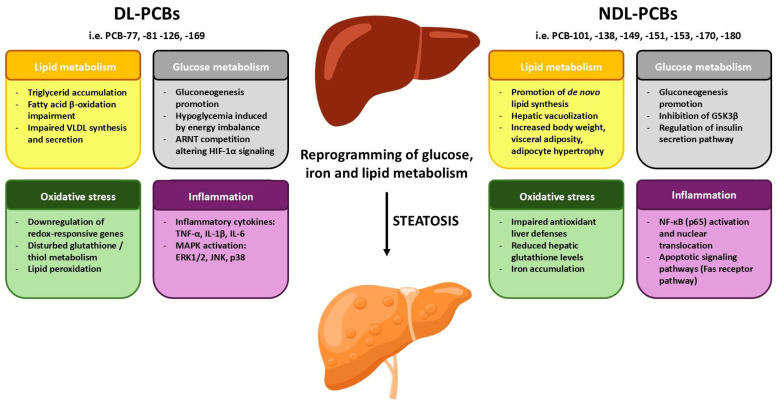 Figure 1
Peer Reviews
No public reviews on file for this paper yet. If you reviewed it on a platform where reviews are public (OpenReview, ICLR, NeurIPS, ICML), you can paste yours below so the community can read it here.
Videos
No videos yet. Explain this paper in a talk, walkthrough, or lecture? Add one.
Taxonomy
TopicsToxic Organic Pollutants Impact · Effects and risks of endocrine disrupting chemicals · Carcinogens and Genotoxicity Assessment