Phytochemical Quorum-Sensing Inhibitors Against Bacterial Pathogens: Mechanisms of Action and Translational Challenges
Christos Papaneophytou

TL;DR
This paper reviews how plant-based compounds can disrupt bacterial communication to reduce virulence, but highlights challenges in translating these findings into practical applications.
Contribution
The paper provides a critical synthesis of phytochemical mechanisms targeting bacterial quorum sensing and identifies translational barriers for anti-virulence applications.
Findings
Phytochemicals like curcumin and eugenol can inhibit bacterial quorum sensing pathways at sub-inhibitory concentrations.
Translational development is hindered by methodological inconsistencies and limited validation of molecular targets.
QS inhibition raises concerns about disrupting beneficial bacterial functions and host microbiomes.
Abstract
Antimicrobial resistance is a critical global health challenge, driven by the rapid emergence of multidrug-resistant bacterial pathogens and exacerbated by extensive antibiotic use, which imposes intense selective pressure and disrupts host-associated microbial communities. In this context, quorum sensing (QS), a conserved molecular communication system that coordinates population-level gene regulation, virulence expression, and biofilm development, has emerged as an attractive target for anti-virulence intervention. A growing body of evidence indicates that phytochemicals, such as curcumin, carvacrol, carnosol, eugenol, and chlorogenic acid, can modulate key QS pathways, including acyl-homoserine lactone-, autoinducing peptide-, and LuxS/AI-2-mediated signaling, thereby attenuating pathogenic behaviors at sub-inhibitory concentrations that do not directly impair bacterial viability.…
Genes, proteins, chemicals, diseases, species, mutations and cell lines named across the full text — each resolved to its canonical identifier and authoritative record.
Click any figure to enlarge with its caption.
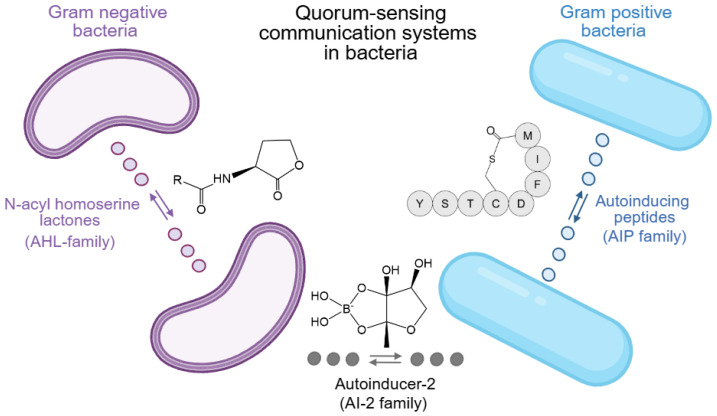 Figure 1
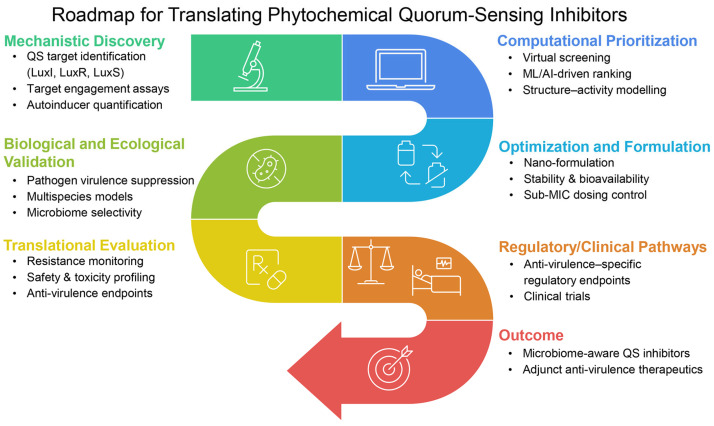 Figure 2
Peer Reviews
No public reviews on file for this paper yet. If you reviewed it on a platform where reviews are public (OpenReview, ICLR, NeurIPS, ICML), you can paste yours below so the community can read it here.
Videos
No videos yet. Explain this paper in a talk, walkthrough, or lecture? Add one.
Taxonomy
TopicsBacterial biofilms and quorum sensing · Antimicrobial Resistance in Staphylococcus · Antibiotic Resistance in Bacteria