Decoding Early-Onset Aging After Cancer: Hallmarks, Biomarkers, and Future Directions for Childhood and Young Adult Survivorship
Jasper David Feldkamp, Nele Schmitt, Sanem Özayral, Mareike Frick

TL;DR
Cancer survivors, especially young ones, often face age-related health issues due to treatments, and this review explores how biological aging processes might explain these effects.
Contribution
This review synthesizes current evidence on molecular hallmarks of accelerated aging in young cancer survivors and highlights potential biomarkers for risk assessment.
Findings
Epigenetic age acceleration is consistently observed in cancer survivors and correlates with treatment and health conditions.
Clonal hematopoiesis is enriched in survivors and may indicate long-term cardiovascular and hematologic risks.
Immune dysregulation and inflammaging underscore the systemic impact of cancer therapies on aging pathways.
Abstract
More children, teenagers, and young adults survive cancer today than ever before, but many develop health problems years after their treatment has ended. These problems often look similar to conditions usually seen in much older adults, such as heart disease, hormone changes, memory difficulties, or second cancers. This has raised the important question of whether cancer treatment speeds up the body’s natural aging processes. In this review, we bring together current knowledge about biological changes that may explain why some survivors experience earlier or more severe long-term health issues. We look at different signs of aging inside the body, such as changes in DNA regulation, stress on blood-forming cells, inflammation, immune system weakness, and energy production in cells. By summarizing the latest research, we aim to show how these changes develop, how they may interact, and how…
Genes, proteins, chemicals, diseases, species, mutations and cell lines named across the full text — each resolved to its canonical identifier and authoritative record.
Click any figure to enlarge with its caption.
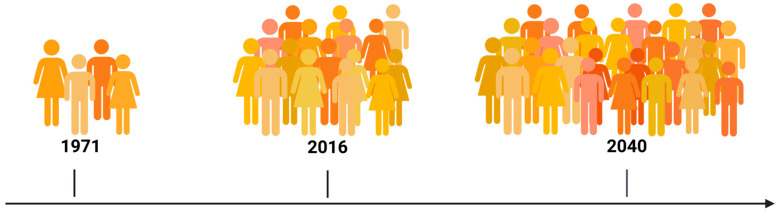 Figure 1
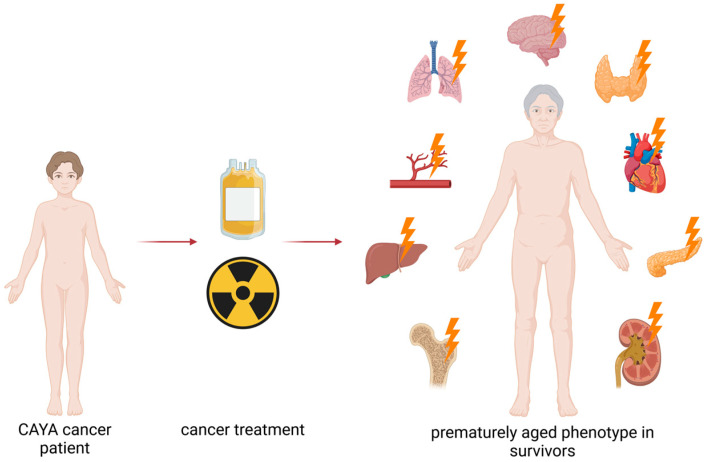 Figure 2
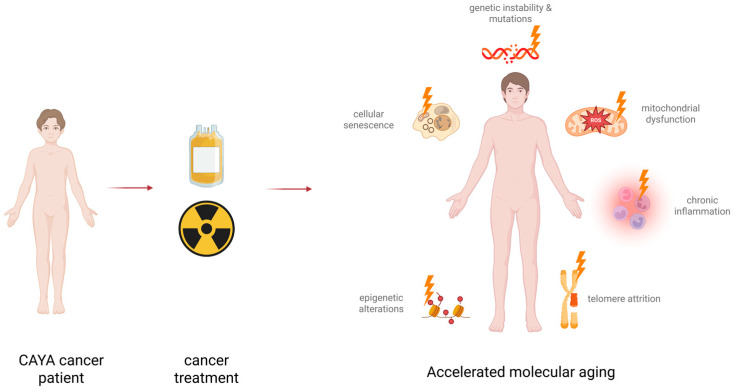 Figure 3
Peer Reviews
No public reviews on file for this paper yet. If you reviewed it on a platform where reviews are public (OpenReview, ICLR, NeurIPS, ICML), you can paste yours below so the community can read it here.
Videos
No videos yet. Explain this paper in a talk, walkthrough, or lecture? Add one.
Taxonomy
TopicsChildhood Cancer Survivors' Quality of Life · Cancer-related cognitive impairment studies · Telomeres, Telomerase, and Senescence