Motion-Informed, Patient-Specific Femoral Localization for MPFL Reconstruction Using 4D-CT and Constrained Optimization
Jiaying Wei, Xinhao Zhang, Jia Li, Weigen Ye, Runxing Kang, Dehua Wang, Weilin Wu, Mao Yuan, Yinsong Sun, Hong Cheng, Wei Huang, Ke Li, Chaobin Zou, Chen Zhao

TL;DR
This study introduces a new method using 4D-CT scans and optimization to improve femoral localization in knee ligament surgery, leading to better graft stability.
Contribution
The novel framework combines 4D-CT and constrained optimization to provide motion-informed, patient-specific femoral localization for MPFL reconstruction.
Findings
The I-point showed a proximal shift compared to the Schöttle point (PERMANOVA pseudo-F = 4.457, p = 0.006).
The I-point reduced MPFL length variation during knee flexion and achieved a stable length-change profile.
The framework offers quantitative imaging-based guidance for personalized MPFLR planning.
Abstract
Background: Accurate femoral localization is a critical factor influencing graft length-change behavior in medial patellofemoral ligament reconstruction (MPFLR). However, the commonly used Schöttle point is derived from static radiographs and does not account for subject-specific patellofemoral kinematics during active knee motion. In this study, we integrated four-dimensional computed tomography (4D-CT) with constrained optimization to establish a motion-informed, patient-specific femoral localization framework. Methods: A total of 1382 4D-CT knee datasets were screened, and 58 knees were selected for detailed kinematic modeling. Subject-specific femoral and patellar point clouds were reconstructed from time-resolved CT data acquired during voluntary knee flexion. Within a predefined 5–15 mm neighborhood of the Schöttle point, a constrained sequential quadratic programming (SQP)…
Genes, proteins, chemicals, diseases, species, mutations and cell lines named across the full text — each resolved to its canonical identifier and authoritative record.
Click any figure to enlarge with its caption.
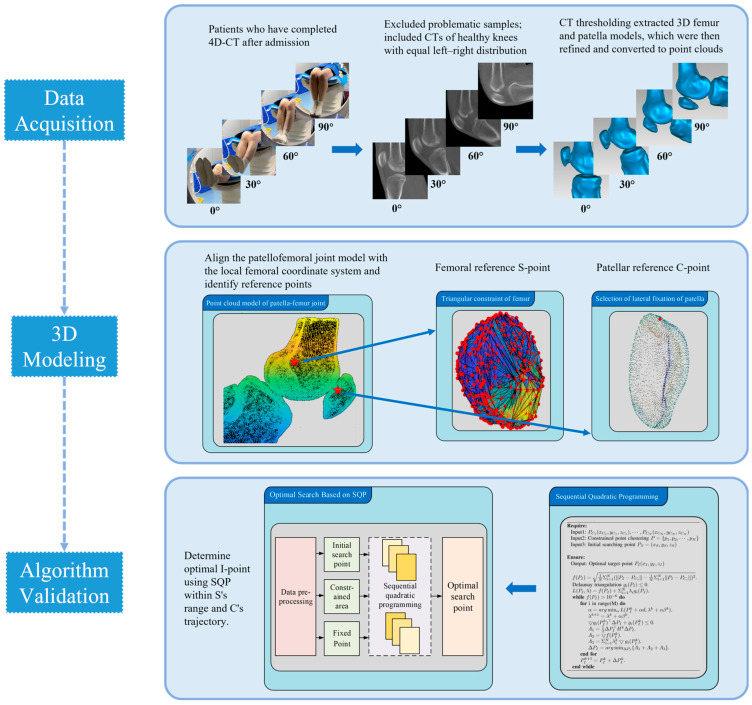 Figure 1
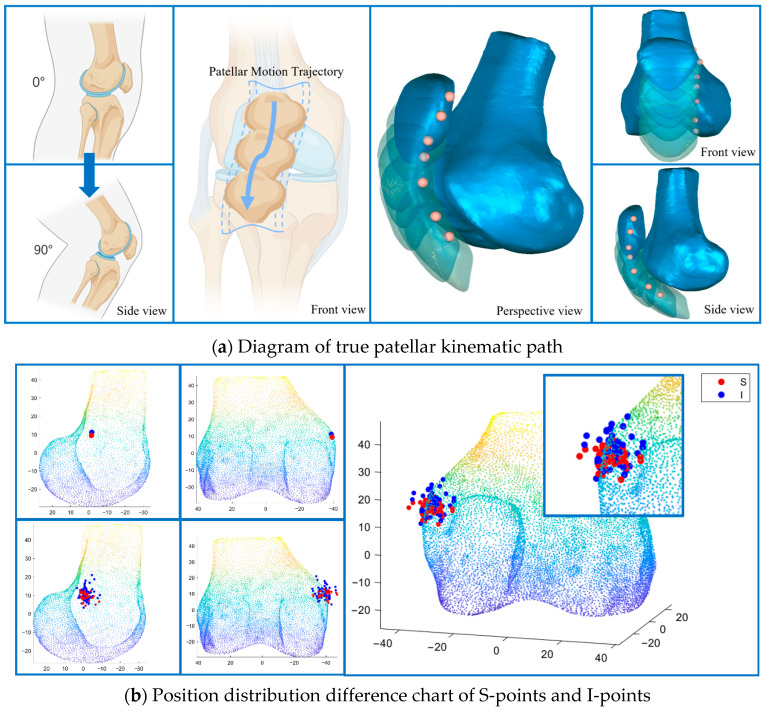 Figure 2
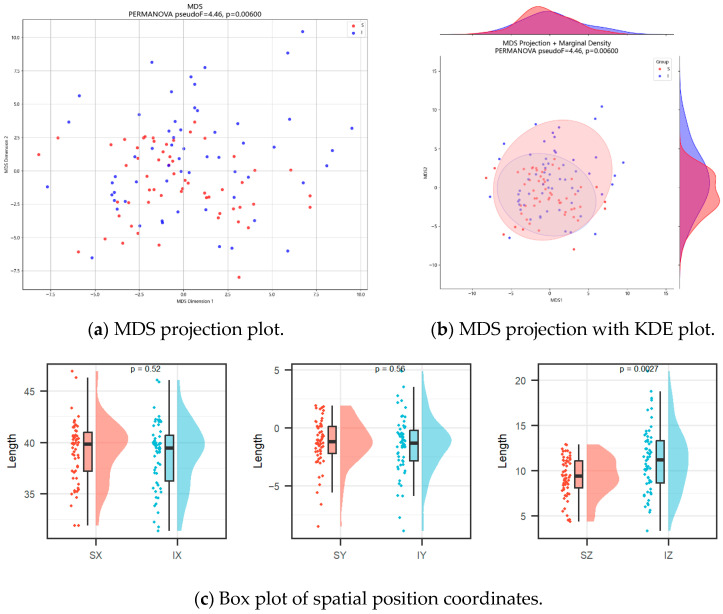 Figure 3
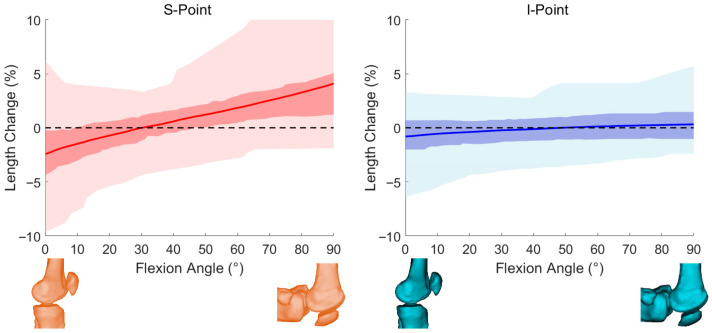 Figure 4
Peer Reviews
No public reviews on file for this paper yet. If you reviewed it on a platform where reviews are public (OpenReview, ICLR, NeurIPS, ICML), you can paste yours below so the community can read it here.
Videos
No videos yet. Explain this paper in a talk, walkthrough, or lecture? Add one.
Taxonomy
TopicsTotal Knee Arthroplasty Outcomes · Lower Extremity Biomechanics and Pathologies · Knee injuries and reconstruction techniques