Approaches to Exceptional Points in the Framework of Non-Hermitian Random Matrices
Henri Benisty

TL;DR
This paper investigates how to create exceptional points in non-Hermitian random matrices using metrics like the Petermann factor and pseudo-spectral tools.
Contribution
The study introduces agnostic methods to enforce exceptional points and compares behaviors in real and complex matrices.
Findings
High Petermann factors are more likely to occur near the real axis in Ginibre matrices.
Real matrices show unique behaviors at exceptional points not seen in complex matrices.
Random perturbations help identify and analyze exceptional points effectively.
Abstract
We explore how easy it is to enforce the advent of exceptional points starting from random matrices of non-Hermitian nature. We use the Petermann factor, whose mathematical version is called “overlap”, for guidance, as well as simple pseudo-spectral tools. We attempt to proceed in the most agnostic way, by adding random perturbation and checking basic metrics such as the sum of all vectors’ Petermann factors, equivalently the sum of diagonal overlaps. Issues such as the location of high Petermann factors vs. the modulus of eigenvalue are addressed. We contrast the fate of exploratory approaches in the Ginibre set (real matrices) and complex matrices, noting the special role of exceptional points on the real axis for the Ginibre matrices, completely absent in complex matrices.
Genes, proteins, chemicals, diseases, species, mutations and cell lines named across the full text — each resolved to its canonical identifier and authoritative record.
Click any figure to enlarge with its caption.
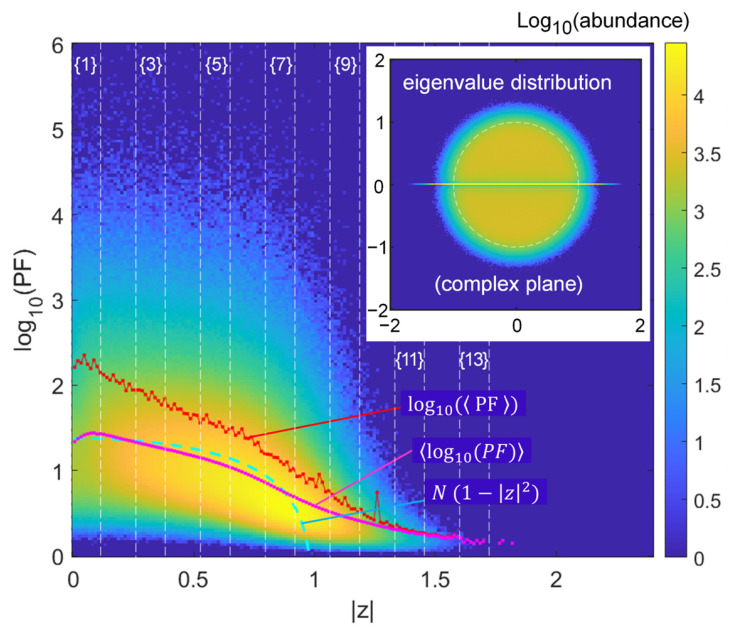 Figure 1
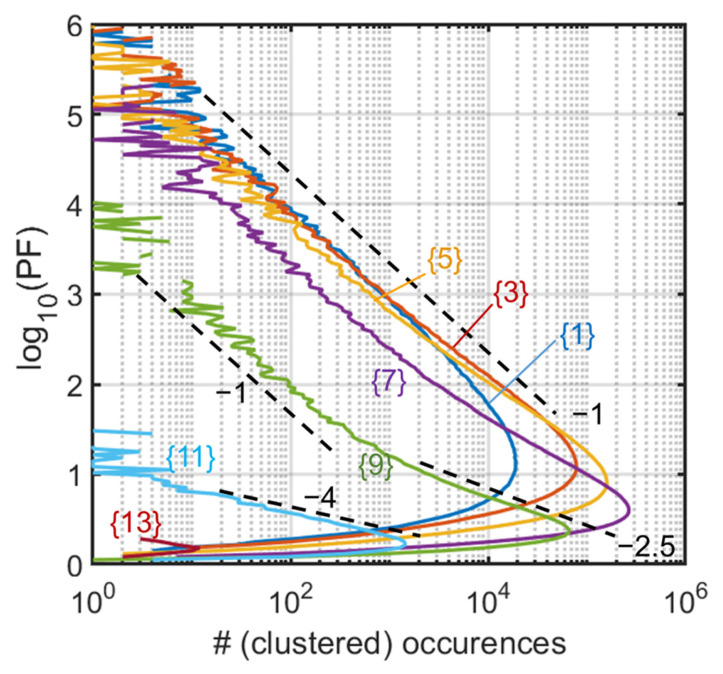 Figure 2
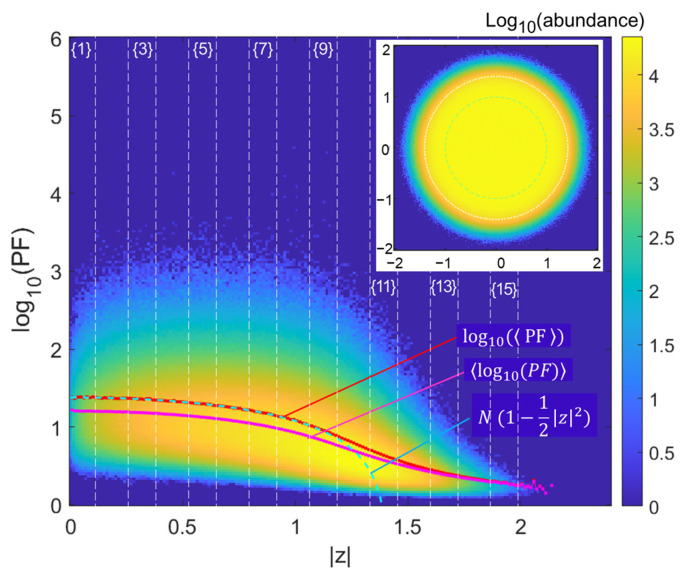 Figure 3
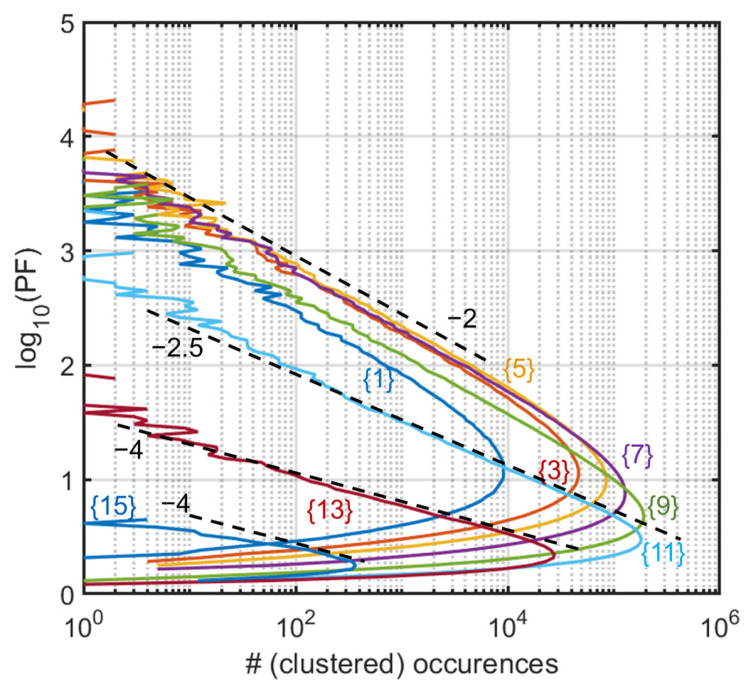 Figure 4
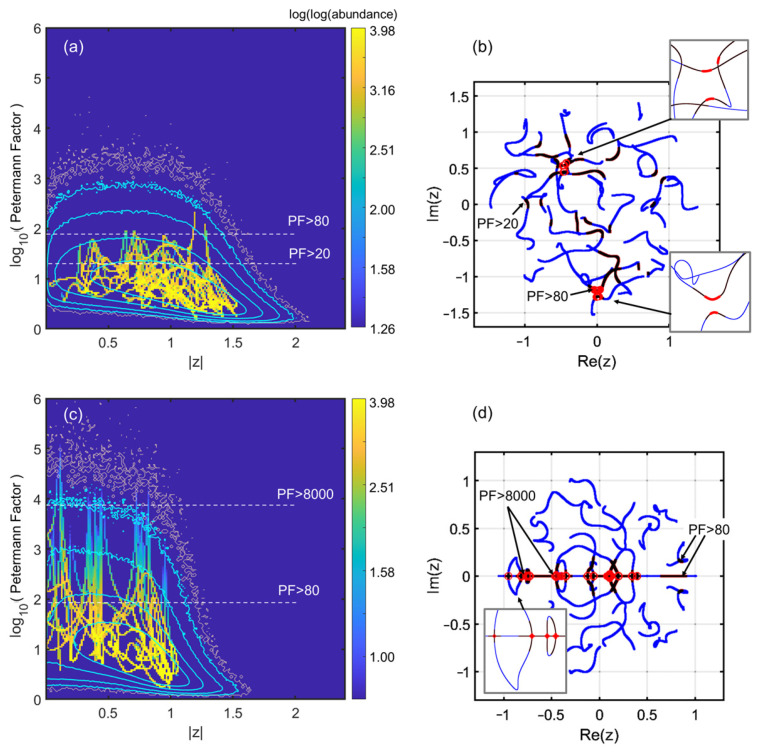 Figure 5
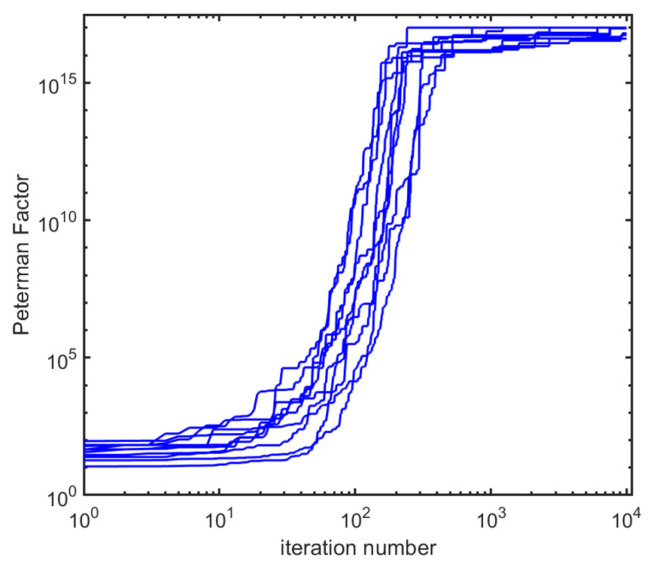 Figure 6
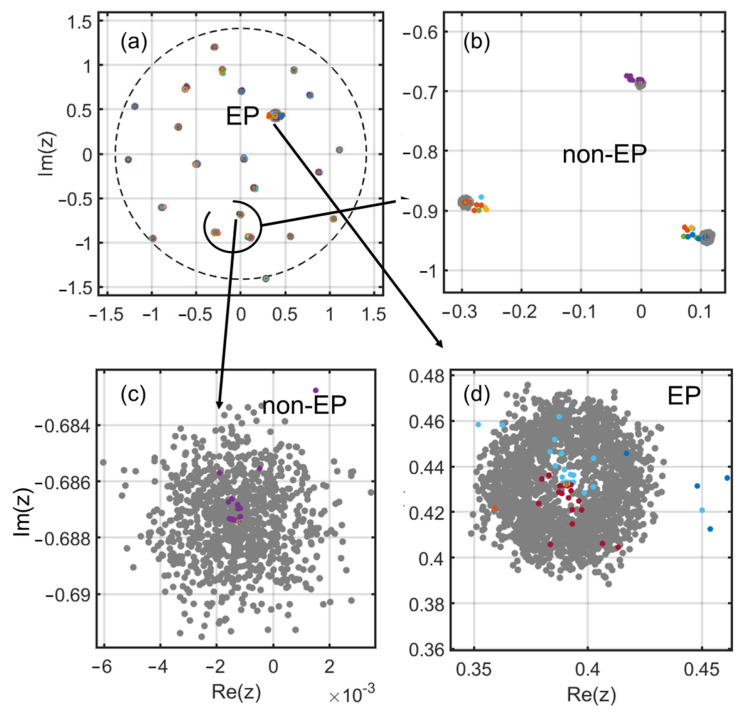 Figure 7
Peer Reviews
No public reviews on file for this paper yet. If you reviewed it on a platform where reviews are public (OpenReview, ICLR, NeurIPS, ICML), you can paste yours below so the community can read it here.
Videos
No videos yet. Explain this paper in a talk, walkthrough, or lecture? Add one.
Taxonomy
TopicsRandom Matrices and Applications · Matrix Theory and Algorithms · Graph theory and applications